 flip
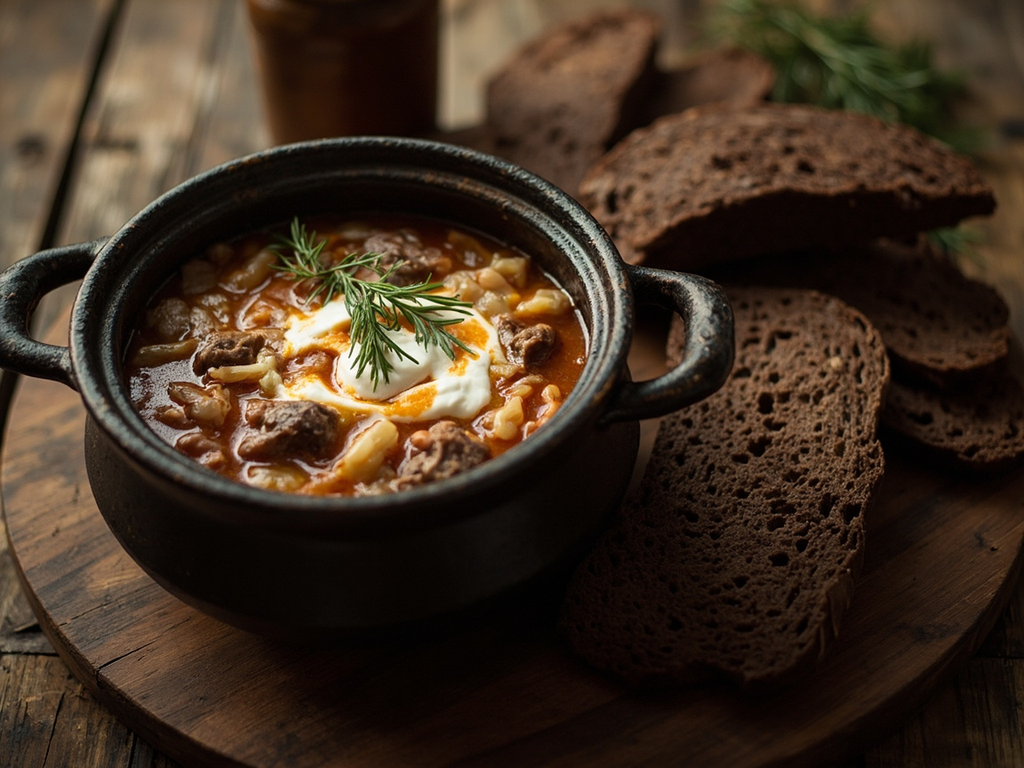
flipStoofvlees with Brown Beer (Flemish Carbonade)
Stoofvlees with Brown Beer (Flemish Carbonade)
Why this dish? Born and trained in Antwerp in Rubens' workshop, Van Dyck grew up in the land of brown beer. This slow stew, left on the embers while working on canvas, is the dish of the common people and Flemish workshops: nourishing, inexpensive, ready to wait for the artist absorbed in his work.
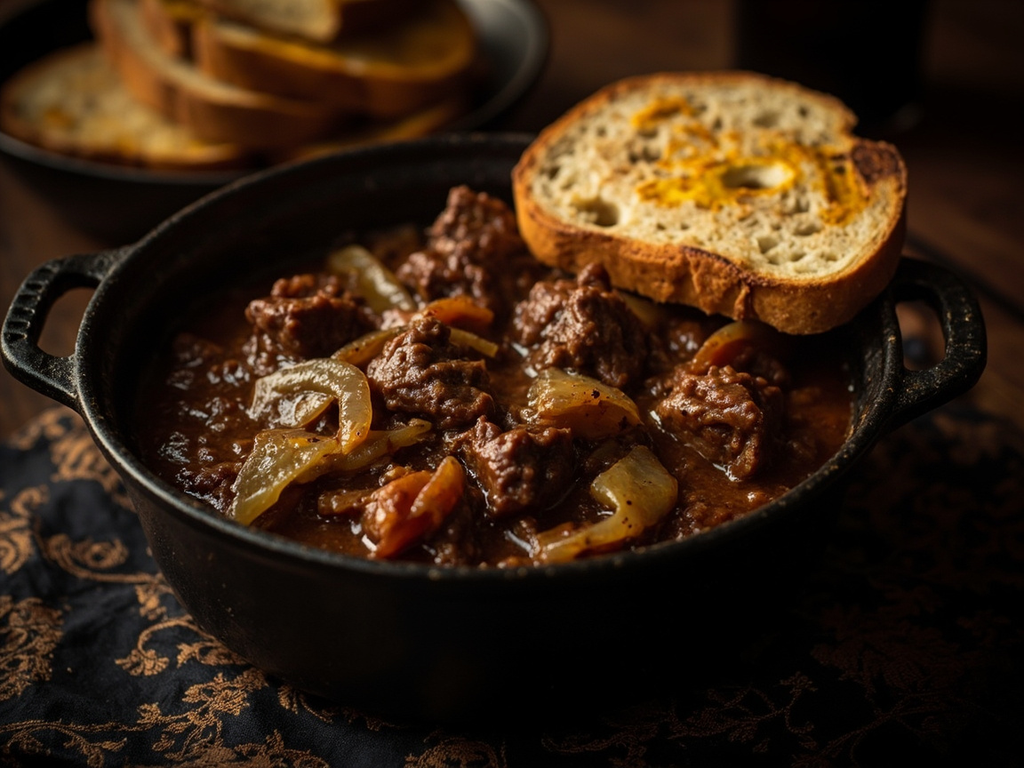
Beef pieces long-simmered in brown beer with caramelized onions, thickened with brown bread spread with mustard. The sweet-sour of malt and syrup responds to a dash of vinegar: a dark, deep, comforting dish.
Come, sit by the hearth. This stew I have smelled since childhood, in Antwerp, when Master Rubens let us grind colours: it simmered for hours while we painted. We drown the beef in the good brown beer of the country, throw in the onions, then lay a slice of bread spread with mustard on top, which melts and thickens the sauce. Patience is the only skill here: who hurries the fire spoils the meat.
- •Beef for stew (chuck, shoulder) — a good piece (meat for stewing)
- •Brown barley beer — enough to cover (signature liquid)
- •Onions — several (melting base)
- •Stale brown bread — two slices (thickener)
- •Mustard — to spread (spice)
- •Wine vinegar — a dash (acidity)
- •Apple syrup or brown sugar — a spoonful (sweet-sour)
- •Bay leaf, clove, pepper — to taste (spices)
- •Lard or butter — for searing (fat)
Stoofvlees with Brown Beer (Flemish Carbonade)
Beef pieces long-simmered in brown beer with caramelized onions, thickened with brown bread spread with mustard. The sweet-sour of malt and syrup responds to a dash of vinegar: a dark, deep, comforting dish.
Why this dish? Born and trained in Antwerp in Rubens' workshop, Van Dyck grew up in the land of brown beer. This slow stew, left on the embers while working on canvas, is the dish of the common people and Flemish workshops: nourishing, inexpensive, ready to wait for the artist absorbed in his work.
Come, sit by the hearth. This stew I have smelled since childhood, in Antwerp, when Master Rubens let us grind colours: it simmered for hours while we painted. We drown the beef in the good brown beer of the country, throw in the onions, then lay a slice of bread spread with mustard on top, which melts and thickens the sauce. Patience is the only skill here: who hurries the fire spoils the meat.
Ingredients (period version)
- Beef for stew (chuck, shoulder) — a good piece (meat for stewing)
- Brown barley beer — enough to cover (signature liquid)
- Onions — several (melting base)
- Stale brown bread — two slices (thickener)
- Mustard — to spread (spice)
- Wine vinegar — a dash (acidity)
- Apple syrup or brown sugar — a spoonful (sweet-sour)
- Bay leaf, clove, pepper — to taste (spices)
- Lard or butter — for searing (fat)
Ingredients
- Beef for braising (chuck) — 1 kg (meat for stewing)
- Brown beer (abbey/Flemish brown type) — 50 cl (signature liquid)
- Onions — 3 large (melting base)
- Stale country bread — 2 slices (thickener)
- Mustard — 2 tbsp (spice)
- Red wine vinegar — 1 tbsp (acidity)
- Brown sugar or Liège syrup — 1 tbsp (sweet-sour)
- Bay leaf, 2 cloves, pepper — to taste (spices)
- Butter — 30 g (fat)
- Salt — to taste (seasoning)
Method
- Cut the beef into large cubes, salt and sear in butter in a pot until nicely browned, then set aside.
- Gently melt the sliced onions in the same pot until golden.
- Return the meat, pour in the brown beer, add bay leaf, cloves, pepper, vinegar and brown sugar.
- Spread the bread slices with mustard and place them mustard-side down on top.
- Cover and simmer over very low heat for 2.5 to 3 hours: the bread disintegrates and thickens the sauce.
- Adjust sweet-sour balance and salt, serve hot with bread or steamed potatoes (modern nod).
How it was made : In 17th-century Flanders, less noble meats were cooked very slowly in beer, which was safer and cheaper than wine. The bread thickening (not roux) is ancient: it thickens and sweetens the sauce. The first printed Dutch cookbook already attests to these beer stews.
The contemporary twist : Serve the stoverij in individual black cocottes, topped with a mustard-grilled gingerbread crouton, 'workshop still-life' style.
Sources : Een notabel boecxken van cokeryen (first printed Dutch cookbook, c. 1514) · Flemish culinary tradition of stoofvlees / carbonade
Anthony van Dyck · Charactorium