 flip
flipGolden Frumenty with Game from the Royal Hunt
Golden Frumenty with Game from the Royal Hunt
Why this dish? Game — deer, boar, doe — is the privilege of the king and his knights: the hunt in the forest of Brocéliande is the noble echo of Arthur's court. Frumenty, a wheat porridge simmered and gilded with saffron, was THE festive dish served under meat in great medieval English households: a dish worthy of a Round Table banquet.
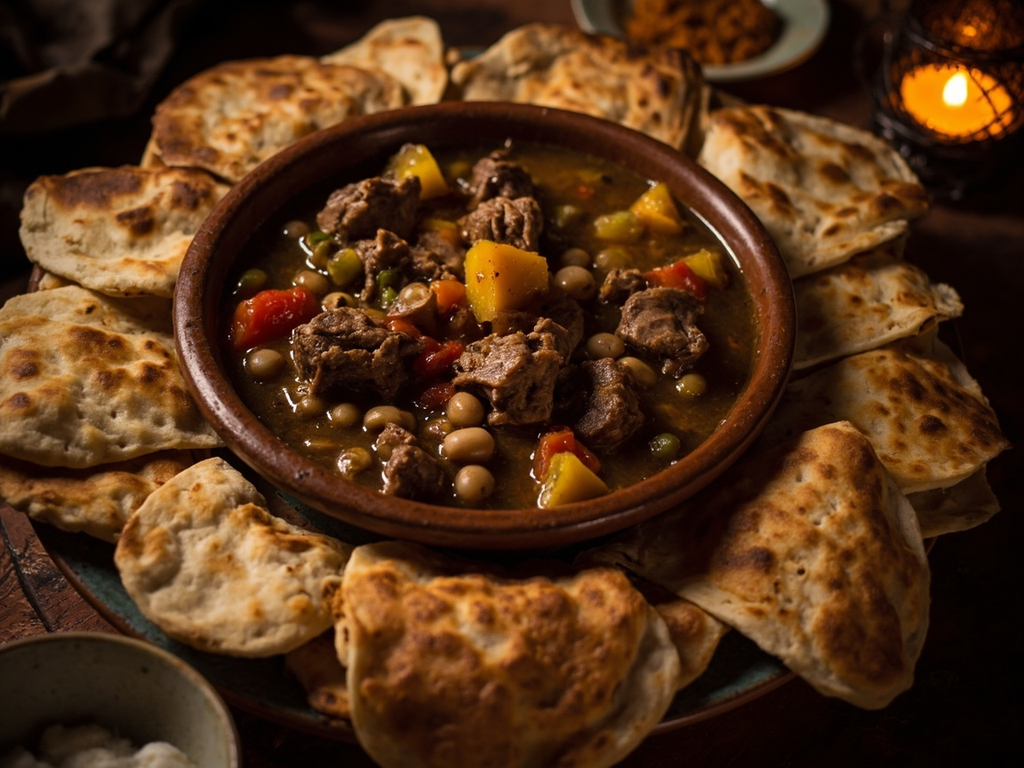
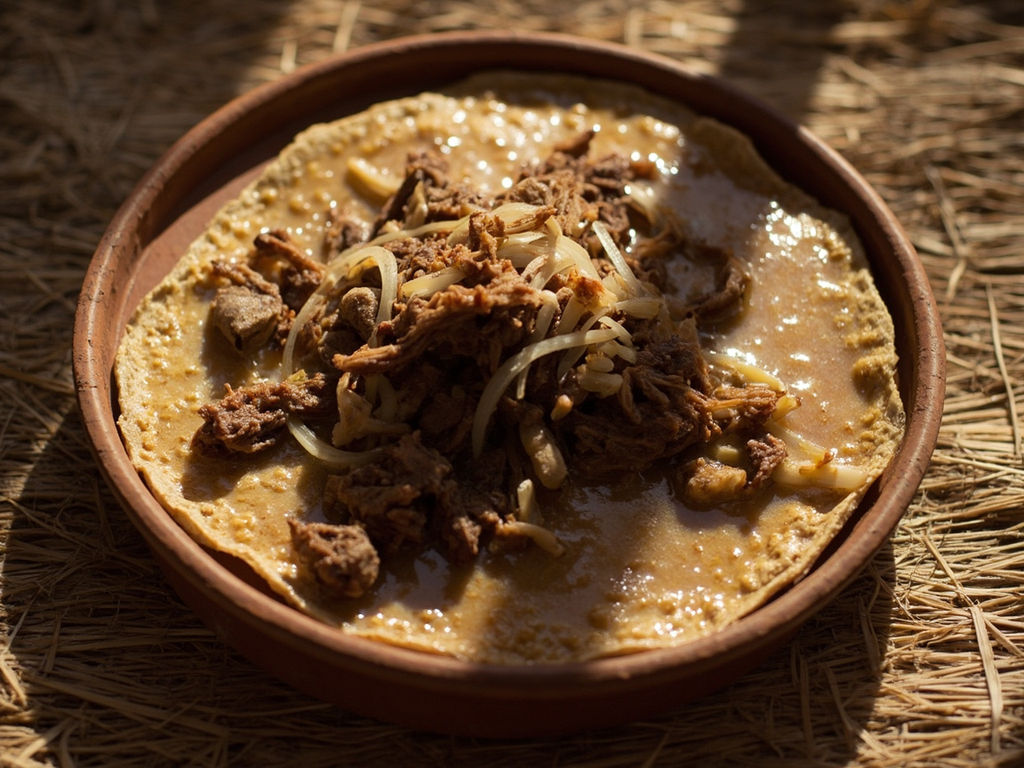
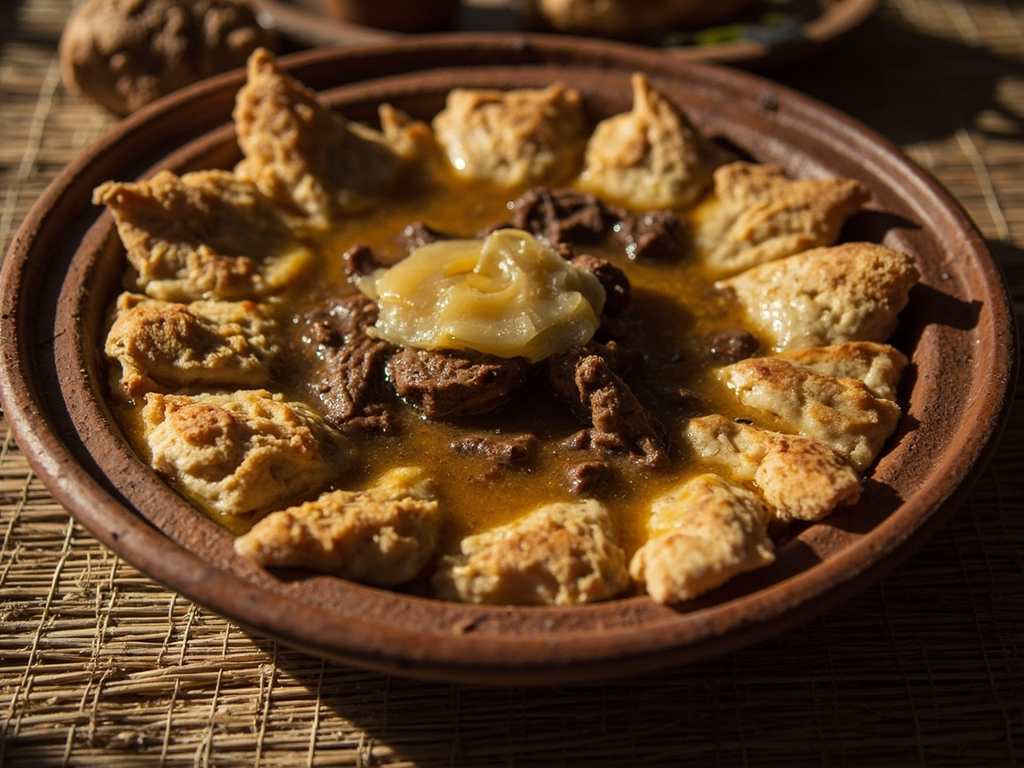
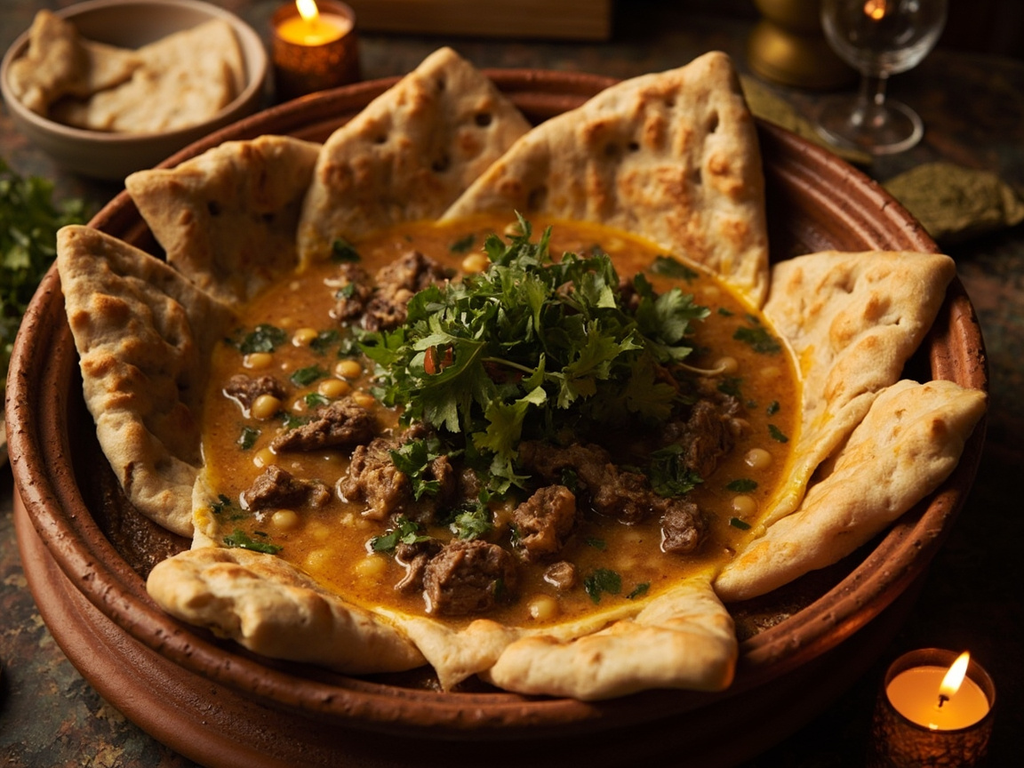
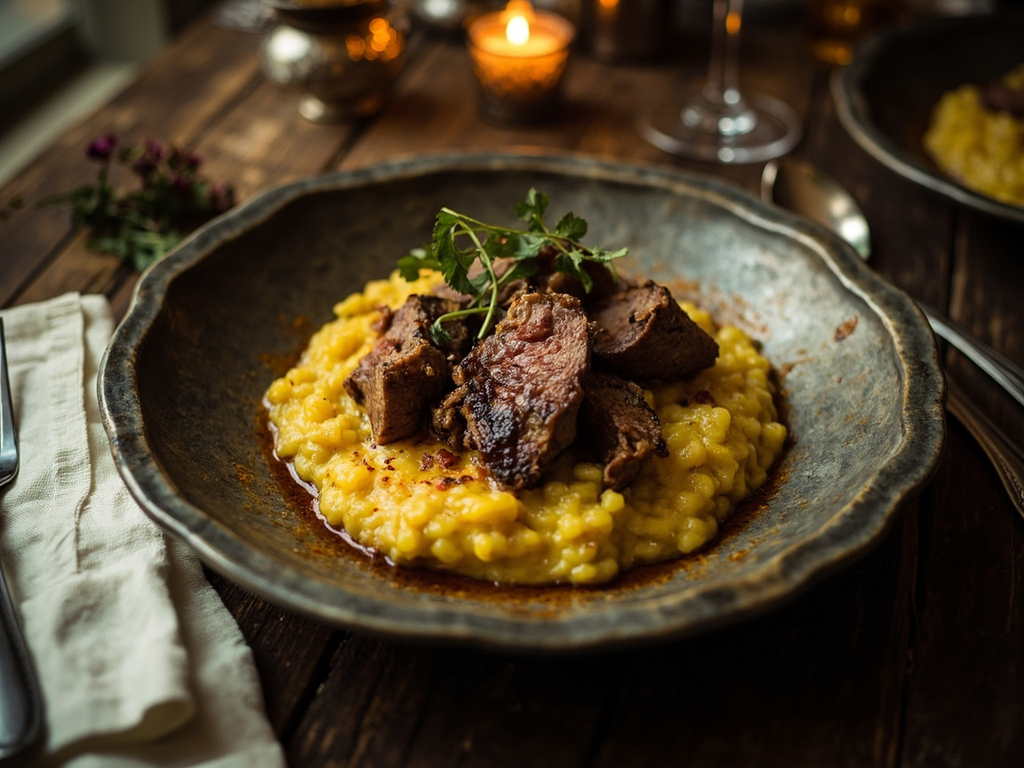
A creamy porridge of cracked wheat, bound with milk and egg yolks, gilded with saffron, served as a soft bed under slices of roasted game. The contrast between the sweet wheat and the strong venison is the signature of seigneurial tables.
Approach, and take your place at my table, for no one sits hungry in Camelot. See this wheat that my cooks have swollen all day in milk, gilded with the saffron that merchants bring me from beyond the seas. Beneath it I lay the venison that my knights and I have raised by chase since dawn, in the woods where no villein hunts. Taste: the sweetness of the grain marries the strength of the deer, and you shall know the taste of a king's feast.
- •Cracked wheat (cracked wheat) — a good bowlful (base of the dish, simmered long)
- •Milk and venison broth — enough to cover generously (cooking liquid)
- •Egg yolks — a few (creamy binding)
- •Saffron — a precious pinch (golden color, noble perfume)
- •Deer or boar — a fine piece (roast served on top)
- •Salt — to taste (seasoning)
Golden Frumenty with Game from the Royal Hunt
A creamy porridge of cracked wheat, bound with milk and egg yolks, gilded with saffron, served as a soft bed under slices of roasted game. The contrast between the sweet wheat and the strong venison is the signature of seigneurial tables.
Why this dish? Game — deer, boar, doe — is the privilege of the king and his knights: the hunt in the forest of Brocéliande is the noble echo of Arthur's court. Frumenty, a wheat porridge simmered and gilded with saffron, was THE festive dish served under meat in great medieval English households: a dish worthy of a Round Table banquet.
Approach, and take your place at my table, for no one sits hungry in Camelot. See this wheat that my cooks have swollen all day in milk, gilded with the saffron that merchants bring me from beyond the seas. Beneath it I lay the venison that my knights and I have raised by chase since dawn, in the woods where no villein hunts. Taste: the sweetness of the grain marries the strength of the deer, and you shall know the taste of a king's feast.
Ingredients (period version)
- Cracked wheat (cracked wheat) — a good bowlful (base of the dish, simmered long)
- Milk and venison broth — enough to cover generously (cooking liquid)
- Egg yolks — a few (creamy binding)
- Saffron — a precious pinch (golden color, noble perfume)
- Deer or boar — a fine piece (roast served on top)
- Salt — to taste (seasoning)
Ingredients
- Cracked wheat (coarse bulgur or soft wheat) — 250 g (base of frumenty)
- Whole milk — 500 ml (creamy cooking)
- Beef or game broth — 500 ml (depth of flavor)
- Egg yolks — 3 (binding)
- Saffron — 1 pinch (a few pistils) (color and aroma)
- Venison steak or duck breast/beef steak — 600 g (roasted meat)
- Salt and pepper — to taste (seasoning)
Method
- Soak the cracked wheat in cold water for 1 hour, then drain.
- Infuse the saffron in warm milk for 10 minutes.
- Pour wheat, saffron milk and broth into a saucepan; simmer gently for 30-40 minutes, stirring, until creamy like risotto.
- Off the heat, whisk in the egg yolks quickly to bind without scrambling. Season with salt.
- Sear the meat in a hot pan, 3-4 minutes per side for medium-rare; rest 5 minutes then slice.
- Plate a bed of golden frumenty, lay game slices on top, drizzle with pan juices.
How it was made : Frumenty (from Old French "frument", wheat) appears in the oldest English cookbook, the Forme of Cury (circa 1390), often served with venison or porpoise at banquets. It was gilded with saffron and bound with egg yolks, exactly as here.
The contemporary twist : Serve the frumenty in a ring, meat fanned on top, and call it "Round Table Risotto": the medieval porridge becomes a chef's dish without betraying anything.
Sources : Forme of Cury (England, circa 1390) · C. B. Hieatt & S. Butler, Curye on Inglysch (1985)
King Arthur · Charactorium