 flip
flipBarley Tharid with Mutton (the Caliph's Sopped Bread)
Barley Tharid with Mutton (the Caliph's Sopped Bread)
Why this dish? Tharid — bread crumbled into meat broth — was, according to tradition, the Prophet's favorite dish, and Abu Bakr was his closest companion and host. In Medina, upon receiving a guest or celebrating an occasion, a sheep was slaughtered and this shared dish was prepared, where the caliph's barley bread met the meat of feast days.
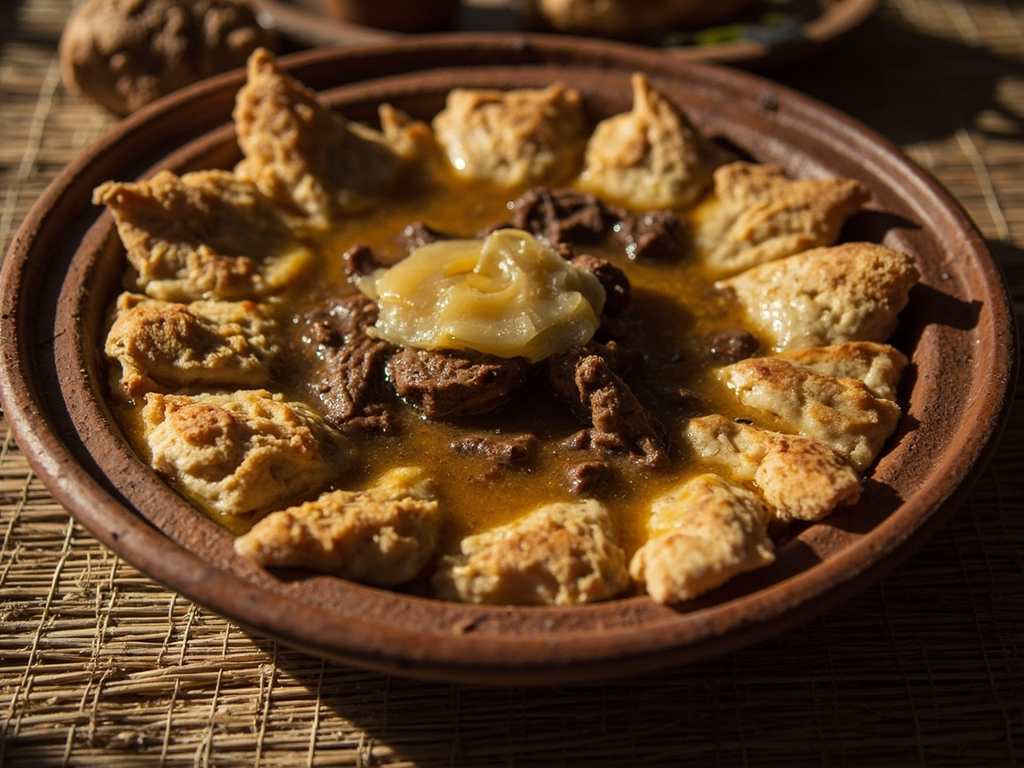
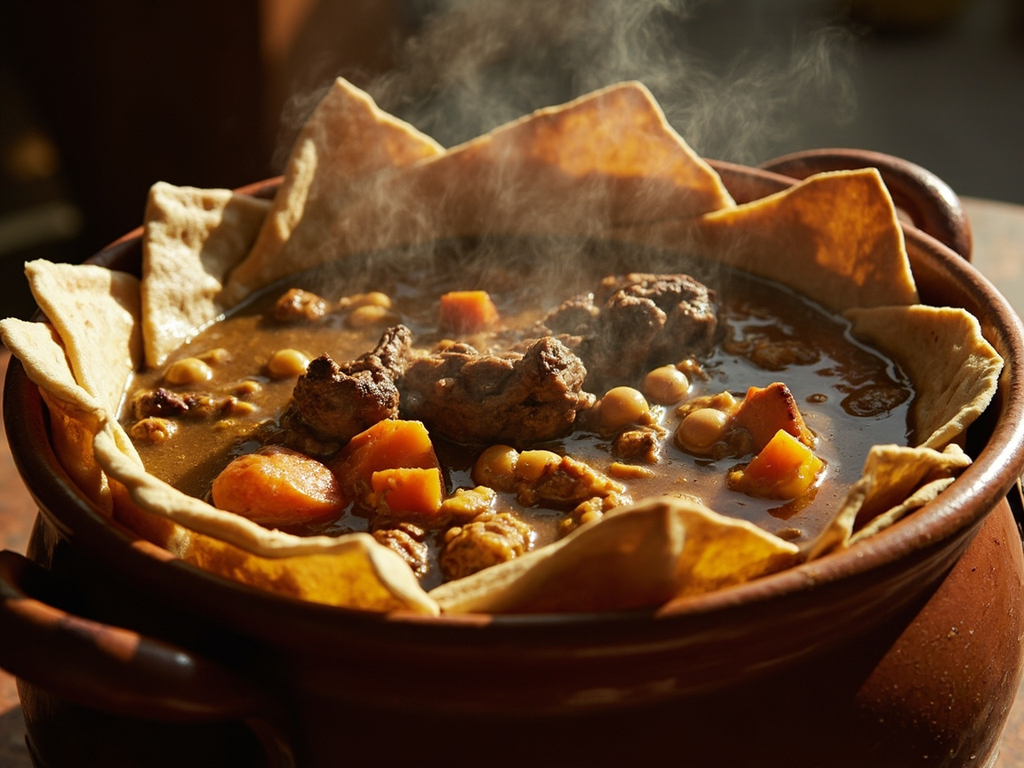
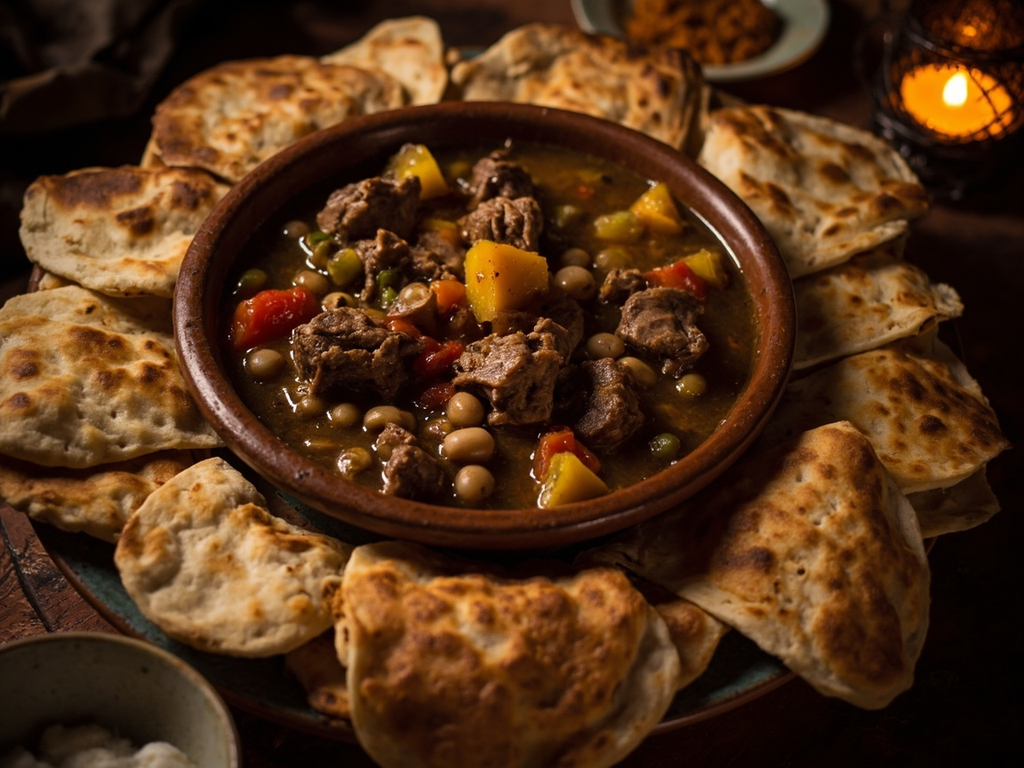
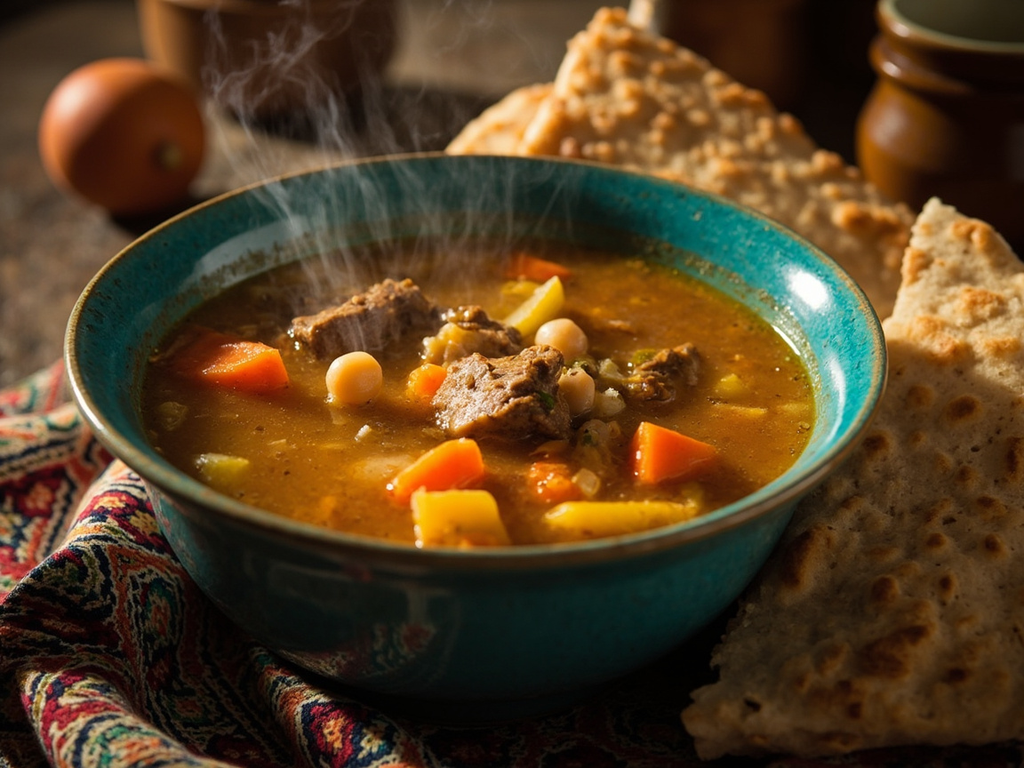
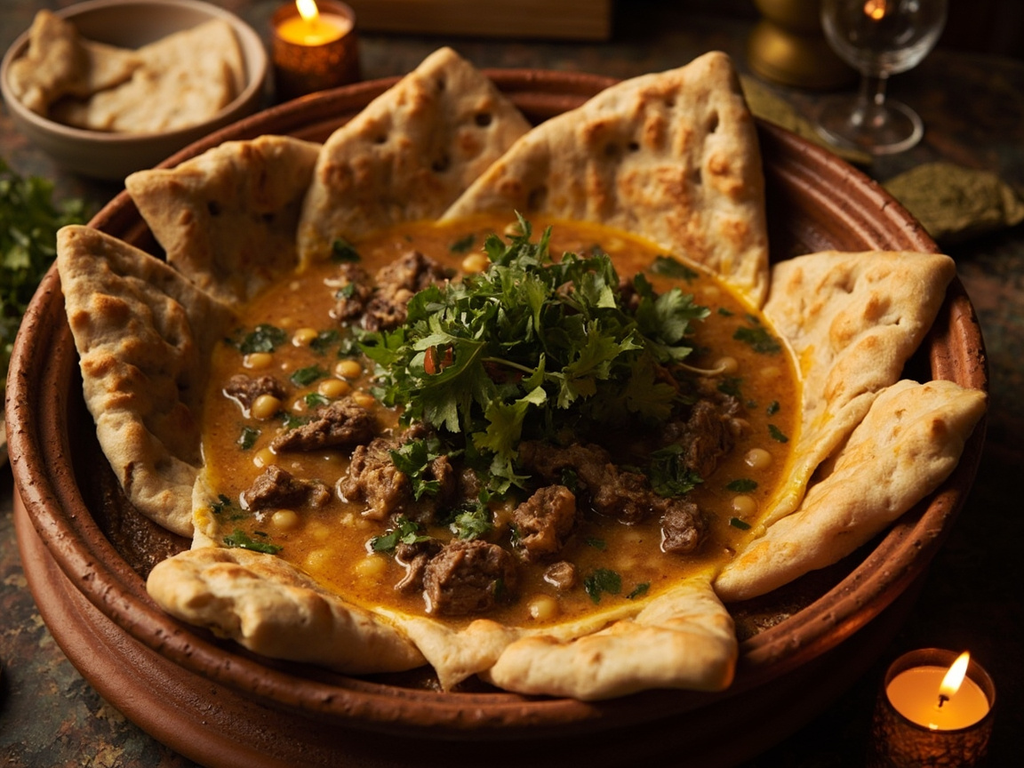
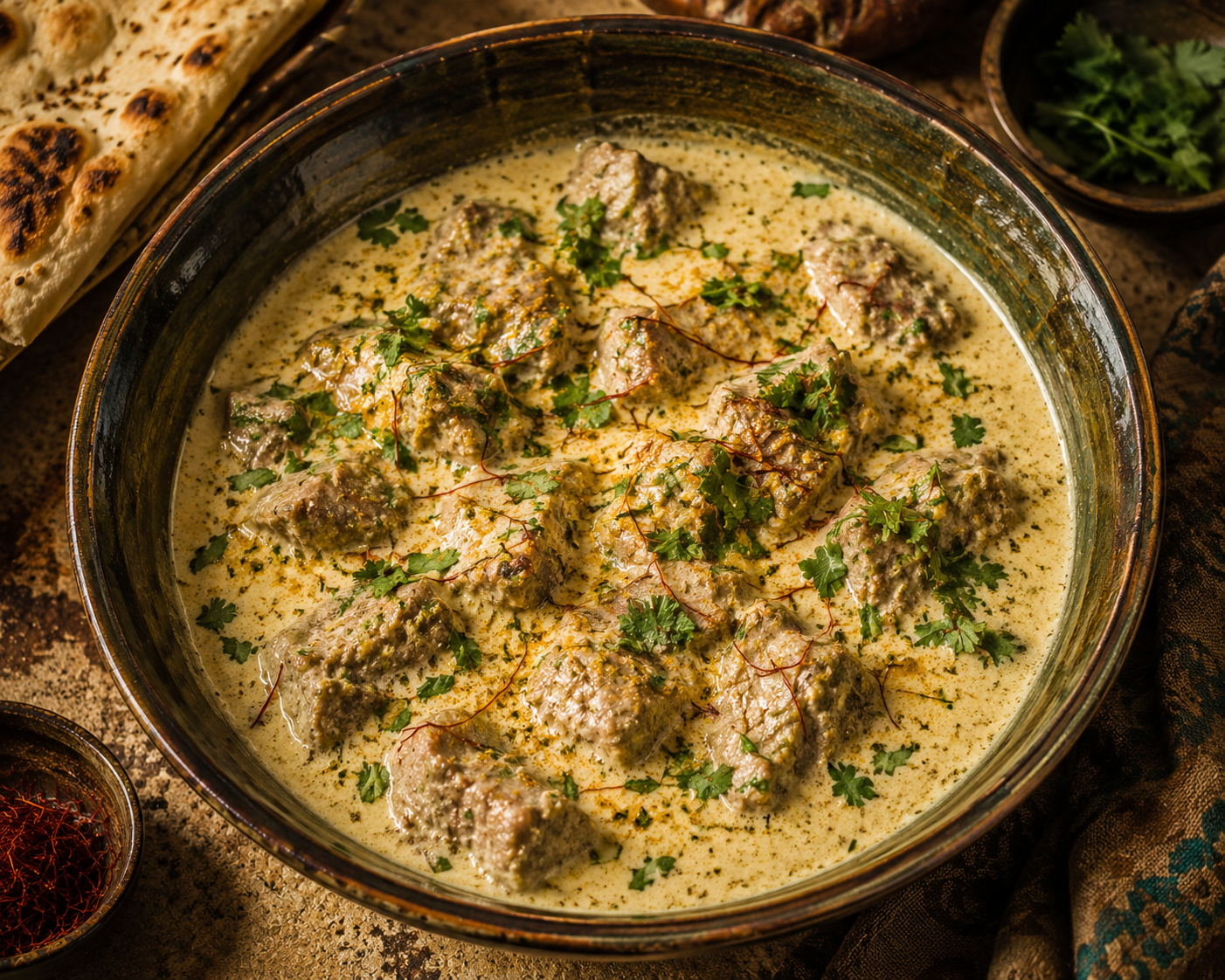
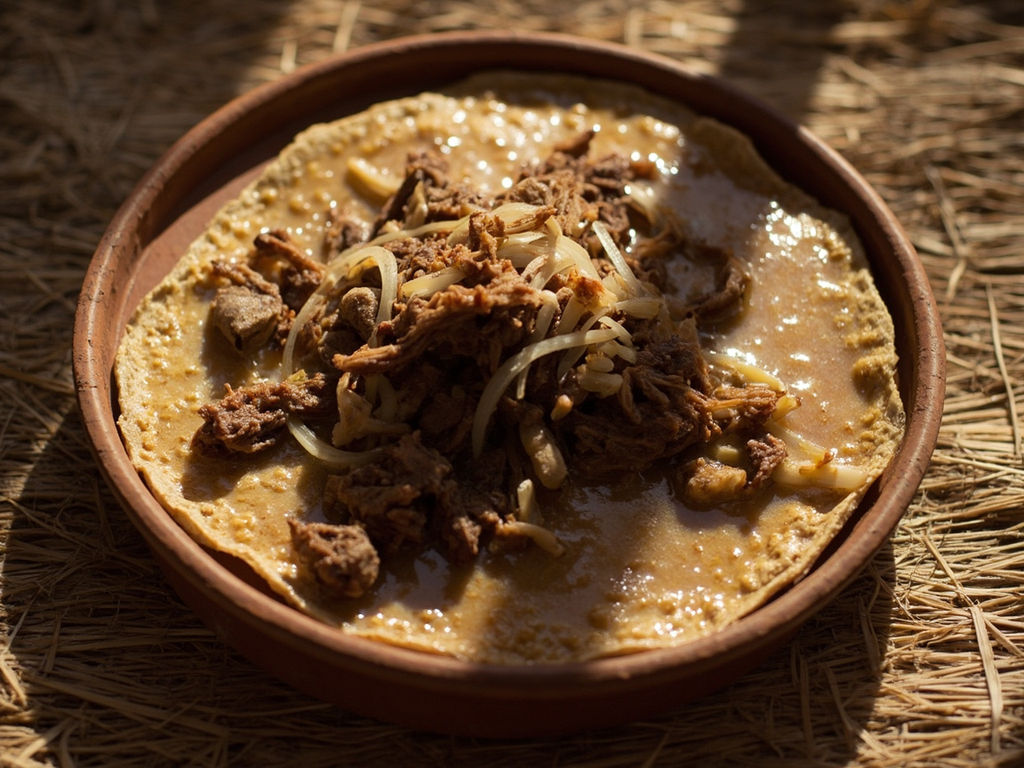
A fragrant mutton broth into which barley bread is crumbled, soaking it up and melting into tender morsels. A single, generous dish, eaten by several hands from the same vessel.
Come, and sit on the mat with us, for no one eats alone at my table. See this barley bread I crumble with my fingers into the mutton broth — it is the dish the Messenger of God, peace be upon him, loved above all, and I have served it a hundred times under the roof of Medina. Eat from what is before you, with the right hand, and let the salt and fat melt the bread. He who shares his dish never has hunger in his heart.
- •Barley bread (khubz cha'ir), slightly stale — several flatbreads (base that soaks up the broth)
- •Mutton shoulder or neck — a nice bone-in piece (meat and broth)
- •Onion — a few (aromatic base)
- •Mutton tail fat — as available (richness)
- •Cumin, coriander seed, black pepper — a pinch of each (flavor)
- •Salt, well water — to taste (cooking)
Barley Tharid with Mutton (the Caliph's Sopped Bread)
A fragrant mutton broth into which barley bread is crumbled, soaking it up and melting into tender morsels. A single, generous dish, eaten by several hands from the same vessel.
Why this dish? Tharid — bread crumbled into meat broth — was, according to tradition, the Prophet's favorite dish, and Abu Bakr was his closest companion and host. In Medina, upon receiving a guest or celebrating an occasion, a sheep was slaughtered and this shared dish was prepared, where the caliph's barley bread met the meat of feast days.
Come, and sit on the mat with us, for no one eats alone at my table. See this barley bread I crumble with my fingers into the mutton broth — it is the dish the Messenger of God, peace be upon him, loved above all, and I have served it a hundred times under the roof of Medina. Eat from what is before you, with the right hand, and let the salt and fat melt the bread. He who shares his dish never has hunger in his heart.
Ingredients (period version)
- Barley bread (khubz cha'ir), slightly stale — several flatbreads (base that soaks up the broth)
- Mutton shoulder or neck — a nice bone-in piece (meat and broth)
- Onion — a few (aromatic base)
- Mutton tail fat — as available (richness)
- Cumin, coriander seed, black pepper — a pinch of each (flavor)
- Salt, well water — to taste (cooking)
Ingredients
- Whole wheat or barley bread, stale — 300 g (base)
- Mutton or lamb shoulder — 800 g bone-in (meat and broth)
- Onions — 2 large (base)
- Olive oil — 3 tbsp (cooking fat)
- Ground cumin — 1 tsp (flavor)
- Ground coriander — 1 tsp (flavor)
- Black pepper — 1/2 tsp (flavor)
- Salt — to taste (seasoning)
- Water — 1.5 L (broth)
Method
- Sauté the sliced onions in olive oil in the bottom of a large pot.
- Add the meat, sear on all sides, then pour in the water and bring to a simmer.
- Add cumin, coriander, pepper, and salt; cover and simmer for 2 hours until the meat falls off the bone.
- Meanwhile, break the stale bread into large pieces in a wide, deep dish.
- Pour some of the hot broth over the bread so it soaks and swells for a few minutes.
- Top with the shredded meat, drizzle with remaining broth, and serve the dish in the center of the table for sharing.
How it was made : Tharid (or tharîd) is one of the oldest attested dishes in Arab cuisine; it is mentioned as the Prophet's favorite. Barley, the cereal of the poor and the desert, was more common than wheat in Medina. People ate directly from the large dish, with the right hand, starting from the edge closest to them.
The contemporary twist : Serve in individual bowls with a drizzle of extra virgin olive oil and a sprinkle of crushed toasted almonds — a nod to the tharid of grand medieval households, which would later be enriched with spices and dried fruits.
Sources : Maxime Rodinson, « Recherches sur les documents arabes relatifs à la cuisine », Revue des études islamiques, 1949 · Lilia Zaouali, L'Islam de marché : une histoire de la cuisine arabe médiévale, 2007
Abu Bakr as-Siddiq · Charactorium