 flip
flipTharid — Bread Soaked in Meat Broth
Tharid — Bread Soaked in Meat Broth
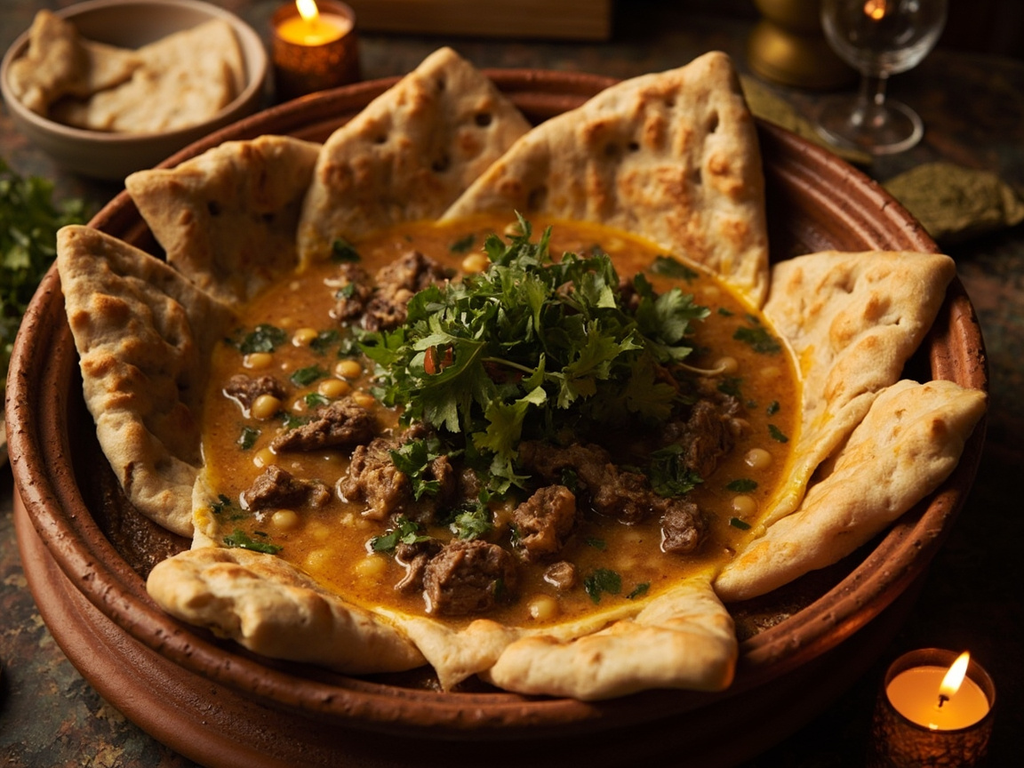
Why this dish? Tharid was the Prophet Muhammad's most beloved dish, and Ali was his cousin and son-in-law. On Ali's frugal table, meat appeared only on feast days: tharid was then the quintessential dish of sharing.
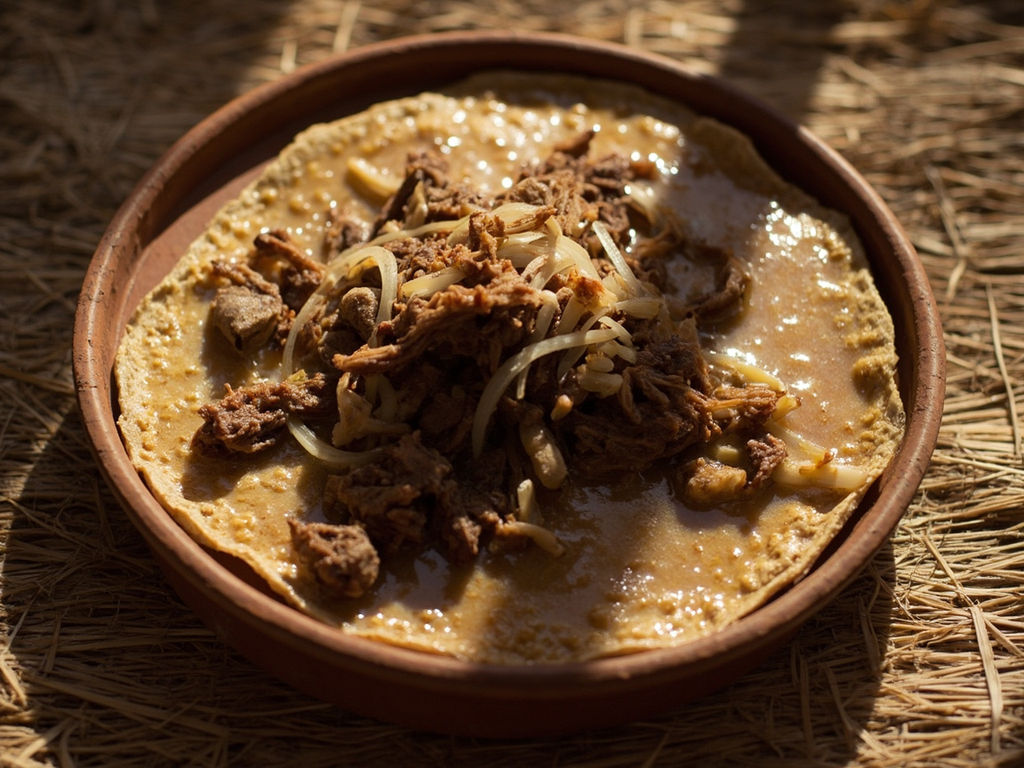
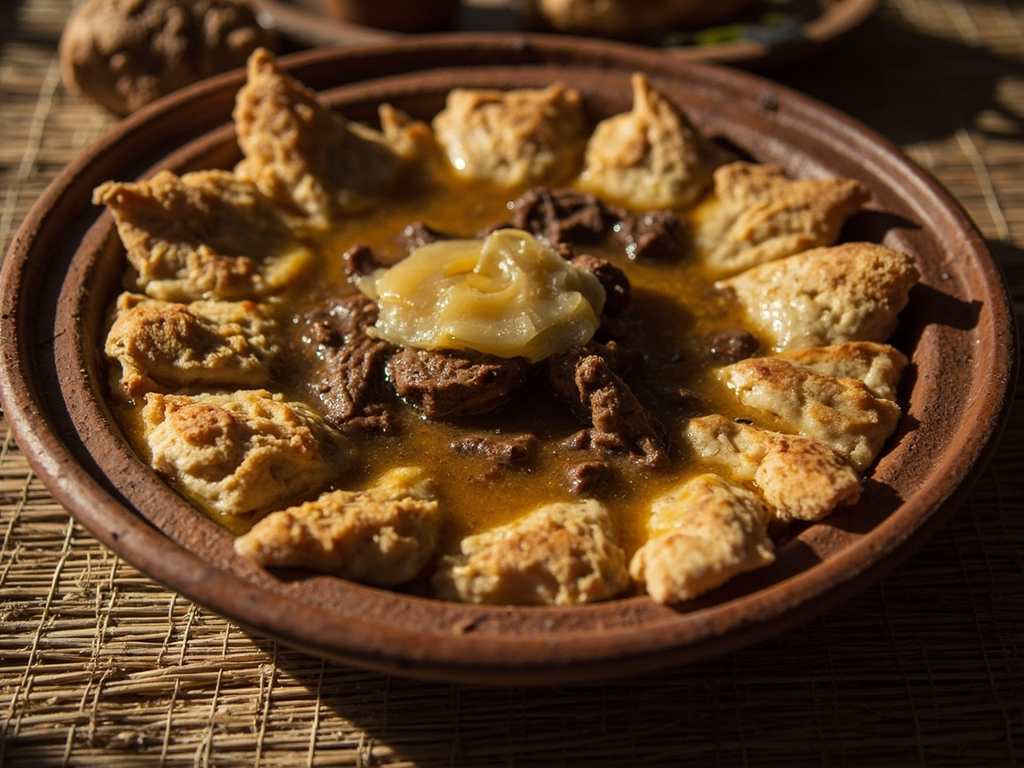
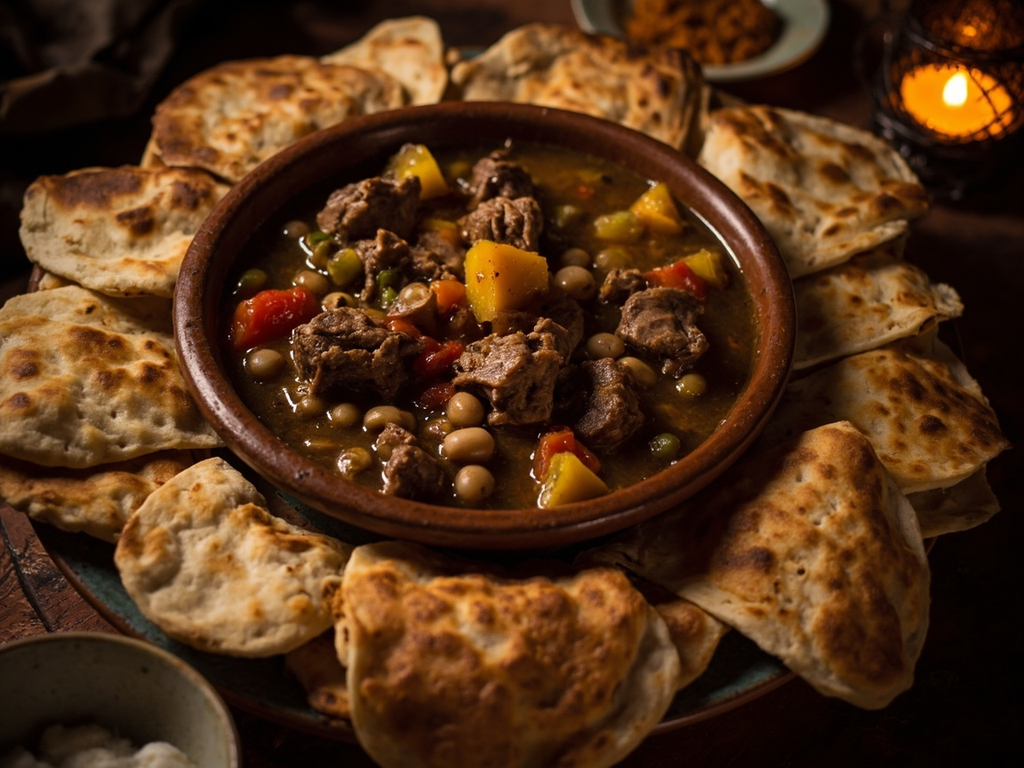
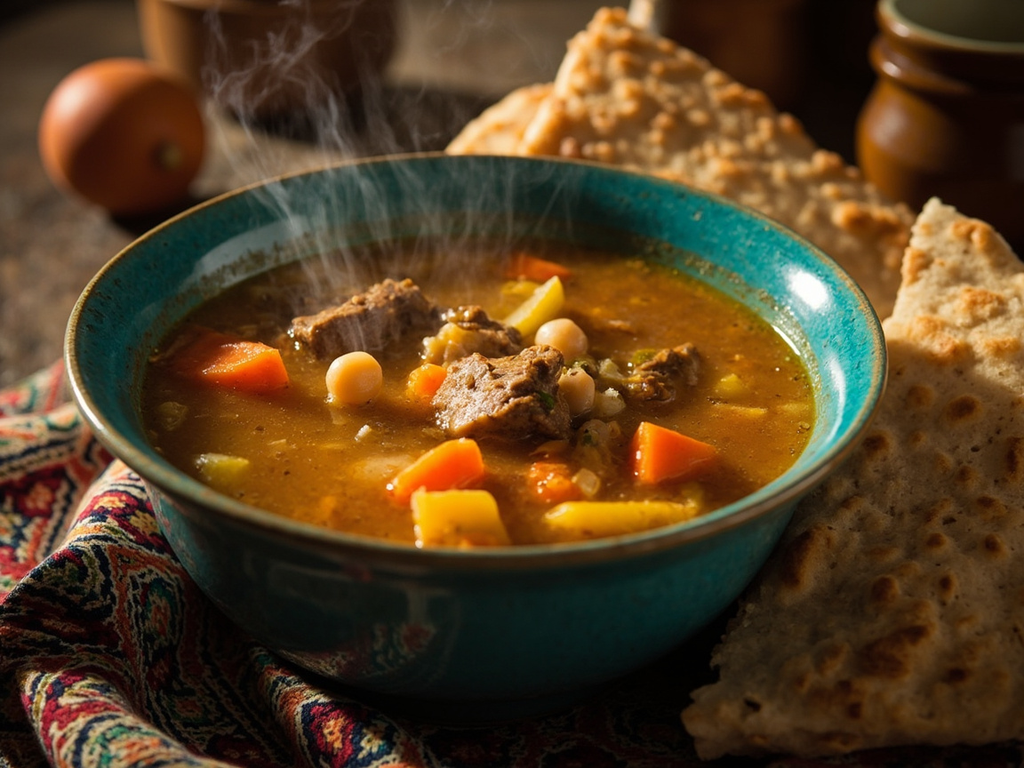
Stale bread crumbled at the bottom of a large dish, drenched in a fragrant broth where meat and a few vegetables have simmered. Each person eats from the edge in front of them. It is the dish of conviviality and generosity.
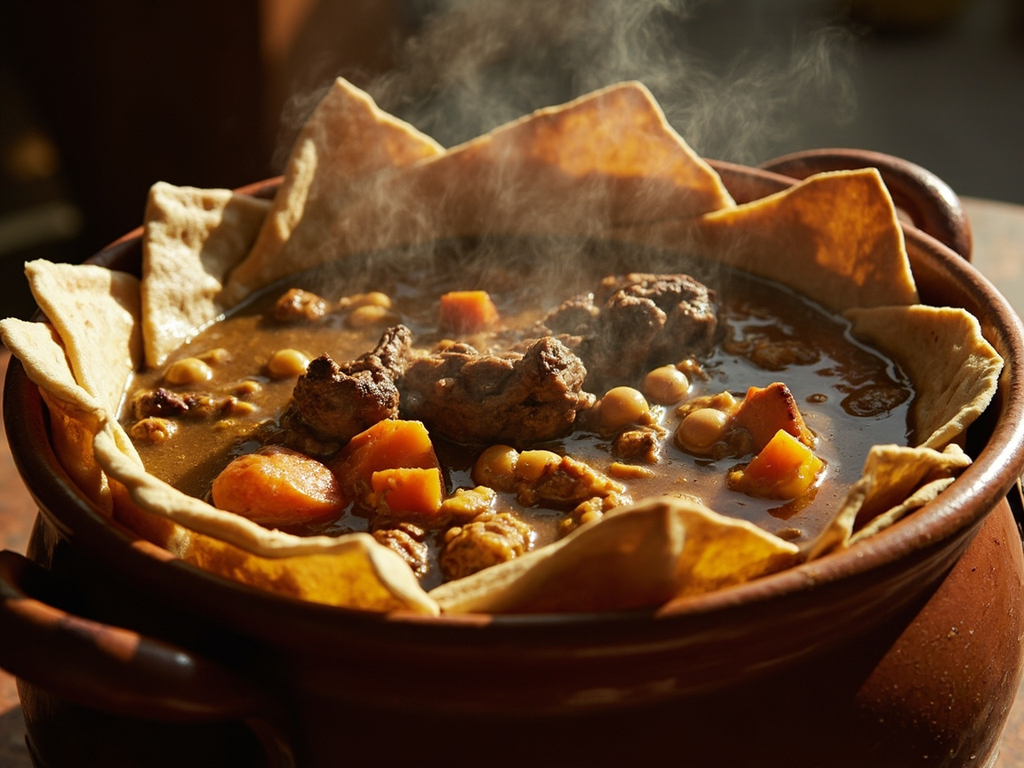
Today is a feast day, and the pot is steaming. Crumble the dry bread into the bottom of the dish — waste nothing, even the hardest crust finds its place here. Pour over it the broth in which the meat has long trembled over the fire, with the long gourd and the onion. Eat from the side that is before you, never from the middle, for blessing descends upon the center of the dish. And invite the neighbor who has nothing: the table that is shared is never exhausted.
- •Lamb or kid meat — a good bone-in piece (base of the broth)
- •Stale barley or wheat bread — several flatbreads (base that absorbs the broth)
- •Long gourd (qar') — a few pieces (vegetable)
- •Onion — one (aromatic)
- •Chickpeas — a soaked handful (legume)
- •Cumin, coriander, pepper — to taste (spices)
- •Sheep fat (samn) — a little (fat)
Tharid — Bread Soaked in Meat Broth
Stale bread crumbled at the bottom of a large dish, drenched in a fragrant broth where meat and a few vegetables have simmered. Each person eats from the edge in front of them. It is the dish of conviviality and generosity.
Why this dish? Tharid was the Prophet Muhammad's most beloved dish, and Ali was his cousin and son-in-law. On Ali's frugal table, meat appeared only on feast days: tharid was then the quintessential dish of sharing.
Today is a feast day, and the pot is steaming. Crumble the dry bread into the bottom of the dish — waste nothing, even the hardest crust finds its place here. Pour over it the broth in which the meat has long trembled over the fire, with the long gourd and the onion. Eat from the side that is before you, never from the middle, for blessing descends upon the center of the dish. And invite the neighbor who has nothing: the table that is shared is never exhausted.
Ingredients (period version)
- Lamb or kid meat — a good bone-in piece (base of the broth)
- Stale barley or wheat bread — several flatbreads (base that absorbs the broth)
- Long gourd (qar') — a few pieces (vegetable)
- Onion — one (aromatic)
- Chickpeas — a soaked handful (legume)
- Cumin, coriander, pepper — to taste (spices)
- Sheep fat (samn) — a little (fat)
Ingredients
- Lamb shoulder or neck — 600 g bone-in (base of the broth)
- Stale bread (pita or country bread) — 4 thick slices (base)
- Zucchini or butternut squash — 300 g (vegetable)
- Onion — 1 large (aromatic)
- Cooked chickpeas — 150 g (legume)
- Ground cumin — 1 tsp (spice)
- Ground coriander — 1 tsp (spice)
- Black pepper — ½ tsp (spice)
- Clarified butter (ghee/samn) — 1 tbsp (fat)
- Salt — to taste (seasoning)
Method
- Sauté the sliced onion in ghee at the bottom of a pot.
- Add the meat, brown it, season with salt and spices (cumin, coriander, pepper).
- Cover generously with hot water and simmer gently for 1 hour 30 minutes.
- Add the squash pieces and chickpeas, continue cooking for 30 minutes until the meat is tender.
- Crumble the stale bread into the bottom of a large shallow dish.
- Pour the boiling broth over the bread to soak it well, arrange the meat and vegetables on top, and serve immediately at the center of the table.
How it was made : Tharid (or thrid) is one of the best-attested dishes of 7th-century Arabia, celebrated in hadiths. It allowed recycling hard bread and stretching a small amount of meat to feed many guests — hence its social function as a sharing dish. Gourd (qar') was a common vegetable; no New World products appear in the recipe.
The contemporary twist : Serve the tharid in a large single dish placed in the center of the table, without individual plates, to recreate the original collective gesture.
Ali ibn Abi Talib · Charactorium