 flip
flipPulsnitzer Pfefferkuchen — Long-Keeping Saxon Gingerbread
Pulsnitzer Pfefferkuchen — Long-Keeping Saxon Gingerbread
Why this dish? Born in Leipzig, Leibniz is a son of Saxony — the very land of Pfefferkuchen, of which Pulsnitz was a renowned center. This spiced honey cake, which keeps for weeks, was the ideal treat and travel provision for a man constantly on the road.
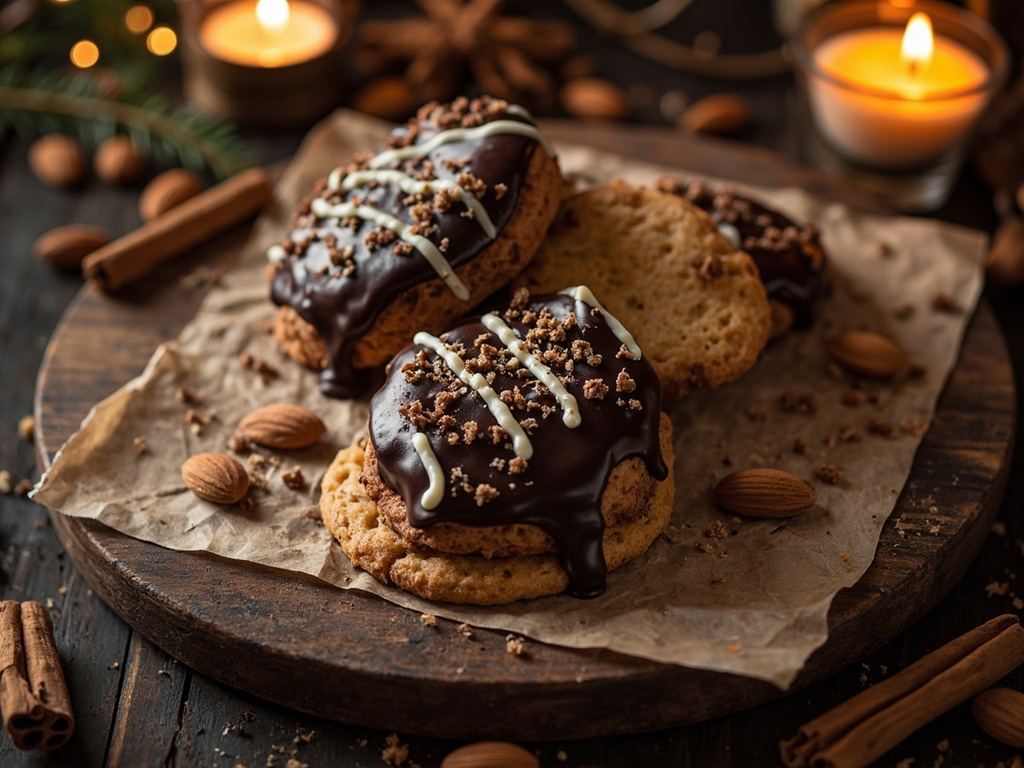
A dense honey-rye gingerbread, loaded with ginger, cinnamon, clove, and anise, which hardens and improves with keeping: broken off on the road or crumbled into sauces.
Being from Leipzig, I grew up among the smell of honey and spices baked into bread throughout Saxony. This cake has a rare virtue: it keeps for weeks without losing anything, so one slips a piece into one's trunk for the long roads from Hanover to Berlin. We would knead hot honey with rye, throw in ginger, clove, and anise, and entrust the dough to the oven; nothing is lost, everything is transformed — even the crumb, which, crushed, comes to bind sauces.
- •Rye flour — to a firm dough (base cereal)
- •Honey — in abundance (sweetener and preservative)
- •Spice blend (ginger, cinnamon, clove, anise, coriander, cardamom) — generous (spiced signature)
- •Potash (Pottasche) — a pinch (period leavening)
- •Candied citrus peel — a little (flavor and tenderness)
Pulsnitzer Pfefferkuchen — Long-Keeping Saxon Gingerbread
A dense honey-rye gingerbread, loaded with ginger, cinnamon, clove, and anise, which hardens and improves with keeping: broken off on the road or crumbled into sauces.
Why this dish? Born in Leipzig, Leibniz is a son of Saxony — the very land of Pfefferkuchen, of which Pulsnitz was a renowned center. This spiced honey cake, which keeps for weeks, was the ideal treat and travel provision for a man constantly on the road.
Being from Leipzig, I grew up among the smell of honey and spices baked into bread throughout Saxony. This cake has a rare virtue: it keeps for weeks without losing anything, so one slips a piece into one's trunk for the long roads from Hanover to Berlin. We would knead hot honey with rye, throw in ginger, clove, and anise, and entrust the dough to the oven; nothing is lost, everything is transformed — even the crumb, which, crushed, comes to bind sauces.
Ingredients (period version)
- Rye flour — to a firm dough (base cereal)
- Honey — in abundance (sweetener and preservative)
- Spice blend (ginger, cinnamon, clove, anise, coriander, cardamom) — generous (spiced signature)
- Potash (Pottasche) — a pinch (period leavening)
- Candied citrus peel — a little (flavor and tenderness)
Ingredients
- Rye flour — 250 g (base cereal)
- Wheat flour — 100 g (structure)
- Honey — 300 g (sweetener and preservative)
- Gingerbread spice mix (ginger, cinnamon, clove, anise, coriander, cardamom) — 2 tbsp (spiced signature)
- Baking soda — 1 tsp (leavening)
- Chopped candied orange peel — 50 g (flavor and tenderness)
- Egg — 1 (binder)
Method
- Warm the honey until it becomes runny, without boiling.
- Mix the flours, spices, and baking soda; add the candied peel.
- Pour in the warm honey and the egg; knead into a firm, homogeneous dough.
- Let the dough rest for a few hours (ideally overnight) to develop the aromas.
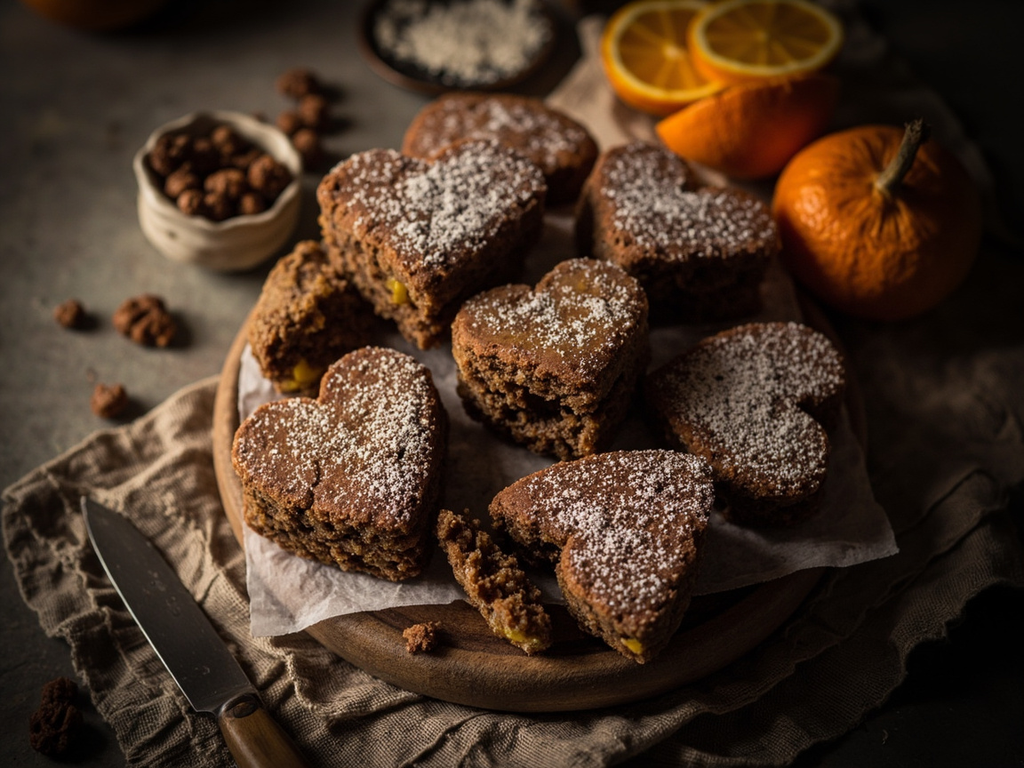
- Roll out to 1.5 cm thick, cut into rectangles or hearts, and place on a baking sheet.
- Bake at medium heat (170 °C) for 12–15 minutes; let cool and harden before storing in an airtight container.
How it was made : Pfefferkuchen (honey gingerbread) is an ancient specialty of central Germany, led by Nuremberg and Saxony; the town of Pulsnitz maintains a renowned tradition. Before modern chemical leavens, potash (Pottasche) from ashes was used. Very sweet and spicy, it kept for a long time, making it a choice provision.
The contemporary twist : Iced with sugar and cut into hearts, it's the Lebkuchenherz of Christmas markets; plain and a little stale, it becomes the secret binder of sweet-and-sour sauces.
Leibniz · Charactorium