 flip
flipQuince jelly
Quince jelly
Why this dish? In every bourgeois household, the pantry kept its autumn jams and jellies, prepared in large quantities to last the winter. Quince jelly, amber and fragrant, evokes the France of studious interiors and libraries where Blum — reader of Stendhal and Goethe — spent his evenings: a keeping sweet, placed near the book and the cup.
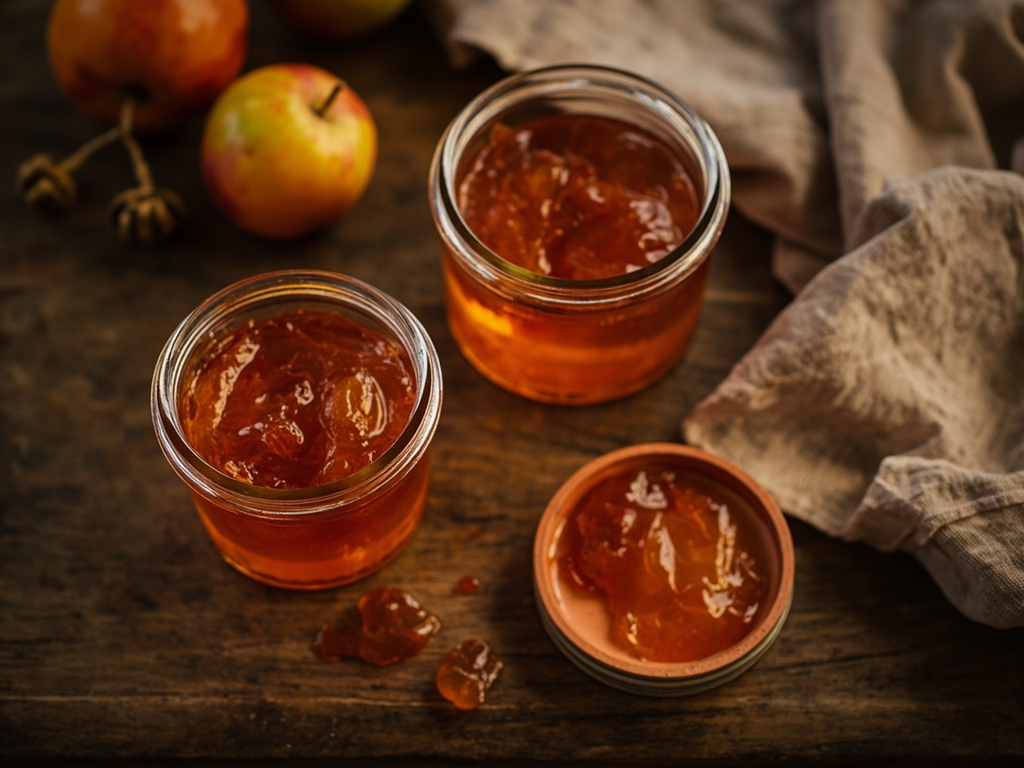
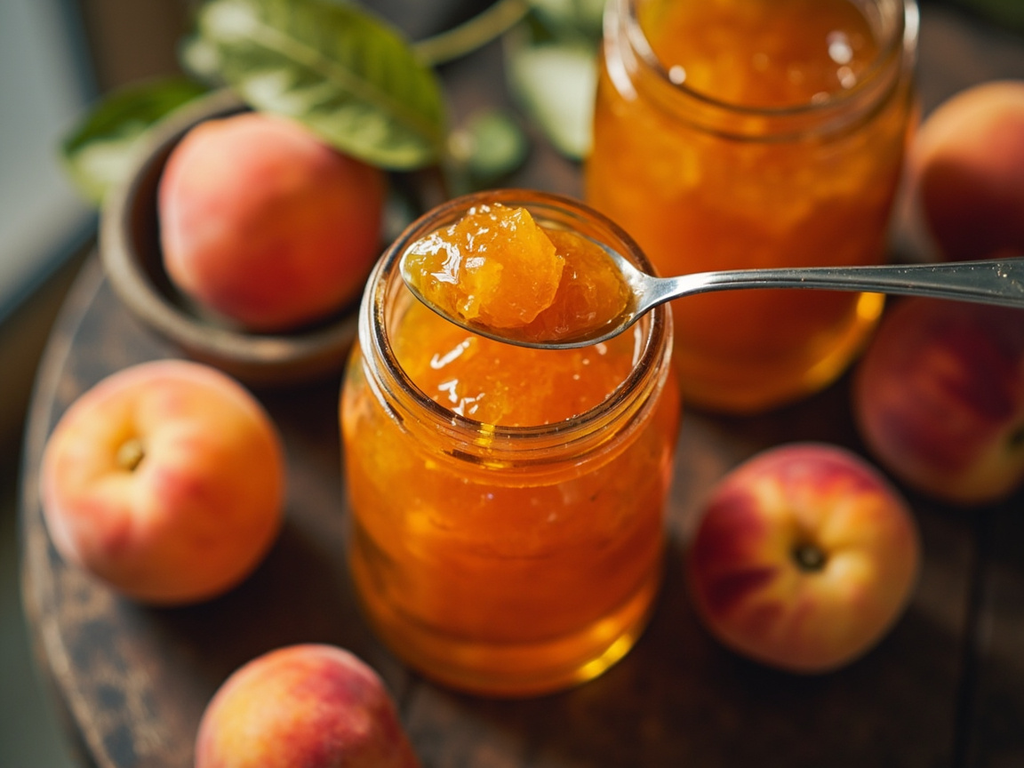
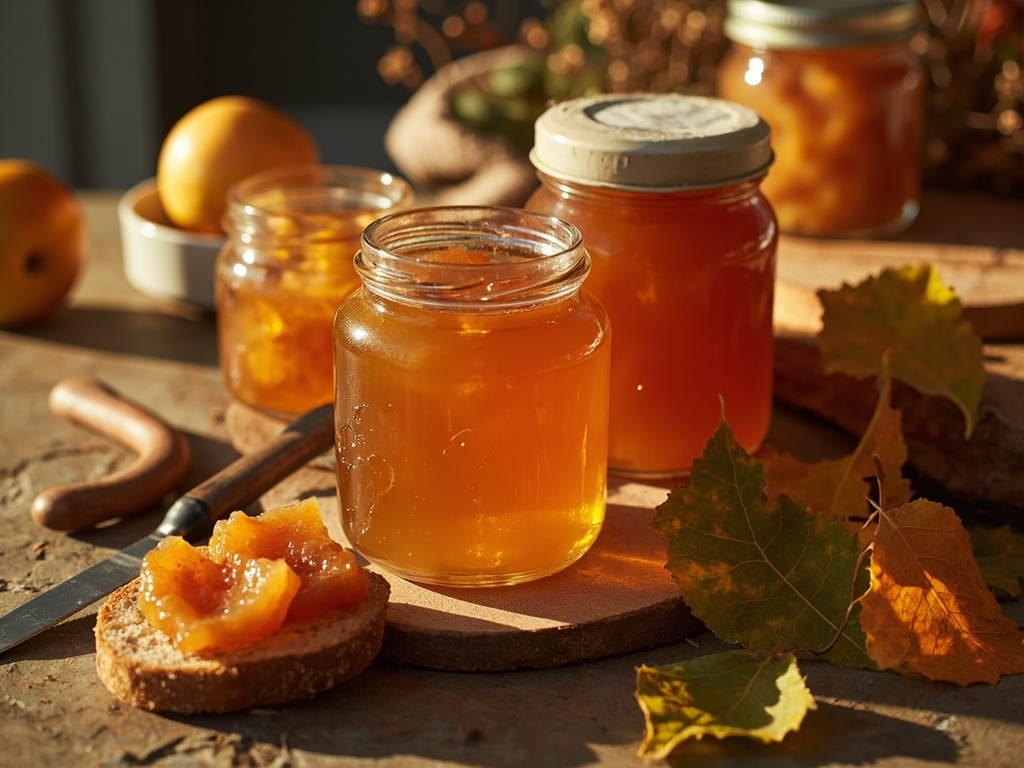
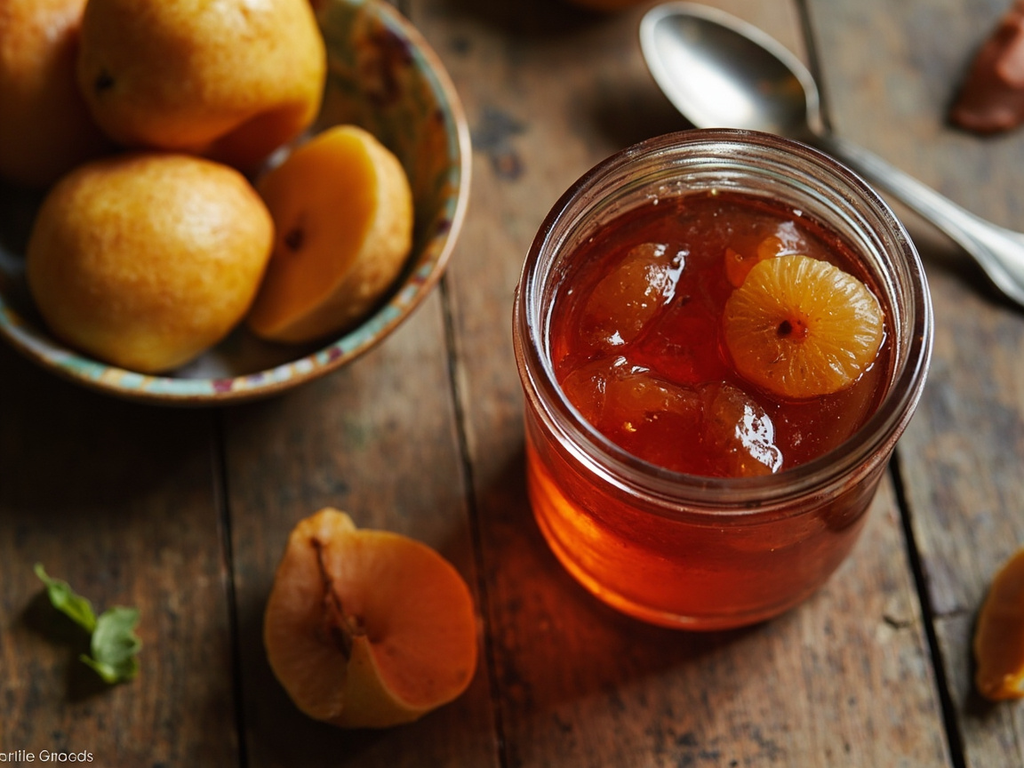
A jelly of amber-red, translucent and trembling, with a powerful quince perfume, between sugar and the fruit's lively acidity. Spread on bread or served at the end of a meal.
The quince is a thankless fruit if you want it raw, but patient if you know how to wait for it: it is, in short, a lesson in government. You poach it slowly, collect its juice and clarify it without pressing — for pressing is troubling, and a cloudy jelly shames the pantry. You will see it take on that beautiful stained-glass color, and the whole apartment will smell of autumn. I liked to keep a pot near my books; a spoonful of this amber sweetness accompanied a page of Stendhal quite well.
- •Ripe quinces — a crate (base and pectin)
- •Sugar — equal weight to juice (preservation and set)
- •Lemon — one (acidity and shine)
- •Water — to cover (extraction)
Quince jelly
A jelly of amber-red, translucent and trembling, with a powerful quince perfume, between sugar and the fruit's lively acidity. Spread on bread or served at the end of a meal.
Why this dish? In every bourgeois household, the pantry kept its autumn jams and jellies, prepared in large quantities to last the winter. Quince jelly, amber and fragrant, evokes the France of studious interiors and libraries where Blum — reader of Stendhal and Goethe — spent his evenings: a keeping sweet, placed near the book and the cup.
The quince is a thankless fruit if you want it raw, but patient if you know how to wait for it: it is, in short, a lesson in government. You poach it slowly, collect its juice and clarify it without pressing — for pressing is troubling, and a cloudy jelly shames the pantry. You will see it take on that beautiful stained-glass color, and the whole apartment will smell of autumn. I liked to keep a pot near my books; a spoonful of this amber sweetness accompanied a page of Stendhal quite well.
Ingredients (period version)
- Ripe quinces — a crate (base and pectin)
- Sugar — equal weight to juice (preservation and set)
- Lemon — one (acidity and shine)
- Water — to cover (extraction)
Ingredients
- Ripe quinces — 1.5 kg (base and pectin)
- Granulated sugar — ≈ 800 g (weight of juice obtained) (preservation and set)
- Lemon juice — 1 lemon (acidity and shine)
- Water — ≈ 1.5 L (to cover) (extraction)
Method
- Wash and rub the quinces, cut into pieces without peeling or coring (pectin is in skin and seeds).
- Cover with water and cook 40 minutes until very tender.
- Pour into a suspended cloth and let the juice drip overnight without pressing, for a clear jelly.
- Weigh the juice, add an equal weight of sugar and the lemon juice.
- Boil vigorously for 20 to 30 minutes until setting point (a drop congeals on a cold plate).
- Pour into scalded jars, cover immediately and turn upside down.
How it was made : Before industrial pectin, cooks relied on the natural pectin of quinces and citrus; the setting test was done by eye and cold plate. The remaining quince pulp was never wasted: it was made into quince paste (cotignac), an old-fashioned confectionery.
The contemporary twist : Flavor the cooking with a vanilla bean or a dash of rose water, and cut the set jelly into small glossy cubes to serve with a sheep's cheese.
Léon Blum · Charactorium