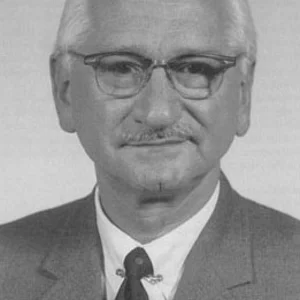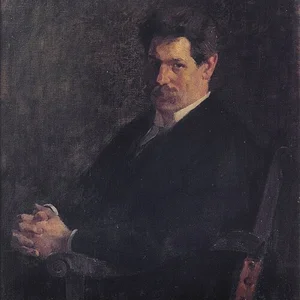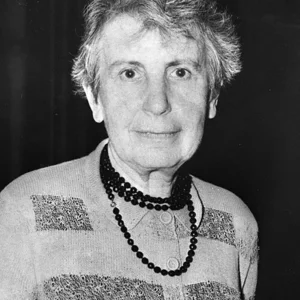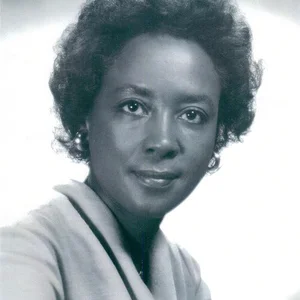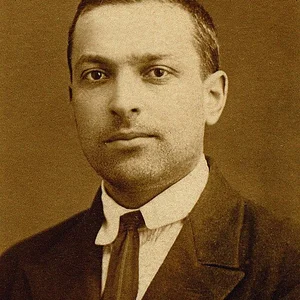

Soviet psychologist of Belarusian origin, founder of the cultural-historical approach to the development of the mind. He showed that higher mental functions are built through social interactions and language. He died prematurely of tuberculosis at the age of 37.
Lev Vygotsky(1896 — 1934)
Lev Vygotsky
Union soviétique, Empire russe
6 min read
Frequently asked questions
Famous Quotes
« What a child can do today in collaboration, they will be able to do alone tomorrow.»
Key Facts
- Born in 1896 in Orsha (Russian Empire, present-day Belarus)
- Publishes 'Thought and Language', his major work, in 1934
- Develops the concept of the zone of proximal development (ZPD)
- Founds the cultural-historical approach to developmental psychology
- Dies of tuberculosis in 1934 in Moscow, at only 37 years old
Works & Achievements
His doctoral thesis, which analyzes how a work of art transforms human emotions. It already foreshadows his social vision of the mind.
A major methodological essay in which Vygotsky argues for a unified, scientific psychology that moves beyond the rival schools of his time.
A central work setting out his “genetic law”: the higher functions of the mind arise first in social relationships before becoming internal.
His most famous book, which explores the links between thought and word and introduces the notion of the zone of proximal development.
A founding concept for modern teaching: good instruction should aim at what a child can do with help, in order to draw them toward independence.
Pioneering work on the education of children with disabilities, based on their abilities rather than their deficiencies.
Anecdotes
Vygotsky received no university training as a psychologist: he studied law and literature in Moscow. It was a lecture he gave in 1924 in Petrograd on the psychology of consciousness that dazzled his peers and opened the doors of the Institute of Psychology in Moscow to him.
His early thesis was on Shakespeare's Hamlet. Throughout his life, Vygotsky was passionate about art and theater, convinced that emotions and imagination were as important as logic in the development of the mind.
To describe the gap between what a child can do alone and what they can achieve with the help of an adult, Vygotsky coined the concept of the “zone of proximal development,” one of the ideas most widely used today by teachers around the world.
Suffering from tuberculosis, Vygotsky knew he had little time left: he worked himself to exhaustion, sometimes dictating his texts from his hospital bed. He died at 37, leaving behind an unfinished but immense body of work.
After his death, his writings were banned in the USSR for some twenty years, deemed contrary to the official line. It was only in the 1960s, once translated into English, that he became world-famous.
Primary Sources
“Language does not serve as the expression of a ready-made thought. In becoming language, thought reorganizes and transforms itself. Thought is not merely expressed in words; it comes into existence through them.”
“Every higher psychological function appears twice in the course of the child's development: first as a collective, social activity, then as an individual activity, as an inner property of the child's thought.”
“Art is the social within us. The work of art transforms our personal and private feelings into shared emotions, common to all people.”
“What a child can do today in collaboration, he will be able to do alone tomorrow. The only good kind of education is that which marches ahead of development and leads it forward.”
Key Places
Vygotsky's birthplace, located in present-day Belarus, then part of the Russian Empire.
The city where Vygotsky grew up and cut his teeth as a teacher after finishing his studies, leading classes in psychology and literature.
Vygotsky studied law here while also pursuing philosophy and history at a parallel free university.
The research center where Vygotsky developed his cultural-historical approach and trained many students, such as Luria and Leontiev.
It was at a conference in this city in 1924 that Vygotsky drew attention with a brilliant lecture that launched his career.
The city where Vygotsky carried out most of his research and where he died of tuberculosis in 1934.
Typical Objects

Vygotsky wrote tirelessly, accumulating articles, lectures, and drafts often dictated for lack of time. A large part of his work was only published after his death.

Vygotsky observed children at play to understand how play and imitation build thought. For him, play was a true laboratory of development.

A tool of the educator, it served Vygotsky during his classes and lectures to illustrate his diagrams of the mind's development. Teaching was at the heart of his research.

A lover of theatre and poetry, Vygotsky drew insights about emotions and human consciousness from literature, and notably from Hamlet.

With his collaborator Sakharov, Vygotsky used colored blocks and cards of various shapes to study how children form concepts. This apparatus became famous under the name "Vygotsky-Sakharov blocks".
School Curriculum
Vocabulary & Tags
Key Vocabulary
Daily Life
Morning
Vygotsky often started early, reading and writing at home before heading to the Institute of Psychology. Despite the fatigue of his illness, he devoted his mornings to drafting his articles and lectures.
Afternoon
His afternoons were filled with classes, seminars, and observations of children in the schools and clinics of Moscow. He enjoyed working as a team with his young collaborators Luria and Leontiev.
Evening
In the evening, Vygotsky continued his reading of literature, philosophy, and psychology, and discussed ideas passionately with his students. He sometimes dictated his texts late into the night, aware that time was running short.
Food
In Soviet Russia in the 1920s and 1930s, food remained simple and was sometimes rationed: black bread, soup (shchi, borscht), buckwheat kasha, potatoes, and tea. Periods of shortage linked to the civil war and collectivization marked these years.
Clothing
Vygotsky wore the plain attire of the Soviet intellectual: jacket, shirt, and tie, with a coat and hat for the harsh Moscow winter. His clothing reflected the modesty of the academics of the time.
Housing
He lived in a modest Moscow apartment, often shared, like many families in the communal housing of the USSR. The conditions were cramped, comfort was limited, and heating was unreliable in winter.
Historical Timeline
Period Vocabulary
Liens externes & ressources
Références
Œuvres
Psychologie de l'art
1925
La signification historique de la crise en psychologie
1927
Histoire du développement des fonctions psychiques supérieures
1931
Pensée et langage
1934
Théorie de la zone proximale de développement
1933
Études sur la défectologie
1924-1934