 flip
flipKalua puaʻa (underground oven pork)
Kalua puaʻa (underground oven pork)
Why this dish? Kalua pork sat at the center of Hawaii's great royal banquets, such as those given for the coronation of King Kalākaua, Liliuokalani's brother, in 1883. The queen presided over these ʻahaʻaina where the imu smoked from morning to night.
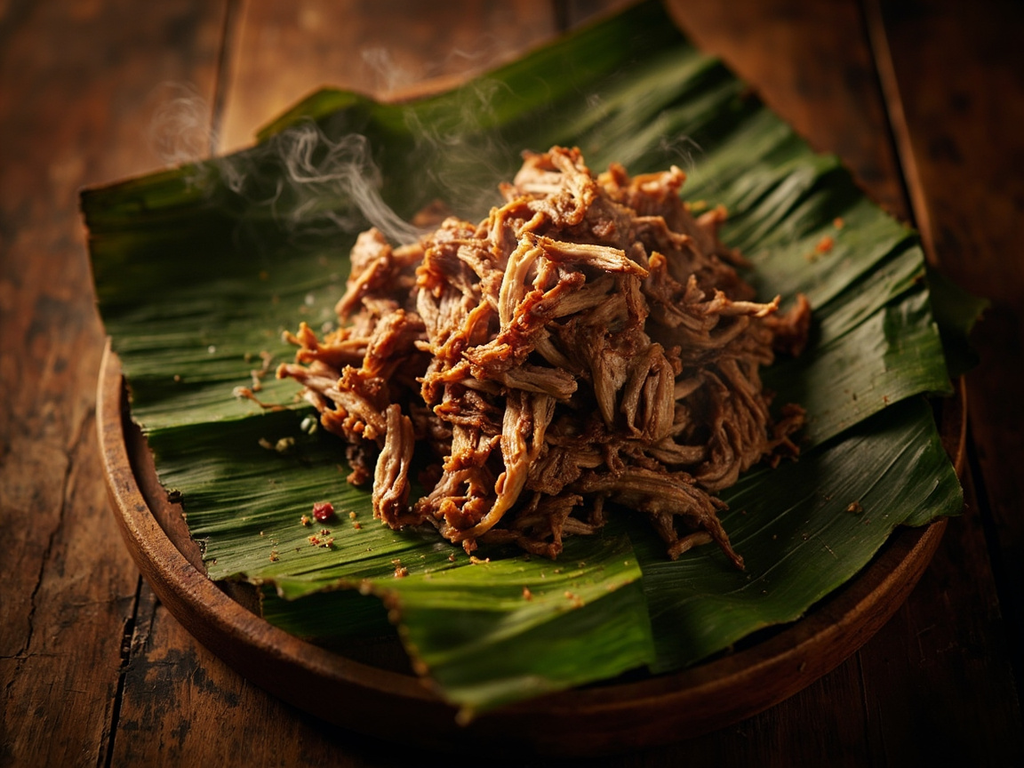
Whole pig (or shoulder) rubbed with sea salt, wrapped in tī leaves, and cooked for hours in the imu, the underground oven heated with volcanic stones. The meat emerges tender, salty, and delicately smoked.
For celebration, nothing equals the puaʻa cooked in the imu, and it is an honor to invite you to it. At dawn, my men heated the stones until red, lined the pit with banana trunks and lāʻī leaves, then laid in the pig rubbed with our paʻakai. The earth was closed, and all day a fine smoke rose to the sky as we sang. When the oven was opened at dusk, the flesh fell apart at the mere pressure of the fingers — that is the spirit of aloha served on a leaf.
- •Pig (puaʻa) — 1 whole animal (celebration meat)
- •ʻAlaea sea salt — generously (seasoning)
- •Tī leaves (lāʻī) and banana leaves — in layers (wrap, flavor, retain moisture)
- •Volcanic stones — the imu floor (cooking heat)
Kalua puaʻa (underground oven pork)
Whole pig (or shoulder) rubbed with sea salt, wrapped in tī leaves, and cooked for hours in the imu, the underground oven heated with volcanic stones. The meat emerges tender, salty, and delicately smoked.
Why this dish? Kalua pork sat at the center of Hawaii's great royal banquets, such as those given for the coronation of King Kalākaua, Liliuokalani's brother, in 1883. The queen presided over these ʻahaʻaina where the imu smoked from morning to night.
For celebration, nothing equals the puaʻa cooked in the imu, and it is an honor to invite you to it. At dawn, my men heated the stones until red, lined the pit with banana trunks and lāʻī leaves, then laid in the pig rubbed with our paʻakai. The earth was closed, and all day a fine smoke rose to the sky as we sang. When the oven was opened at dusk, the flesh fell apart at the mere pressure of the fingers — that is the spirit of aloha served on a leaf.
Ingredients (period version)
- Pig (puaʻa) — 1 whole animal (celebration meat)
- ʻAlaea sea salt — generously (seasoning)
- Tī leaves (lāʻī) and banana leaves — in layers (wrap, flavor, retain moisture)
- Volcanic stones — the imu floor (cooking heat)
Ingredients
- Pork shoulder with skin — 2 kg (celebration meat)
- Sea salt (ideally ʻalaea) — 2 tbsp (seasoning)
- Liquid smoke (hickory) — 1 tbsp (imitate imu smoke)
- Tī or banana leaves (or parchment paper + foil) — enough to wrap (moisture and aroma)
Method
- Score the meat, rub all over with salt and, if not traditional, a little liquid smoke.
- Wrap the pork in tī or banana leaves, then in a double layer of aluminum foil.
- Cook in a very low oven (120 °C) or slow cooker for 6 to 8 hours, until the meat shreds with a fork.
- Shred the meat, toss with its salty juices, and serve immediately on leaves or in a wooden bowl.
How it was made : The imu was built in a pit: volcanic stones were heated red, banana trunks and leaves were laid for steam, the pig wrapped in tī was placed in, then covered with mats and earth. The slow cooking — often a full day — was a community affair.
The contemporary twist : Shredded into small sliders on brioche buns, topped with pineapple coleslaw for a banquet-style 'Hawaiian pulled pork'.
Sources : Rachel Laudan, The Food of Paradise, University of Hawaiʻi Press, 1996 · Liliuokalani, Hawaii's Story by Hawaii's Queen, 1898
Liliuokalani · Charactorium