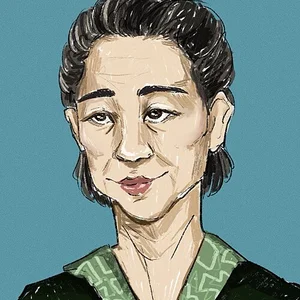

Lin Lanying was a Chinese engineer and scientist specializing in semiconductor materials. A pioneer of microelectronics in China, she is nicknamed the “mother of Chinese semiconductor materials” for developing the country's first single crystals of silicon and gallium arsenide.
Lin Lanying(1918 — 2003)
Lanying Lin
République populaire de Chine
6 min read
Frequently asked questions
Key Facts
- Born on February 7, 1918, in Putian (Fujian), died on March 4, 2003, in Beijing.
- Earned a doctorate at the University of Pennsylvania in the United States, then worked in the American electronics industry (Sylvania).
- Returned to China in 1957 and developed the first Chinese single crystal of silicon (1958).
- Produced China's first single crystal of gallium arsenide, a key material for optoelectronics and the space program.
- Elected to the Chinese Academy of Sciences, she trained several generations of semiconductor specialists.
Works & Achievements
Cutting-edge training that made her an expert in materials and laid the groundwork for her research on semiconductors.
A founding achievement: she gave China the base material of all modern electronics.
Mastery of an advanced semiconductor used in lasers, optoelectronics, and high-speed components.
Development of purification and crystal-growth processes for China's microelectronics industry.
Pioneering experiment producing semiconductor crystals in weightlessness aboard a recoverable satellite.
Leading national research and training many researchers in microelectronics.
Anecdotes
As a child in Putian, in China's Fujian province, Lin Lanying clashed with her family: tradition dictated that a girl should leave school after primary education to get married. She refused with determination, won the right to continue her studies, and consistently finished top of her class.
After earning a doctorate in solid-state physics at the University of Pennsylvania in 1955, she worked at an American electronics company where she was well paid. In 1957, however, she chose to return to China to help her country build its semiconductor industry, almost from scratch.
In 1957-1958, Lin Lanying took part in producing China's first silicon single crystal, then the country's first gallium arsenide crystal. These ultra-pure materials are the foundation of transistors and all of microelectronics: without them, there would be no modern computers or phones.
In 1987, gallium arsenide crystals were grown in weightlessness aboard a recoverable Chinese satellite, an experiment she led. It was one of the very first times this type of semiconductor crystal was grown in space.
Lin Lanying never married and devoted her entire life to research. Today she is nicknamed the “mother of Chinese semiconductor materials” in tribute to her pioneering role.
Primary Sources
Research work defended for the award of her doctorate, focusing on solid-state physics, the field that underpins her future expertise in semiconductor crystals.
Scientific reports documenting the development of the first high-purity single crystals of silicon and gallium arsenide produced in China.
Institutional document recounting her career as an academician and describing her as a pioneer of Chinese semiconductor materials.
Description of the protocol and results of growing gallium arsenide crystals in weightlessness during a recoverable satellite flight.
Key Places
Coastal city in southeastern China where Lin Lanying was born in 1918 and where she fought for her right to attend school.
Institution where she studied physics and received her university education in China before going abroad.
University where she earned her doctorate in solid-state physics in 1955, the foundation of her expertise in semiconductors.
Laboratory where she led research on single crystals of silicon and gallium arsenide and trained generations of researchers.
Chinese capital where she spent most of her scientific career and where she died in 2003.
Typical Objects
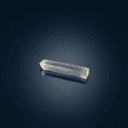
A block of ultra-pure silicon whose atoms are arranged in a single regular lattice. It is the basic material of modern electronic components.
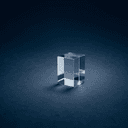
A semiconductor crystal made of gallium and arsenic, faster than silicon for certain applications. Lin Lanying produced the first Chinese specimens.
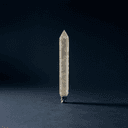
A device that melts a material and then slowly pulls a single rotating crystal from it. It makes it possible to obtain single crystals of silicon or GaAs.
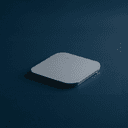
A thin disc cut from a single crystal, polished like a mirror. It is the surface on which electronic circuits are etched.
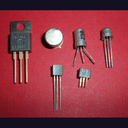
A tiny electronic switch made from semiconductors. Assembled by the millions, it forms the heart of computers.
📷 CC BY-SA 3.0 · Wikimedia Commons ↗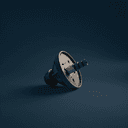
A spacecraft designed to return to Earth with its samples. Lin Lanying grew GaAs crystals aboard it in weightlessness in 1987.
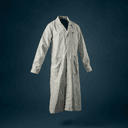
Researchers' work garment, protecting them from chemicals and dust. Since purity is essential, crystal-growth rooms demand great cleanliness.
School Curriculum
Vocabulary & Tags
Key Vocabulary
Daily Life
Morning
Her day begins early in Beijing, with a commute to the Institute of Semiconductors. Mornings are often devoted to reading the previous day's results and preparing crystal-growth experiments.
Afternoon
Afternoons are spent in the laboratory, around the crystal-pulling furnaces and measuring instruments, monitoring the purity of materials and training her young colleagues. Meetings, calculations, and the fine-tuning of processes fill these hours.
Evening
In the evening, she willingly extends her work: writing scientific notes, reading international journals, and preparing the next day's research. Unmarried and deeply committed, she devotes most of her time to science.
Food
Her diet is that of twentieth-century Chinese people: rice, noodles, stir-fried vegetables, soup, and tea, with a little meat or fish depending on the period. Under Mao, food was sometimes rationed and cooking remained simple.
Clothing
Day to day, she wears plain, functional outfits in the style of the communist era (straight jackets, trousers). In the laboratory, a lab coat and a concern for cleanliness are essential to avoid contaminating the crystals.
Housing
She lives in Beijing, most often in housing allocated near her research institute, like many scientists of the Academy of Sciences. Comfort is modest and life is organized around work.
Historical Timeline
Period Vocabulary
Liens externes & ressources
Références
Œuvres
Doctorat de physique du solide (University of Pennsylvania)
1955
Premier monocristal de silicium de Chine
1957-1958
Premier monocristal d'arséniure de gallium (GaAs) de Chine
début des années 1960
Développement de matériaux semi-conducteurs de haute pureté
années 1960-1980
Croissance de cristaux de GaAs en microgravité
1987
Direction scientifique à l'Institut des semi-conducteurs (CAS)
années 1960-2000