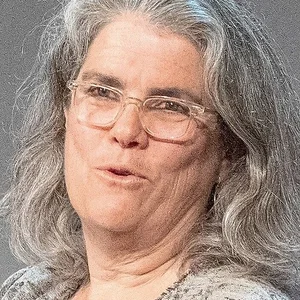

Linda Brown Buck is an American biologist born in 1947. She unraveled how the olfactory system works by discovering the large family of genes that encode odor receptors. Her work earned her the Nobel Prize in Physiology or Medicine in 2004, shared with Richard Axel.
Linda B. Buck(1947 — ?)
Linda B. Buck
États-Unis
6 min read
Frequently asked questions
Key Facts
- Born on January 29, 1947, in Seattle (Washington State)
- Publishes the discovery of the family of olfactory receptor genes in 1991 with Richard Axel
- Receives the Nobel Prize in Physiology or Medicine in 2004, jointly with Richard Axel
- Professor and researcher at the Fred Hutchinson Cancer Research Center in Seattle
Works & Achievements
Identification of around a thousand genes encoding odor receptors: the molecular basis of smell, and the largest gene family in mammals.
Scientific publication that laid the foundations for all modern research on olfaction and has been cited thousands of times.
Work showing that each sensory neuron in the nose expresses only a single type of receptor, and how the brain combines these signals to recognize an odor.
Research on how odor information captured by the nose is organized and transmitted to the brain.
The supreme honor recognizing her discoveries about odor receptors and the organization of the olfactory system.
Landmark address in which she synthesizes decades of research on how the sense of smell works.
Anecdotes
In 1991, Linda Buck and Richard Axel published a stunning discovery: the human nose relies on a vast family of around a thousand genes, dedicated solely to detecting smells. It is the largest gene family known in mammals, and it finally explains how we tell apart thousands of different scents.
Buck was steered toward the sense of smell after reading, around 1985, a scientific paper suggesting that there must exist specialized receptors for odor molecules. Fascinated by this unsolved mystery, she decided to devote her research to cracking the molecular code of the sense most neglected by science.
She and Axel demonstrated an elegant rule of the olfactory system: each neuron in the nose makes only a single type of receptor. The brain then reconstructs a smell the way one reads a word, by combining the signals of several receptors activated at once.
In 2004, she received the Nobel Prize in Physiology or Medicine, shared with Richard Axel. She is among the small number of women laureates in this category, and received her prize in Stockholm from the hands of the King of Sweden.
In 2008, Linda Buck showed great scientific honesty: she requested the retraction of one of her papers (published in Nature in 2001) because some results could not be reproduced by her team. For researchers, publicly acknowledging an error is an essential mark of integrity.
Primary Sources
A novel multigene family may encode odorant receptors: a molecular basis for odor recognition.
The perception of odors begins with the interaction of odorant molecules with receptors located on the sensory neurons of the nasal cavity.
I was born in Seattle, Washington. My father was an engineer who loved to build things; my mother was passionate about word games and puzzles.
Key Places
Linda Buck's hometown, where she would return to work after a long career on the East Coast. The setting of her childhood and the final part of her career.
There, in 1972, she earned her degree in psychology and then in microbiology, long unsure of her path before choosing biology.
The center where Linda Buck earned her doctorate in immunology in 1980, her first major scientific specialization.
In Richard Axel's laboratory, Buck carried out the research that led to the discovery of olfactory receptors in 1991.
The research institute where she led her laboratory from 2002 onward, continuing her study of the sense of smell and how the brain processes it.
The city where she received the Nobel Prize in December 2004 and delivered her Nobel lecture on the sense of smell.
Typical Objects

A precision instrument used to draw up and dispense tiny volumes of liquid, essential in molecular biology. Buck used it to handle DNA, enzymes, and cell samples.

A device that cyclically heats and cools samples to copy DNA fragments in large numbers. This technique allowed Buck to isolate the genes of olfactory receptors.

A machine that can read the order of the chemical "letters" (A, T, G, C) of a DNA strand. It was used to identify and compare the large family of smell genes.
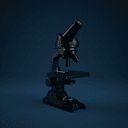
A tool for observing cells and tissues invisible to the naked eye. Buck used it to identify which neurons in the nose express the different receptors.

A small transparent dish in which cells and microorganisms are grown. A basic element of any cell biology laboratory.

A register in which the researcher records every experiment, hypothesis, and result, dated and detailed. It ensures traceability and the ability to reproduce experiments.
School Curriculum
Vocabulary & Tags
Key Vocabulary
Tags
Daily Life
Morning
The morning of a biologist like Linda Buck often begins with reading the latest scientific publications and meeting with her laboratory team. The day's experiments are planned and the previous day's results are discussed.
Afternoon
The afternoon is devoted to bench work: handling DNA samples, cell cultures, microscope observation and data analysis. A researcher also supervises her doctoral students and reviews papers.
Evening
In the evening, the work often continues with writing papers, funding applications (*grants*) and preparing for conferences. The life of a top-level researcher extends well beyond office hours.
Food
Like any American city dweller of the late 20th century, her diet is varied and modern: meals often eaten quickly between two experiments, with coffee ever-present in the laboratories to keep up the pace.
Clothing
In the laboratory, attire is above all practical and safe: a white coat, latex gloves and protective goggles for handling chemicals and biological samples.
Housing
She lives in comfortable urban housing in major American cities (New York, Boston, then Seattle), close to the universities and research institutes where she works.
Historical Timeline
Period Vocabulary
Liens externes & ressources
Références
Œuvres
Découverte de la famille des gènes des récepteurs olfactifs (avec Richard Axel)
1991
Article fondateur dans la revue Cell
1991
Démonstration de la règle « un neurone, un récepteur »
Années 1990-2000
Cartographie des signaux olfactifs vers le bulbe olfactif
Années 1990-2000
Prix Nobel de physiologie ou médecine
2004
Conférence Nobel « Unraveling the Sense of Smell »
2004