 flip
flipRoast partridge on the spit, truffle sauce
Roast partridge on the spit, truffle sauce
Why this dish? Louis XIV ate 'with legendary appetite' several meats and game at each Grand Couvert. Feathered game, roasted on the spit, reigned at the second service; the Périgord truffle, then highly prized at court, enhanced the sauce.
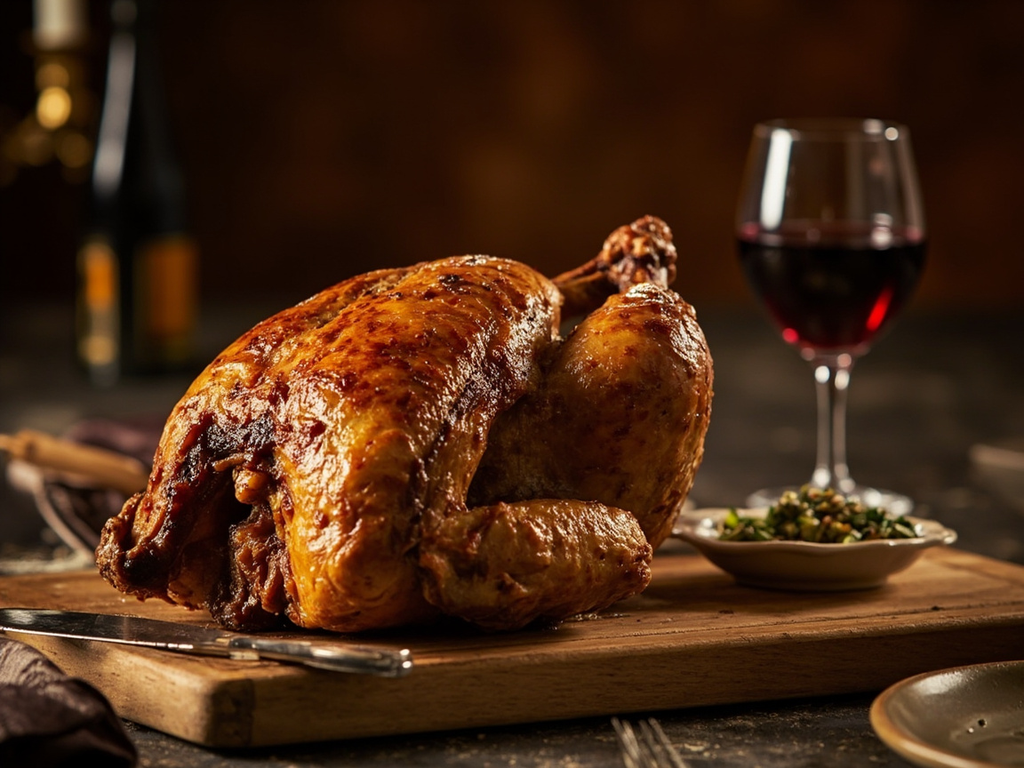
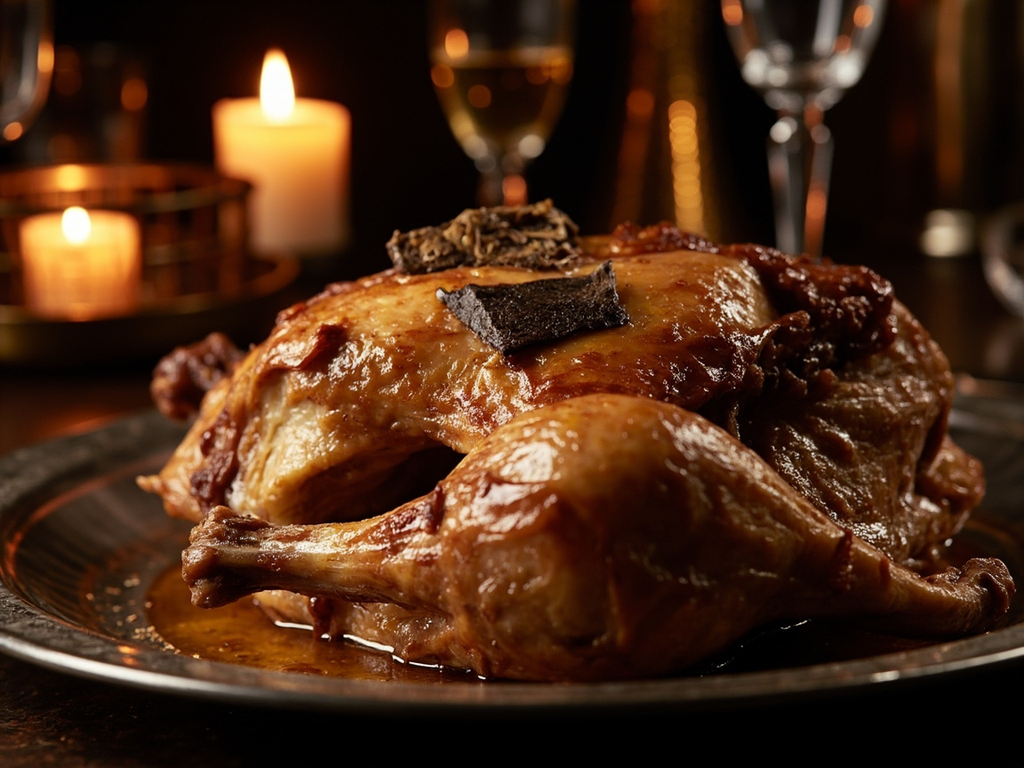
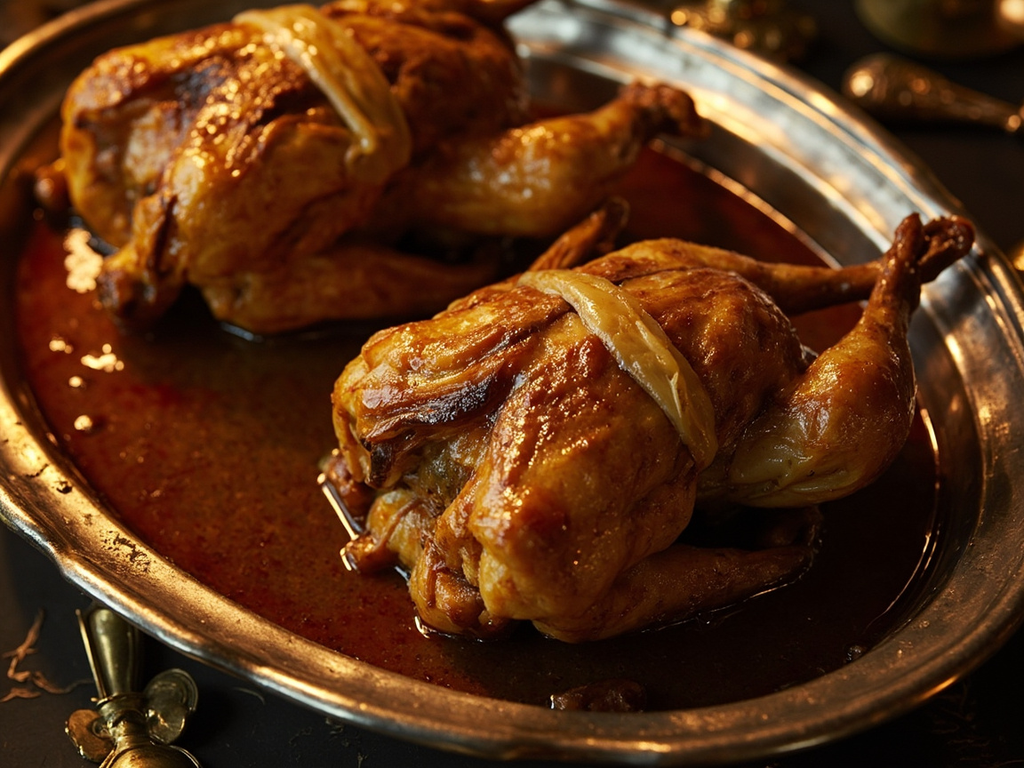
Young partridges golden-roasted on the spit, finely larded, then coated with a short jus perfumed with black truffle. A savory, deeply fragrant flesh, a prestige piece of the royal service.
Here is a dish worthy of Our table. Our partridges are turned on the spit before a large fire until the skin takes on that beautiful golden color. They are barded with thin lard so that the flesh remains tender, and a short jus infused with black truffle from Our Périgord is poured over them. Eat them standing, as Our courtiers do, if necessary: such a dish must be earned. For Us, We could never tire of it.
- •Plucked and gutted partridges — two young ones (main ingredient)
- •Fatty bacon — thin barding strips (protects and nourishes the flesh)
- •Black truffle — one, sliced (flavor, signature)
- •Fresh butter — a piece (binds the jus)
- •Meat broth — a ladleful (jus)
- •Salt, pepper, clove — to discretion (seasoning)
Roast partridge on the spit, truffle sauce
Young partridges golden-roasted on the spit, finely larded, then coated with a short jus perfumed with black truffle. A savory, deeply fragrant flesh, a prestige piece of the royal service.
Why this dish? Louis XIV ate 'with legendary appetite' several meats and game at each Grand Couvert. Feathered game, roasted on the spit, reigned at the second service; the Périgord truffle, then highly prized at court, enhanced the sauce.
Here is a dish worthy of Our table. Our partridges are turned on the spit before a large fire until the skin takes on that beautiful golden color. They are barded with thin lard so that the flesh remains tender, and a short jus infused with black truffle from Our Périgord is poured over them. Eat them standing, as Our courtiers do, if necessary: such a dish must be earned. For Us, We could never tire of it.
Ingredients (period version)
- Plucked and gutted partridges — two young ones (main ingredient)
- Fatty bacon — thin barding strips (protects and nourishes the flesh)
- Black truffle — one, sliced (flavor, signature)
- Fresh butter — a piece (binds the jus)
- Meat broth — a ladleful (jus)
- Salt, pepper, clove — to discretion (seasoning)
Ingredients
- Partridges (or guinea fowl) ready to roast — 2 (main ingredient)
- Thin bacon slices / barding — 4 (protects the flesh)
- Black truffle (or truffle juice) — 20 g (or 1 tbsp juice) (flavor, signature)
- Unsalted butter — 40 g (binds the jus)
- Chicken broth — 150 ml (jus)
- Salt, pepper — to taste (seasoning)
Method
- Bard the partridges with bacon, truss them, and lightly salt.
- Roast them in the oven at 200°C (or on a spit) for 25-30 minutes, basting often, until golden and just cooked.
- Deglaze the pan with broth, add the truffle slices, and let infuse at a simmer for 5 minutes.
- Mount the jus with cold butter off the heat, adjust seasoning, and spoon over the carved partridges.
How it was made : Game was roasted on a spit turned by hand in front of the hearth, constantly basted with its own fat. Court sauces became shorter and more concentrated than in the Middle Ages; the black truffle, harvested in winter, was one of the most sought-after products on Louis XIV's table.
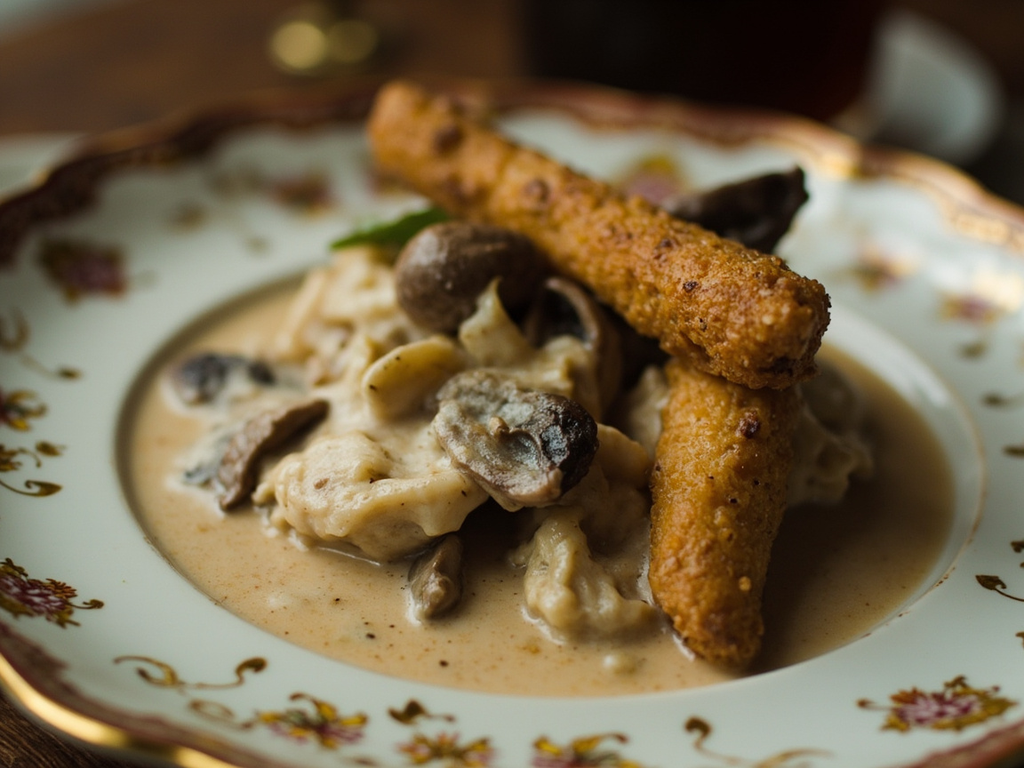
The contemporary twist : Present the boned partridge on a shard of savory French toast, truffle jus in a pipette, 'Versailles revisited' style.
Sources : François Massialot, Le Cuisinier roïal et bourgeois, 1691 · Vincent La Chapelle, Le Cuisinier moderne, 1735 (continuity of court cuisine)
Louis XIV · Charactorium