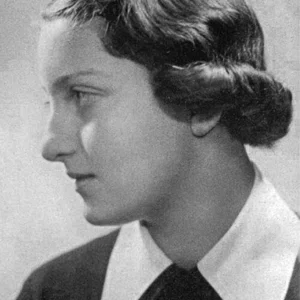

Louise Baldy is a Frenchwoman recognized as Righteous Among the Nations for having hidden and protected a Jewish family in Pézenas during the Second World War, at the risk of her own life.
Louise Baldy(1886 — 1949)
Louise Baldy
France
6 min read
Frequently asked questions
Key Facts
- During the Occupation (1940-1944), she hid a Jewish family in Pézenas (Hérault) to shield them from antisemitic persecution.
- Her rescue effort earned her recognition as Righteous Among the Nations by the Yad Vashem memorial.
- She acted at the risk of her life under the Vichy regime, which collaborated in the deportation of Jews.
- Her act was part of the anonymous network of French civilians who protected Jews during the Holocaust.
Works & Achievements
The central act of her life: sheltering and hiding a Jewish family during the Occupation, at the risk of her own freedom and her life.
An honor awarded by Yad Vashem on the basis of testimony from the survivors she protected, inscribing her name in the memory of the Holocaust.
Beyond simply hiding them, she provided food, silence, and safety over many long months, in a context of rationing and surveillance.
Her act illustrates the role of anonymous civilians — women, peasants, neighbors — who refused state antisemitism and saved lives without seeking any reward.
Anecdotes
The title of “Righteous Among the Nations” that Louise Baldy received is the highest civilian distinction awarded by the State of Israel. Each person honored receives a medal engraved with a phrase from the Talmud: “Whoever saves one life saves the entire world.”
Hiding a Jewish family under the Occupation was an act of extreme courage: the slightest neighbor, shopkeeper, or policeman could denounce them. Rescuers like Louise Baldy shared their rationed food and their home with people who had to be kept invisible, sometimes for months or years.
Pézenas, a small town in the Hérault, lay in the “free zone” until November 1942. Many Jewish families had taken refuge there thinking they would be safe, before the German army invaded the south of France as well.
The Righteous were almost never famous heroes: they were ordinary people — peasant women, schoolteachers, priests, factory workers — who said “no” to barbarism. Most of them, like Louise Baldy, only spoke of their deed at the end of their lives, if ever.
For a person to be recognized as Righteous, it is the survivors themselves — the rescued family — who must testify before Yad Vashem, in Jerusalem. Louise Baldy's recognition therefore rests on the word of those she protected.
Primary Sources
The title of Righteous Among the Nations is awarded to non-Jews who risked their lives to save Jews during the Holocaust, without any financial reward.
“Any person descended from three grandparents of the Jewish race […] is regarded as a Jew.” The text barred Jews from many professions and public offices.
“Whoever saves one life saves the entire world.” (a quotation from the Talmud inscribed on the medal awarded to the Righteous)
Key Places
Small town in the Hérault where Louise Baldy hid and protected a Jewish family during the Occupation. Located in the free zone until November 1942, then occupied by the German army.
Department in southern France, a refuge for many Jewish families fleeing the occupied zone before 1942. The network of rescuers was particularly active there.
Holocaust memorial in Israel that awards the title of Righteous Among the Nations and inscribes the names of honored rescuers, including Louise Baldy, on its wall of honor.
Liens externes & ressources
Références
Œuvres
Sauvetage d'une famille juive à Pézenas
1940-1944
Reconnaissance comme Juste parmi les Nations
XXe siècle
Préservation clandestine d'une famille au quotidien
1940-1944
Témoignage par l'exemple des « gens ordinaires »
1940-1944