 flip
flipSchool Panade (Bread Soup)
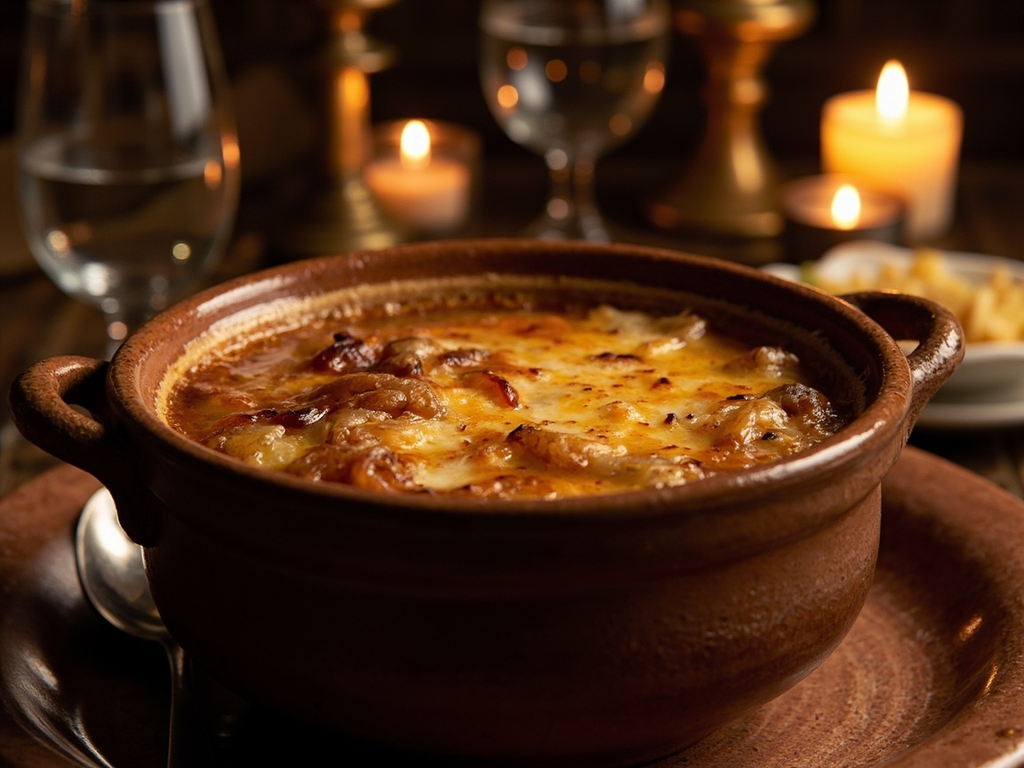
School Panade (Bread Soup)
Why this dish? Before she became the heroine of the barricades, Louise Michel was a schoolteacher in Montmartre, where she fed with her own money the poor children who came with empty stomachs. The panade—stale bread melted into broth—was the soup that filled those schoolchildren's bellies at little cost.
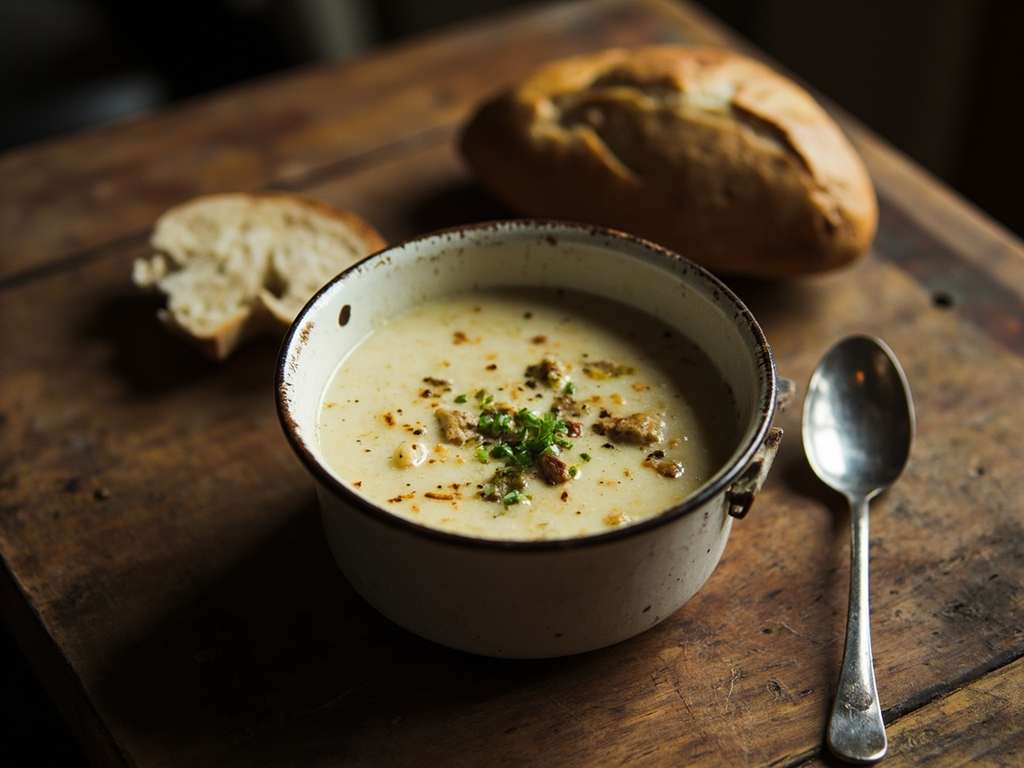
A porridge of stale bread cooked long in water or a thin broth, bound with a little fat. Comforting and economical, it transforms a forgotten crust into a complete meal.
Come closer, child, and hold out your bowl. When I taught school on the Butte, more than one child arrived in the morning with nothing in his belly, and you cannot learn your letters on an empty stomach. So I would melt yesterday's bread in hot water, with a pinch of salt and whatever fat we had, and each ate his fill before the slate and chalk. Believe me, a shared soup is worth more than a fine speech: that is where you learn what equality means.
- •Stale bread — several crusts (base and binder)
- •Water or bone broth — as much as needed (cooking liquid)
- •Lard or butter — a knob (fat)
- •Salt — a pinch (seasoning)
School Panade (Bread Soup)
A porridge of stale bread cooked long in water or a thin broth, bound with a little fat. Comforting and economical, it transforms a forgotten crust into a complete meal.
Why this dish? Before she became the heroine of the barricades, Louise Michel was a schoolteacher in Montmartre, where she fed with her own money the poor children who came with empty stomachs. The panade—stale bread melted into broth—was the soup that filled those schoolchildren's bellies at little cost.
Come closer, child, and hold out your bowl. When I taught school on the Butte, more than one child arrived in the morning with nothing in his belly, and you cannot learn your letters on an empty stomach. So I would melt yesterday's bread in hot water, with a pinch of salt and whatever fat we had, and each ate his fill before the slate and chalk. Believe me, a shared soup is worth more than a fine speech: that is where you learn what equality means.
Ingredients (period version)
- Stale bread — several crusts (base and binder)
- Water or bone broth — as much as needed (cooking liquid)
- Lard or butter — a knob (fat)
- Salt — a pinch (seasoning)
Ingredients
- Stale country bread — 200 g (base and binder)
- Chicken or vegetable broth — 1 liter (cooking liquid)
- Butter — 30 g (fat)
- Egg (optional) — 1 yolk (final binder)
- Salt, pepper — to taste (seasoning)
Method
- Break the stale bread into pieces in a pot.
- Pour hot broth over the bread and let it soak for 10 minutes.
- Cook over low heat for 20 to 30 minutes, stirring, until you get a smooth porridge.
- Off the heat, stir in the butter, adjust salt; for good days, bind with an egg yolk.
- Serve very hot in a deep bowl.
How it was made : Panade was the soup of the destitute, hospices, and wet nurses: it recycled stale bread, the most precious commodity in a worker's home. It was made as simply as possible, without meat, sometimes enhanced with an onion or a cabbage leaf when the season allowed.
The contemporary twist : A spoonful of hazelnut oil and a few croutons golden in butter at serving time: the schoolchildren's soup comes to the table without embarrassment.
Sources : Louise Michel, Mémoires (1886)
Louise Michel · Charactorium