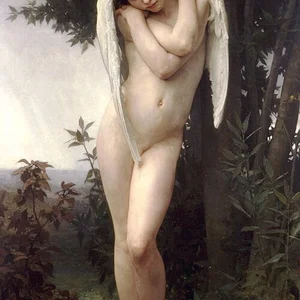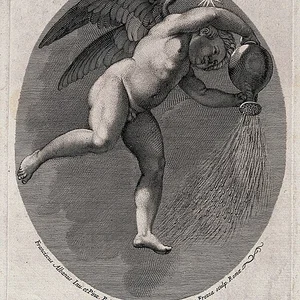

Latin name meaning 'Light-bearer', originally referring to the morning star (Venus). In Christian tradition, it designates the fallen angel cast from Heaven by God for his pride, becoming the figure of absolute Evil.
Lucifer
Lucifer
8 min read
Frequently asked questions
Famous Quotes
« How you have fallen from heaven, morning star, son of the dawn! (Isaiah 14:12)»
« Better to reign in Hell than serve in Heaven. (John Milton, Paradise Lost, 1667)»
Key Facts
- Latin etymology: Lucifer = lux (light) + ferre (to bear), the Roman name for the planet Venus
- Isaiah 14:12 (8th century BC): first occurrence associated with a fallen figure
- Gospel of Luke 10:18: Jesus declares 'I saw Satan fall like lightning from heaven'
- John Milton, Paradise Lost (1667): Lucifer/Satan established as a major literary figure in Western culture
- Dante, The Divine Comedy (1320): Lucifer placed at the center of Hell, the ultimate embodiment of the sin of pride
Works & Achievements
Foundational text containing the verse 'Quomodo cecidisti de caelo, Lucifer' which, misinterpreted or reinterpreted, gave its name to the figure of the fallen angel in Christian tradition.
First systematic theological treatise on the fall of Lucifer, laying the foundations of Christian demonology and the allegorical interpretation of biblical texts about angels.
Major work of Latin patristics in which Augustine develops the theology of pride as Lucifer's original sin, contrasting the City of God with the city of the Devil.
Masterpiece of world literature that synthesizes the entire medieval vision of Lucifer: a three-headed monster imprisoned at the center of the Earth, the embodiment of absolute Evil and radical opposition to God.
English epic that revolutionizes the representation of Lucifer by making him a tragic, eloquent, and almost heroic character, whose rebellion against God is narrated with exceptional poetic power.
Poem from *Les Fleurs du Mal* that addresses Lucifer as a figure of romantic revolt and compassion for the damned, illustrating the modern reappropriation of this myth by literature.
Anecdotes
The name "Lucifer" was originally a perfectly neutral Latin term meaning "light-bringer." It simply referred to the morning star, that is, the planet Venus when it appears before sunrise. Roman poets like Virgil and Horace used it without any negative connotation to greet the dawn.
The Latin translation of the Bible known as the Vulgate, produced by Saint Jerome around 382 AD, is the source of the confusion. When translating the verse Isaiah 14:12 — "How you have fallen from heaven, bright star, son of the dawn!" — he used the word "Lucifer." This verse, originally a satire against the king of Babylon, was gradually interpreted as describing the fall of a proud angel.
In medieval Christian theology, Lucifer is described as the most beautiful and powerful of all angels, a seraph of incomparable splendor. His sin, according to Church Fathers like Origen and Augustine, was not violence but pride: he refused to submit to God and proclaimed "Non serviam" ("I will not serve"), a phrase that became the symbol of absolute rebellion.
Dante Alighieri, in his *Divine Comedy* (c. 1307-1320), places Lucifer at the geometric center of the Earth, imprisoned waist-deep in ice at the bottom of Hell. Far from being majestic, he is depicted as a monstrous three-headed giant, eternally chewing three traitors: Judas, Brutus, and Cassius. This powerful image has deeply marked Western culture.
John Milton, in his epic *Paradise Lost* (1667), restores a tragic grandeur to Lucifer. He makes him a fallen hero, proud and eloquent, whose famous line "Better to reign in Hell than serve in Heaven" has echoed through the centuries. This romanticized Lucifer would influence all Western literature and art up to the present day, inspiring notably the Romantic poets of the 19th century like Byron and Blake.
Primary Sources
“Quomodo cecidisti de caelo, Lucifer, fili aurorae ?” (“How you have fallen from heaven, Lucifer, son of the dawn! How you are cut down to the ground, you who laid the nations low!”)
“I saw Satan fall like lightning from heaven.” Words attributed to Jesus upon the return of the seventy disciples, associating Satan's fall with a striking celestial image.
Origen develops the first systematic theology of Lucifer's fall, explaining that the angel turned away from God through free will and pride, thus inaugurating a tradition of allegorical and spiritual interpretation.
“Pride is the beginning of all sin.” Augustine integrates the figure of Lucifer into a theology of history opposing the City of God to the earthly city, founded by the Devil from his fall.
“And there was war in heaven. Michael and his angels fought against the dragon. The dragon and his angels fought, but they were not strong enough, and no place was found for them in heaven any longer.”
Key Places
According to Christian tradition, Lucifer was the highest-ranking angel before his fall. Heaven represents the origin of his splendor and the place of the rebellion that led to his eternal banishment.
The verse in Isaiah 14:12 mentioning the 'shining star' was originally a satire of the king of Babylon. This ancient city is therefore the real historical context of the foundational text of the figure of Lucifer.
It was in Rome and the Western Church that Jerome's Vulgate became established, spreading the name 'Lucifer' throughout Latin Christianity and gradually building the theology of the fallen angel.
Dante Alighieri, born in Florence, set his imaginary journey through Hell, Purgatory, and Paradise in a precise cosmological framework. Hell, with Lucifer at its center, is described as a vast funnel beneath the Earth.
Typical Objects

Before any religious interpretation, Lucifer referred to the planet Venus at dawn. This bright star, visible in the east before sunrise, is the original image of the name, which literally means "light-bearer."

Symbol of the light-bearer in ancient and medieval iconography, the torch represents both the original splendor of the angel and, in its inverted version, the corrupted or extinguished light after the fall.

In medieval and Baroque art, Lucifer is often depicted with bat wings or broken angel wings, a sign of his downfall and the corruption of his original seraphic nature.

Dante depicts Lucifer chained and imprisoned in ice at the center of Hell. These shackles symbolize his ultimate defeat and eternal immobility, in contrast to the freedom and light he once embodied.

In the Judeo-Christian tradition, Lucifer is equated with the serpent of Genesis that tempted Eve in the Garden of Eden. This reptile has become one of his most recognizable iconographic attributes.

Lucifer's pride is often represented by a royal crown or a celestial throne to which he aspired. Its overturning symbolizes the loss of angelic rank and divine punishment.
School Curriculum
Vocabulary & Tags
Key Vocabulary
Tags
Daily Life
Morning
In medieval tradition, Lucifer's 'day' is a cosmic and eternal day, not a temporal one. Before his fall, he officiated in the divine light, bearing and announcing the celestial brightness among the hierarchy of angels, first to reflect the glory of God.
Afternoon
After his revolt, Lucifer rules over Hell according to medieval Christian cosmology, receiving damned souls, presiding over torments, and relentlessly tempting the living through his subordinate demons.
Evening
The passage from light to darkness symbolizes his very fate: just as the morning star disappears with the rising of the sun, Lucifer was cast from divine brightness into the eternal night of Hell, remaining imprisoned there until the Last Judgment.
Food
As a spiritual and non-corporeal being in Christian theology, Lucifer does not eat in a physical sense. According to some Church Fathers, he metaphorically 'feeds' on human sins, human vanity, and rebellion against the divine order.
Clothing
In medieval iconography, Lucifer is depicted either in remnants of his angelic glory—light and gold—or in a bestial and terrifying form with demonic attributes: a body covered in scales, horns, and a tail. His appearance reflects the corruption of original beauty.
Housing
Hell, as described by Dante, is his inverted palace: a huge funnel dug beneath the Earth, hierarchically arranged into nine concentric circles of increasing suffering. Lucifer is imprisoned at the deepest point, at the geometrical center of the Earth, in eternal ice.
Historical Timeline
Period Vocabulary
Visual Style
Style baroque et romantique sombre, inspiré des gravures de Gustave Doré et des visions de William Blake, opposant la lumière céleste froide à la noirceur ardente de l'Enfer.
Sound Ambience
Une ambiance sonore qui évoque la splendeur céleste originelle de Lucifer — chœurs angéliques et lumière — basculant vers la noirceur, le feu et le vide infernal de sa chute.
Liens externes & ressources
Références
Œuvres
La Bible — Livre d'Isaïe, chapitre 14
VIIIe siècle av. J.-C.
De Principiis — Origène
Vers 230 ap. J.-C.
La Cité de Dieu (De Civitate Dei) — Augustin d'Hippone
413-426 ap. J.-C.
La Divine Comédie (Divina Commedia) — Dante Alighieri
Vers 1307-1320
Paradise Lost — John Milton
1667
Les Litanies de Satan — Charles Baudelaire
1857