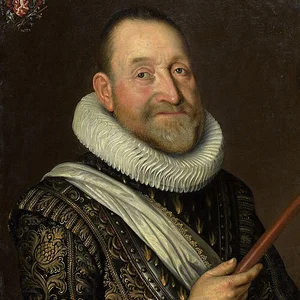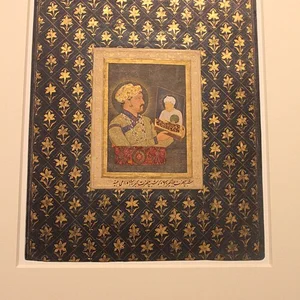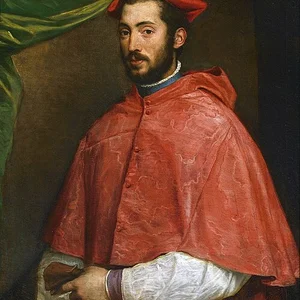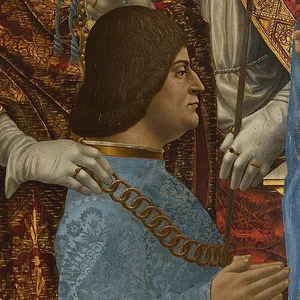

Duke of Milan from 1494 to 1499, nicknamed "il Moro" (the Moor), he was one of the most powerful princes in Renaissance Italy. A celebrated patron of the arts, he brought Leonardo da Vinci to his court and played a key role in the Italian Wars before being overthrown by Louis XII.
Ludovic Sforza(1452 — 1508)
Ludovic Sforza
9 min read
Frequently asked questions
Key Facts
- 1480: becomes regent of Milan on behalf of his nephew Gian Galeazzo Sforza
- 1482–1499: welcomes Leonardo da Vinci to his Milanese court
- 1494: invites Charles VIII to invade Italy, triggering the Italian Wars
- 1494: officially takes the title of Duke of Milan
- 1499: overthrown by Louis XII, captured and imprisoned in France until his death in 1508
Works & Achievements
Ludovico Sforza commissioned Leonardo da Vinci to paint the mural depicting the Last Supper for the refectory of Santa Maria delle Grazie in Milan. This work, considered one of the absolute masterpieces of Western painting, is the most celebrated example of his exceptional patronage.
Ludovico had the Dominican church rebuilt and enlarged according to a plan attributed to Donato Bramante, intending it to serve as the Sforza family mausoleum. This project illustrates his architectural ambition and his support for the greatest artists of his time.
At Ludovico Sforza's initiative, the Piazza Ducale in Vigevano was laid out according to a unified plan featuring arcaded porticoes, making it one of the earliest examples of a planned urban square in the Italian Renaissance.
For seventeen years, Ludovico housed and funded Leonardo da Vinci, enabling him to carry out studies, design machines, and produce paintings and sculptures. This relationship yielded, among other things, *Lady with an Ermine*, *The Last Supper*, and countless notebooks of inventions.
To celebrate the marriage of Gian Galeazzo Sforza to Isabella of Aragon, Ludovico commissioned Leonardo da Vinci to stage a spectacular performance combining moving sets, mechanical devices, music, and poetry — a sophistication without precedent in the history of court theatre.
Ludovico Sforza supported and modernised the University of Pavia, one of the oldest in Italy, by attracting renowned scholars and funding its buildings, thereby contributing to the humanist intellectual prestige of his duchy.
Anecdotes
Around 1482, Leonardo da Vinci sent Ludovico Sforza a job application letter in which he presented himself primarily as a military engineer, expert in building bridges, war machines, and canals. He only mentioned his talents as a painter and sculptor in the very last line, aware that the duke was looking more for a man of science than an artist.
When *The Last Supper* was commissioned for the refectory of Santa Maria delle Grazie (c. 1495–1498), the prior of the convent complained to Ludovico about Leonardo's long interruptions, during which he would spend hours contemplating his work without painting. The duke passed the complaint on to the artist, as reported by Matteo Bandello; Leonardo replied that geniuses could not be rushed like bricklayers, and Ludovico accepted the argument.
Ludovico Sforza bore the nickname “il Moro” (the Moor), long attributed to his dark complexion and dark hair. But it was also a refined play on words: his Latin given name *Maurus* and the mulberry tree (*moro* in Italian), which he had chosen as his personal emblem and whose leaves fed silkworms — the emblematic wealth of the Duchy of Milan.
In 1494, convinced he could turn French ambitions to his own advantage, Ludovico Sforza encouraged Charles VIII to claim the Kingdom of Naples and cross the Alps. He hoped thereby to weaken his Neapolitan rivals and consolidate his own power. This invitation proved catastrophic: it triggered the Italian Wars, and a few years later it was another King of France, Louis XII, who seized Milan itself.
In April 1500, after briefly reconquering Milan at the head of Swiss and German mercenaries, Ludovico was betrayed at Novara by his own landsknechts, who refused to fight their compatriots serving in the French ranks. Handed over to Louis XII, he was imprisoned at the Château de Loches in Touraine and spent the last eight years of his life in that dungeon, dying in 1508 without ever seeing Italy again.
Primary Sources
“I can build very light and strong bridges, very easy to carry… I can also make covered wagons, safe and unassailable… In times of peace, I believe I can fully satisfy anyone as regards architecture and the conducting of water from one place to another.”
“The said Louis of Sforza, who was called the Moor, was a very wise man of great understanding, but he made himself more feared than loved, and had driven from his state his nephew, who was the rightful Duke of Milan.”
“Ludovico Sforza, uomo di grande ingegno e di molta prudenza, ma di poca fede e di nessuna religione, che aveva usurpato il ducato di Milano al nipote… fu la principal cagione che i Franzesi passassero in Italia.”
“Ludovico Maria Sforza, chiamato il Moro, per le sue grandi virtù e per lo splendore della sua corte, rese Milano la più illustre città d’Italia, adornandola di magnifici edifizi e chiamando a sé i più grandi ingegni del tempo.”
“Noi qui in Milano con ogni studio e diligenza questo nostro piccolo libro compilammo ne la gloriosa corte del nostro illustrissimo duca Ludovico Maria Sforza Vicecomite, in compagnia del nostro precipuo amico Leonardo da Vinci Fiorentino.”
Key Places
Birthplace of Ludovico Sforza and the Sforza family's preferred residence. Ludovico commissioned the Piazza Ducale there, one of the earliest examples of a planned urban square in the Italian Renaissance, and modernized the castle.
The main fortress and residence of the Sforza dukes at the heart of Milan, transformed by Ludovico into a Renaissance palace with gardens and ceremonial courtyards decorated by Leonardo da Vinci. It was the political and cultural center of his duchy.
A Dominican church rebuilt under the patronage of Ludovico Sforza from 1492, whose refectory houses Leonardo da Vinci's *The Last Supper* (1495–1498). Ludovico had made it the mausoleum of his family and the symbol of his patronage.
The city where, in April 1500, a decisive turning point unfolded: Ludovico's Swiss mercenaries refused to fight their compatriots hired by Louis XII, surrendering the duke to the French. This episode symbolizes the fragility of Italian princes in the face of the great monarchies.
A French royal prison where Ludovico Sforza was held from 1500 until his death in 1508. This medieval keep in the Touraine was the Duke of Milan's final place of residence; he is said to have drawn frescoes on the walls of his cell to stave off boredom.
Typical Objects

The insignia of power of the condottiere turned prince, this short baton of gilded metal or precious wood symbolized the duke's military and civil authority. Ludovic would brandish it during troop reviews and official ceremonies.

Milan's armorer workshops produced the finest armor in Europe during the Renaissance. Duke Sforza wore finely engraved and gilded suits of armor, a true showcase of Lombard craftsmanship at its best.

A great patron of the arts, Ludovic commissioned many richly illustrated manuscripts from the scribes and illuminators of his court. These luxury books on vellum, adorned with gilded initials and miniatures, bear witness to the humanist taste of the Milanese court.

During the Renaissance, Italian princes had bronze medals struck bearing their portrait in profile in the antique manner, following the Roman tradition. These objects circulated as diplomatic gifts and as tools for projecting their image.

Banquets at the court of Milan were served with precious goldsmith's ware — cups and ewers of gold or silver decorated with mythological scenes. These objects embodied the wealth and refinement of Ludovic's court.

Ludovic Sforza wore doublets of crimson or black velvet embroidered with gold thread, sometimes bearing the mulberry tree — the personal emblem of *il Moro*. Milan was at that time one of the leading European centers for the production of silk fabrics.
School Curriculum
Vocabulary & Tags
Key Vocabulary
Daily Life
Morning
Ludovic rose early and began his day with a private mass in his chapel at the Castello Sforzesco, surrounded by his confessor and a few courtiers. He then received his secretaries to read and dictate the diplomatic dispatches arriving from his ambassadors stationed throughout Italy and across Europe.
Afternoon
The afternoon was devoted to official audiences — receiving ambassadors, consulting his military and financial advisors — then to visits to Leonardo da Vinci's workshops or the architectural projects he personally supervised. He enjoyed lengthy conversations with the artists and engineers of his court, discussing mechanics, painting, or hydraulic schemes.
Evening
Evenings at the Milan court were renowned throughout Italy: sumptuous banquets with court music, theatrical performances, and poetic jousts. Ludovic, a cultivated man of letters, took part in humanist debates and relished extended philosophical discussions in the company of scholars and artists.
Food
Ludovic's table reflected the standing of Italy's foremost court: game from his hunts in the Lomellina, fish from Lake Como, pastries made with rare spices, and wines from the Lombard vineyards. Official feasts featured dozens of courses served on gold and silver tableware, accompanied by sugar sculptures and interspersed entertainments.
Clothing
Ludovic wore velvet and silk garments produced in his own Milanese workshops, often black or crimson embroidered with gold thread, and adorned with his mulberry emblem. His dress contributed to his reputation as an elegant and refined prince, worthy of Italy's greatest state.
Housing
The Castello Sforzesco in Milan — renovated in keeping with the canons of Renaissance architecture, its state rooms frescoed by court painters, its gardens and inner courtyards carefully appointed — was his principal residence. He also had the castle of Vigevano and the castle of Pavia for his hunting retreats and periods of rest.
Historical Timeline
Period Vocabulary
Liens externes & ressources
Références
Œuvres
Commande de La Cène à Léonard de Vinci
vers 1495-1498
Reconstruction de Santa Maria delle Grazie à Milan
à partir de 1492
Aménagement de la Piazza Ducale de Vigevano
1492-1494
Mécénat de Léonard de Vinci à Milan
1482-1499
Festa del Paradiso (Fête du Paradis)
1490
Développement de l'Université de Pavie
années 1490