 flip
flipHealth potage with fine herbs
Health potage with fine herbs
Why this dish? Far from court, in the green solitude of her Château des Rochers in Brittany, the marquise lived more simply and took care of her health. The potage, foundation of every meal in the Grand Siècle, opened each dinner, even the simplest.
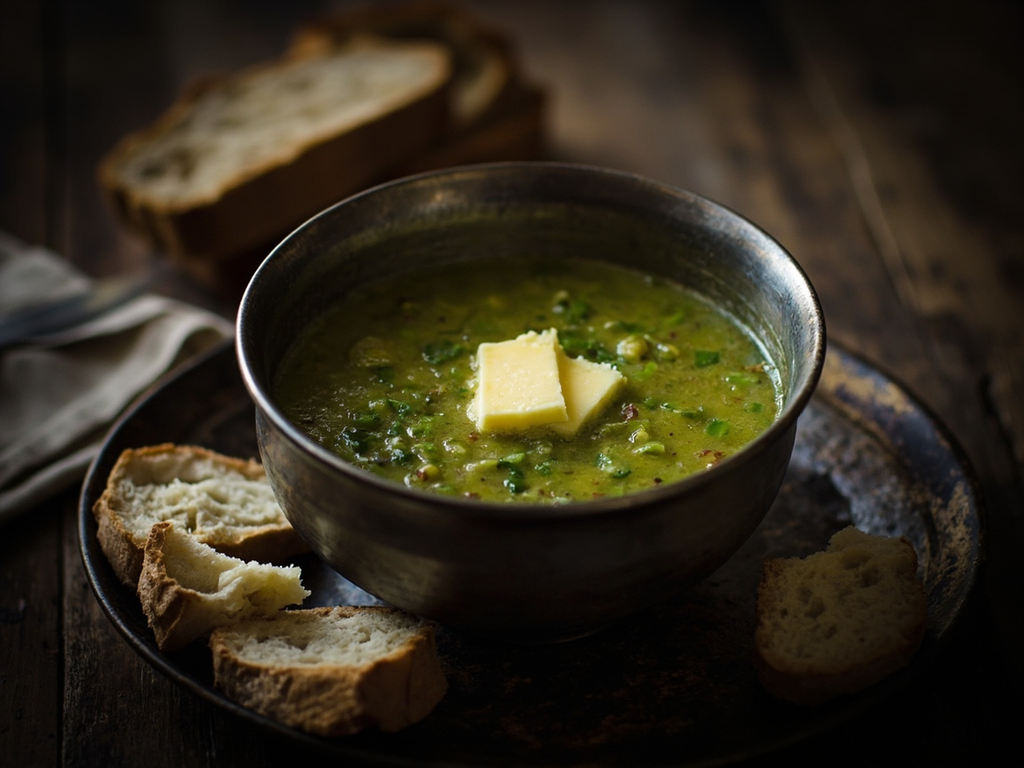
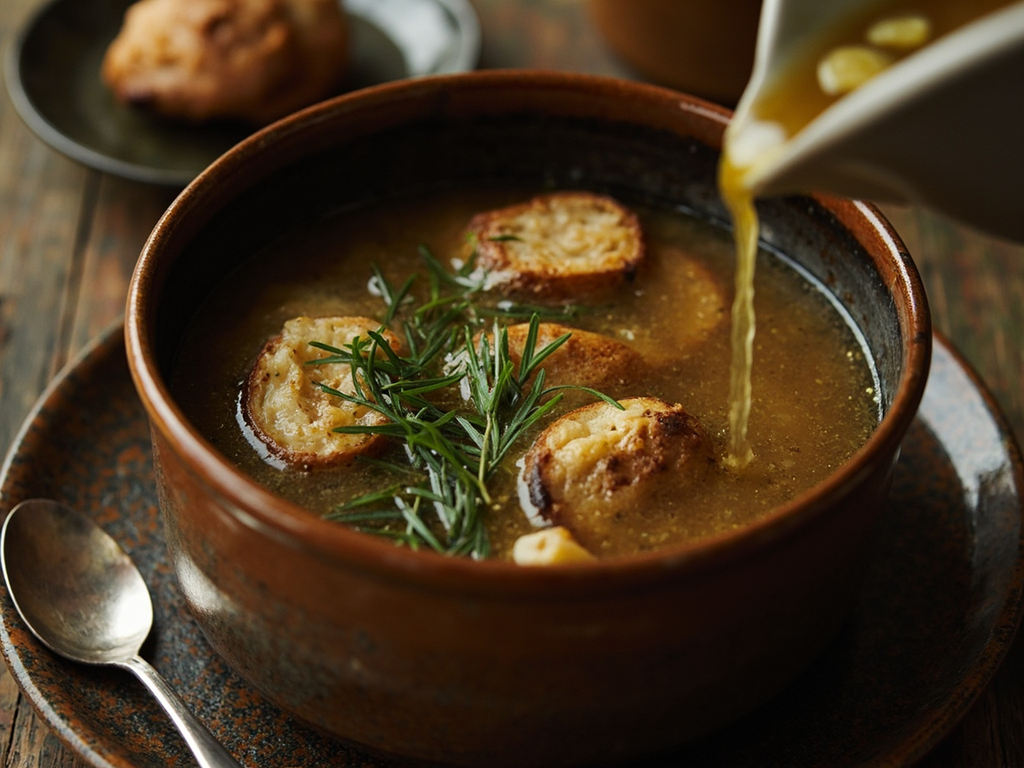
A clear chicken broth, fragrant with garden herbs and poured over slices of stale bread that soak it up gently. The ordinary comfort of good households, neither rich nor poor, called "health" potage because it was believed to maintain the body.
You see, I never believed one had to ruin one's stomach to live well. At Les Rochers, when the Breton rain keeps me prisoner, I content myself with a good health potage: a clear capon broth, chervil picked that morning, and my bread left to soak until it melts. My daughter, I assure you this is better for the constitution than all the financiers' sauces, and one rises from it with a mind as clear as a light belly.
- •Capon or hen broth — a large pot (savory base)
- •Stale bread (household bread) — several slices (thickener, base)
- •Chervil and sorrel — a handful (freshness, aroma)
- •Fresh butter — a knob (binder, smoothness)
- •Salt — to taste (seasoning)
Health potage with fine herbs
A clear chicken broth, fragrant with garden herbs and poured over slices of stale bread that soak it up gently. The ordinary comfort of good households, neither rich nor poor, called "health" potage because it was believed to maintain the body.
Why this dish? Far from court, in the green solitude of her Château des Rochers in Brittany, the marquise lived more simply and took care of her health. The potage, foundation of every meal in the Grand Siècle, opened each dinner, even the simplest.
You see, I never believed one had to ruin one's stomach to live well. At Les Rochers, when the Breton rain keeps me prisoner, I content myself with a good health potage: a clear capon broth, chervil picked that morning, and my bread left to soak until it melts. My daughter, I assure you this is better for the constitution than all the financiers' sauces, and one rises from it with a mind as clear as a light belly.
Ingredients (period version)
- Capon or hen broth — a large pot (savory base)
- Stale bread (household bread) — several slices (thickener, base)
- Chervil and sorrel — a handful (freshness, aroma)
- Fresh butter — a knob (binder, smoothness)
- Salt — to taste (seasoning)
Ingredients
- Chicken broth — 1 liter (savory base)
- Stale country bread — 4 slices (base, thickener)
- Fresh chervil — 1 bunch (aroma)
- Sorrel (or young spinach) — 1 handful (tangy note)
- Fresh butter — 30 g (smoothness)
- Salt, freshly ground pepper — to taste (seasoning)
Method
- Bring the broth to a simmer and adjust seasoning with salt and a turn of pepper.
- Place the slices of stale bread in the bottom of a soup tureen or ovenproof bowls.
- Pour a ladleful of hot broth over the bread and let it soak for a few minutes (the "mitonnage").
- Chop the chervil and sorrel, add them to the broth off the heat to preserve freshness.
- Cover the bread with the remaining herb broth, add the knob of butter which melts on the surface, and serve immediately.
How it was made : In the 17th century, potage was the pillar of the meal: people even said "mettre le pot au feu" (put the pot on the fire) to mean cooking. Stale bread served as a natural thickener, long before the fashion for flour-bound veloutés. The term "health" designated clear herb potages, as opposed to the rich, heavy potages of feast days.
The contemporary twist : Serve in small cups as an appetizer, replacing the bread with a golden garlic-rubbed crouton and a sprinkle of chopped chervil at the last moment.
Sources : La Varenne, Le Cuisinier françois, 1651 · Nicolas de Bonnefons, Les Délices de la campagne, 1654
Madame de Sévigné · Charactorium