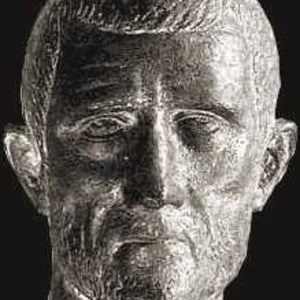

A figure of Vietnamese tradition, Man Thiện is held to be the mother of the Trưng sisters (Trưng Trắc and Trưng Nhị). A descendant of the Hùng kings, she is said to have raised and supported her daughters in their uprising against the Chinese Han occupation, around 40 CE.
Man Thiện
Man Thiện
6 min read
Frequently asked questions
Key Facts
- According to tradition, mother of the Trưng sisters, Trưng Trắc and Trưng Nhị, and a descendant of the Hùng kings
- Said to have trained and supported her daughters, preparing the uprising against the Han administration
- Revolt of the Trưng sisters in 40 CE against the Chinese occupation of Giao Chỉ
- Crushing of the revolt by general Ma Yuan in 43 CE
- A semi-legendary figure, venerated in temples in Vietnam as a founding figure of national resistance
Works & Achievements
Tradition holds that Man Thiện was the teacher of Trưng Trắc and Trưng Nhị, instilling in them a sense of honor and of duty toward their people.
She is credited with training her daughters in arms and strategy, a decisive preparation for their future uprising.
According to tradition, she helped rally the Lạc lords and the population, providing material and moral support to the insurrection.
By claiming descent from the Hùng line, she is said to have given her daughters a legitimacy rooted in the identity of the Lạc Việt.
Having become an object of veneration at Mê Linh, Man Thiện symbolizes the patriotic mother and the role of women in Vietnamese resistance.
Anecdotes
In Vietnamese tradition, Man Thiện was descended from the Hùng kings, the legendary rulers of the first kingdom of Văn Lang. This prestigious lineage is said to have given her family the rank of lạc lords, the hereditary chieftains of the Red River delta before the arrival of the Chinese.
The oldest written source, the Book of the Later Han (Chinese, 5th century), does not name the mother of the Trưng sisters: it states only that Trưng Trắc was “the daughter of a lạc general of Mê Linh.” The name Man Thiện and her story come from Vietnamese tradition and from much later temple records.
According to tradition, once widowed, Man Thiện raised her two daughters alone and taught them the handling of weapons and the art of command. She is credited with having forged their courage long before the uprising of the year 40 AD.
Legend tells that Man Thiện actively supported her daughters' revolt against the Han occupiers, helping to rally the lạc lords and the people around them. Her figure embodies the prominent role of women in this resistance, which has remained famous in Vietnamese history.
Man Thiện is honored as a heroine in the village of Hạ Lôi, in Mê Linh, where tradition places her tomb. Each year, the festivals dedicated to the two Trưng queens also recall the memory of their mother.
Primary Sources
In the sixteenth year of the Jianwu era [40 CE], the women of Jiaozhi (Giao Chỉ), Trưng Trắc and her younger sister Trưng Nhị, rose in revolt and attacked the prefecture. Trưng Trắc was the daughter of a lạc general of Mê Linh and the wife of Thi Sách of Châu Diên; she was very brave and spirited.
The chronicle records that in the year Canh Tý [40 CE], Trưng Trắc, a lady of Mê Linh descended from the line of the lạc lords, rose up with her sister Trưng Nhị against the governor Tô Định and proclaimed herself queen.
The village registers preserve the traditional account of Man Thiện, mother of the two Trưng queens and a descendant of the Hùng kings, and place her tomb within the commune.
Key Places
Stronghold of the Lạc lords and cradle of Man Thiện's family, which became the capital of the Trưng sisters' kingdom in the year 40.
Village where tradition locates the tomb of Man Thiện and where a temple maintains her cult alongside that of her daughters.
Place where tradition sets the oath and then the death of the Trưng sisters; a major temple there honors the family lineage.
Land of the Lạc Việt under Han rule, the living environment of Man Thiện: rice paddies, rivers, and villages on stilts.
Ancient citadel of Âu Lạc, a symbol of the lost independence that the Lạc lords, including Man Thiện's family, sought to recover.
Typical Objects

A ritual drum decorated with engraved scenes, a symbol of the power of the Lạc chiefs. As a descendant of the Hùng kings, Man Thiện's family was tied to these emblems of authority.

A feared mount of the delta chiefs; tradition shows the Trưng sisters fighting on elephant-back, a skill their mother is said to have helped pass on.

Weapons of the Lạc warriors, produced by Đông Sơn metalworking. Tradition credits Man Thiện with training her daughters to wield them.

An emblematic weapon of the ancient kingdom of Âu Lạc, a military legacy of the region that the Lạc Việt continued to use against the Han.

Used for chewing areca nut and betel leaf, a social and ritual gesture central to daily life in the Red River delta.

Bracelets, necklaces and ornaments worn by women of the Lạc aristocracy, markers of the rank Man Thiện is thought to have held.
School Curriculum
Vocabulary & Tags
Key Vocabulary
Daily Life
Morning
A woman from a family of Lạc lords, Man Thiện rises early to oversee the estate and the rice paddies along the river. She organizes the servants' work and, according to tradition, sees to the education of her two daughters.
Afternoon
The afternoon is devoted to managing the land, to weaving, and to the affairs of the Lạc community. Tradition also shows her supervising her daughters' training in the handling of weapons.
Evening
Evening brings the household together for the meal, gathered around rice and fish. It is the time for stories that pass on the pride of the Hùng lineage, and for offerings made to the ancestors.
Food
The diet is based on rice grown in flooded paddies, fish and shellfish from the rivers, vegetables, and tropical fruits. People chew the areca nut with the betel leaf, and buffalo meat appears at festivals.
Clothing
Lạc women wear a skirt and a tunic of plant fibers or silk, often barefoot. Ornaments of bronze and jade and hair worn up mark one's rank; Chinese sources note the use of tattoos among the Lạc Việt.
Housing
People live in stilt houses of wood and bamboo with thatched roofs, raised up to withstand the floods of the Red River — exactly the kind of dwelling engraved on the Đông Sơn drums.
Historical Timeline
Period Vocabulary
Liens externes & ressources
Références
Œuvres
L'éducation des deux héroïnes
premières décennies du Ier siècle apr. J.-C.
La formation militaire de ses filles
avant 40 apr. J.-C.
Le soutien à la révolte de l'an 40
40 apr. J.-C.
La transmission de l'héritage des rois Hùng
Ier siècle apr. J.-C.
Une mémoire vénérée
des siècles suivants à aujourd'hui