 flip
flipConditum Paradoxum (Spiced Honeyed Wine)
Conditum Paradoxum (Spiced Honeyed Wine)
Why this dish? Antony had a reputation as a bon vivant and wine lover — his enemies, including Octavian, even used it as a political argument. Conditum, honeyed and spiced wine served at the start of the meal, naturally accompanied the banquets where he loved to shine.
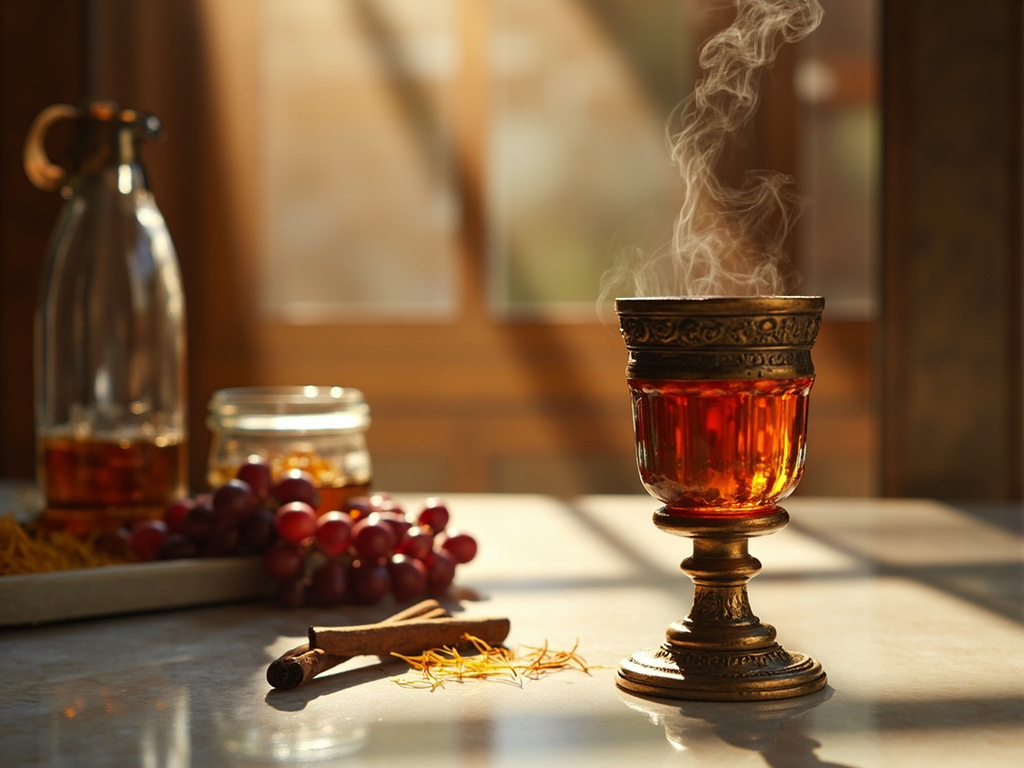
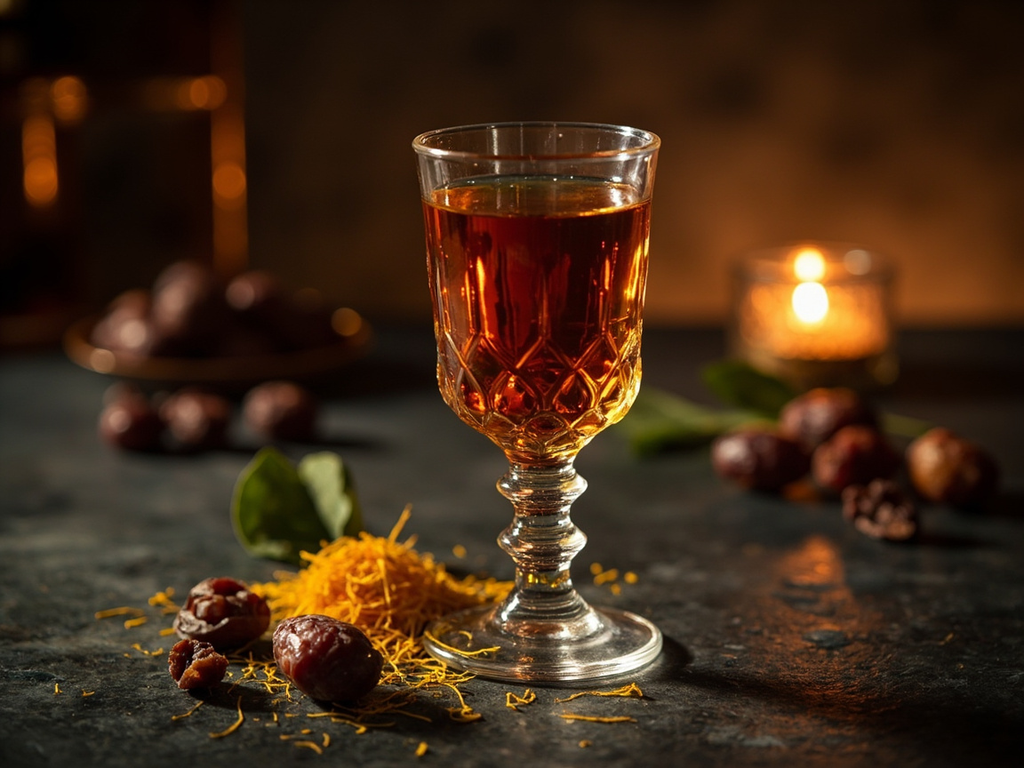
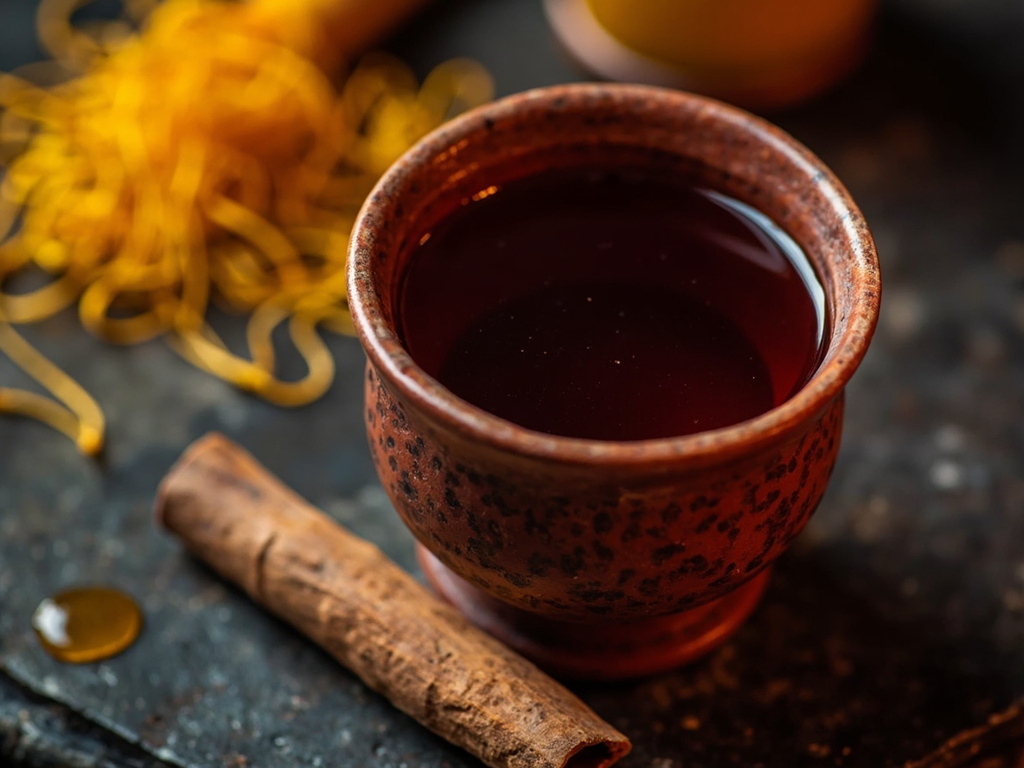
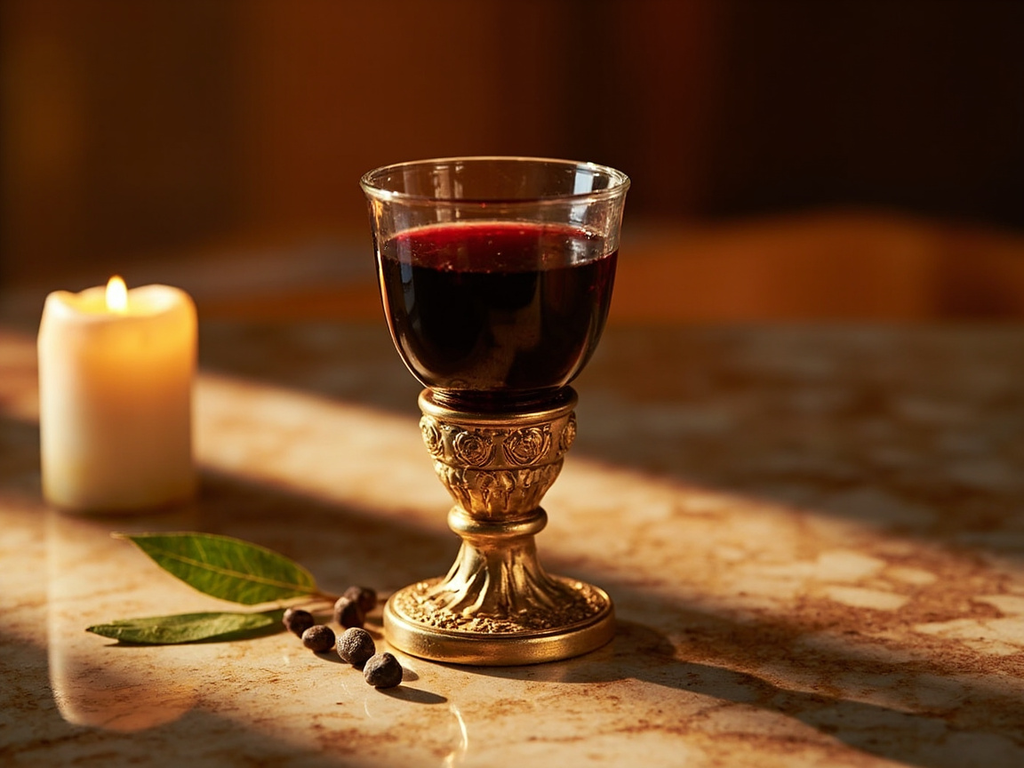
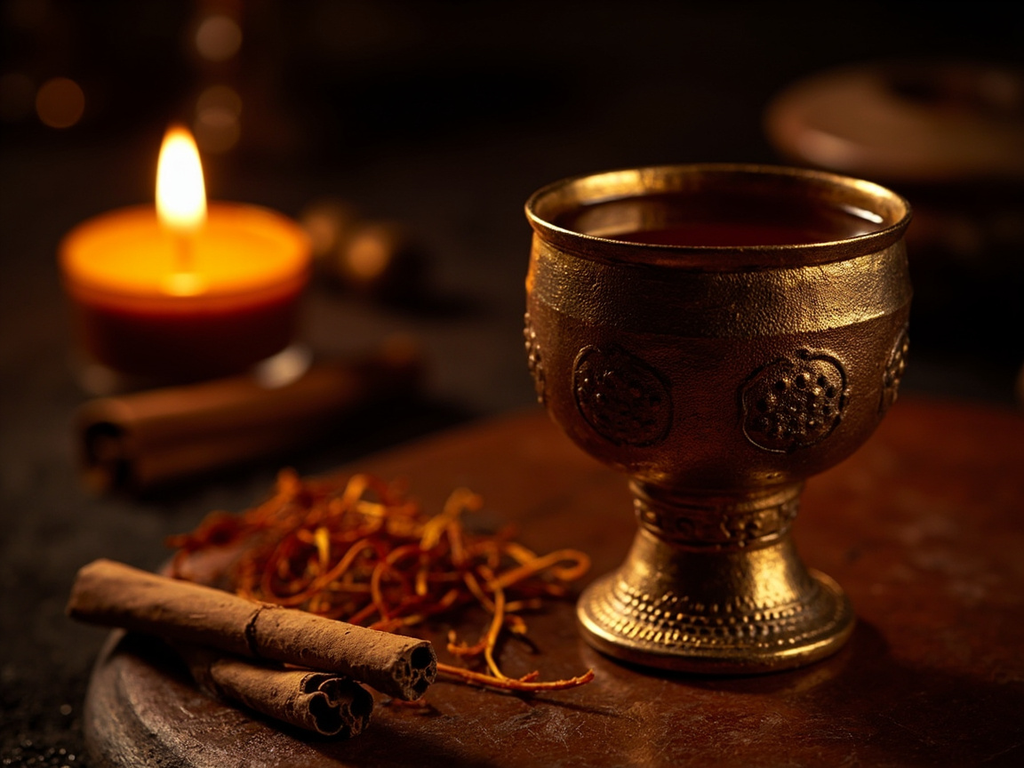
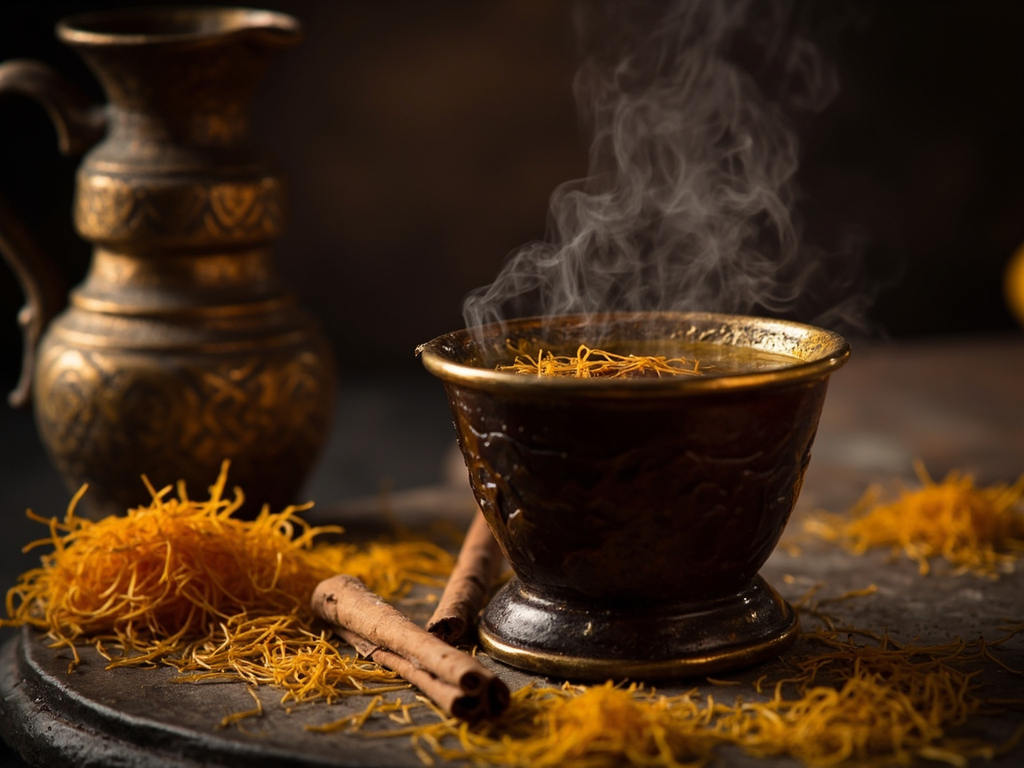
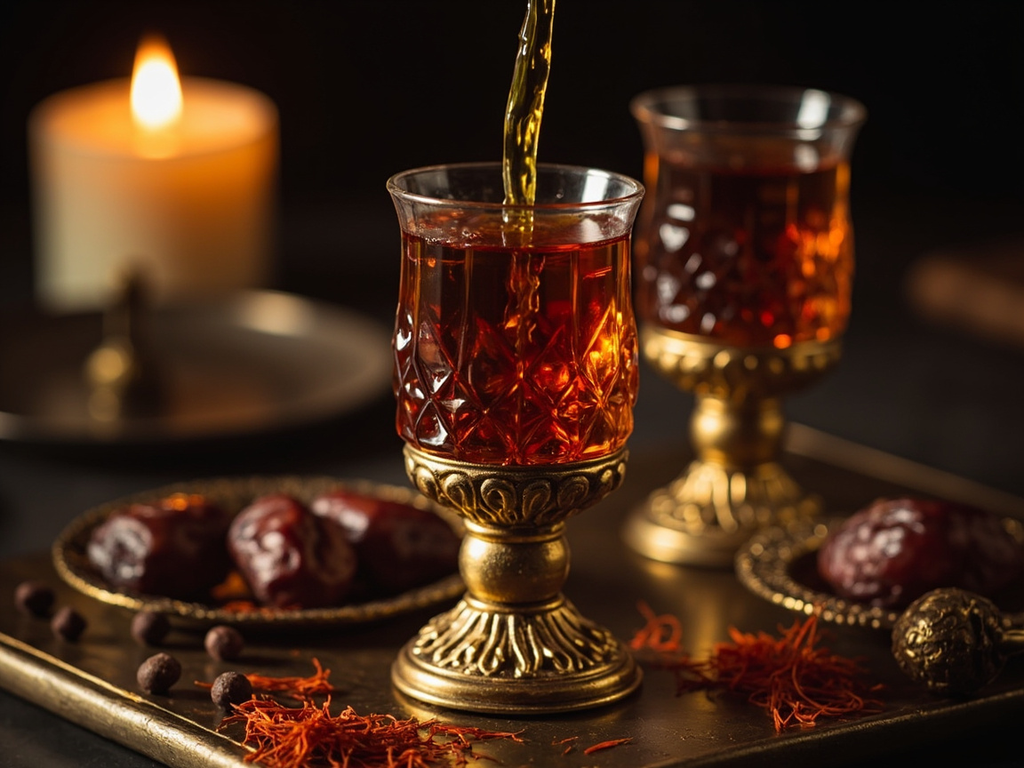
Sweet wine infused with honey, pepper, and spices, heated then cooled. The ceremonial drink that opened the Roman *cena*, as recorded by Apicius under the name *conditum paradoxum*.
Fill the cups! Octavian whispers that I drink too much — let him come and hold out his own. This conditum is prepared by marrying honey to wine over the flame, with pepper and spices from the East; the secret is to remove it from the fire at the first rise, or the honey grows angry. I drank it at Tarsus the evening Cleopatra sailed up the Cydnus on her golden galley — never did a cup seem sweeter. Drink slowly, soldier: this wine is to be savored like a victory.
- •Wine — an amphora (according to thirst) (base)
- •Honey — in generous proportion (sweetness)
- •Pepper — a few ground grains (spice)
- •Bay leaf (folium) — one (aromatic)
- •Saffron — a few pistils (color and fragrance)
- •Roasted dates — a few (roundness)
Conditum Paradoxum (Spiced Honeyed Wine)
Sweet wine infused with honey, pepper, and spices, heated then cooled. The ceremonial drink that opened the Roman *cena*, as recorded by Apicius under the name *conditum paradoxum*.
Why this dish? Antony had a reputation as a bon vivant and wine lover — his enemies, including Octavian, even used it as a political argument. Conditum, honeyed and spiced wine served at the start of the meal, naturally accompanied the banquets where he loved to shine.
Fill the cups! Octavian whispers that I drink too much — let him come and hold out his own. This conditum is prepared by marrying honey to wine over the flame, with pepper and spices from the East; the secret is to remove it from the fire at the first rise, or the honey grows angry. I drank it at Tarsus the evening Cleopatra sailed up the Cydnus on her golden galley — never did a cup seem sweeter. Drink slowly, soldier: this wine is to be savored like a victory.
Ingredients (period version)
- Wine — an amphora (according to thirst) (base)
- Honey — in generous proportion (sweetness)
- Pepper — a few ground grains (spice)
- Bay leaf (folium) — one (aromatic)
- Saffron — a few pistils (color and fragrance)
- Roasted dates — a few (roundness)
Ingredients
- Sweet red wine or medium-sweet white wine — 1 bottle (75 cl) (base)
- Honey — 150 g (sweetness)
- Black peppercorns — 1/2 tsp crushed (spice)
- Bay leaf — 1 (aromatic)
- Saffron — 1 pinch (color and fragrance)
- Dates — 3, lightly roasted (roundness)
Method
- Gently heat the honey alone in a saucepan until it foams, watching so it doesn't boil over (remove from heat if needed, then return).
- Once the honey is cooked and stable, pour in a little wine to thin it.
- Add the remaining wine, crushed pepper, bay leaf, saffron, and roasted dates.
- Heat without boiling, let infuse over very low heat for 10 minutes.
- Strain to remove spices and dates.
- Serve warm, or chilled to taste (Romans often drank it cooled with snow).
How it was made : Apicius opens his book with *conditum paradoxum*, 'surprising spiced wine'. The honey was first cooked separately, then wine and spices added. Served at the start of the meal, this *mulsum* stimulated the appetite. Romans almost always cut their wine (with water, honey, or spices); drinking it neat was considered barbaric.
The contemporary twist : Serve over ice in a frosted cup, 'ancient sangria' style — a reminder of the Alpine snow wealthy Romans had brought to chill their wines.
Sources : Apicius, De re coquinaria, I (Conditum paradoxum) · Pliny the Elder, Natural History, XIV
Mark Antony · Charactorium