 flip
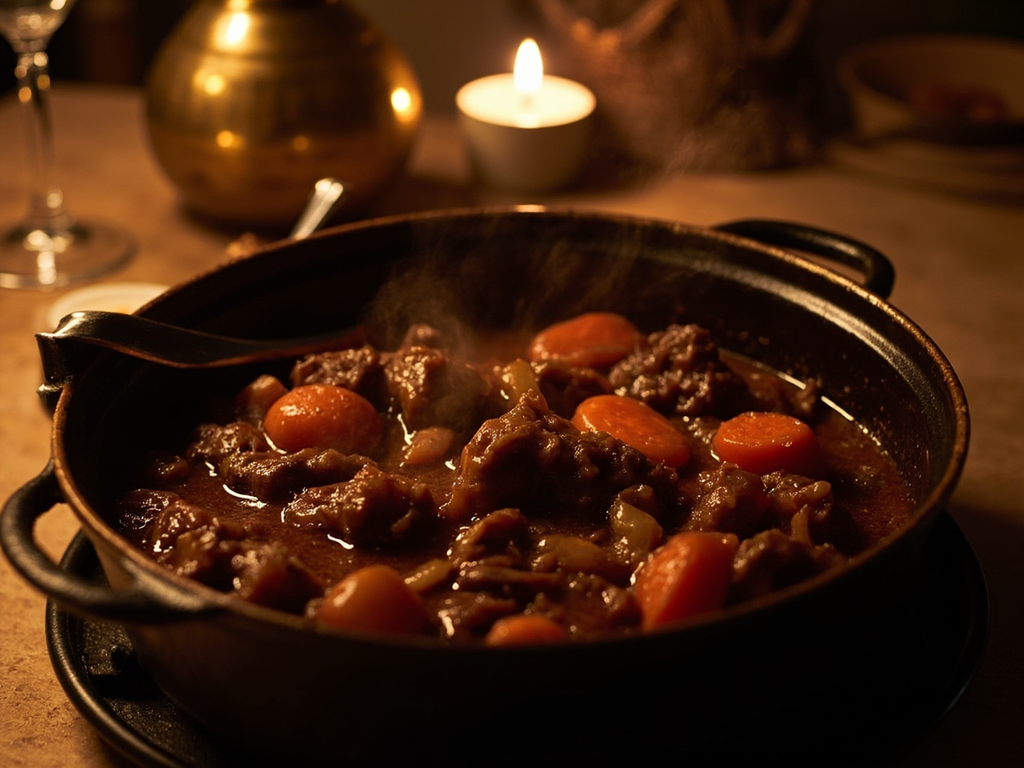
flipRue Saint-Benoît Braised Beef
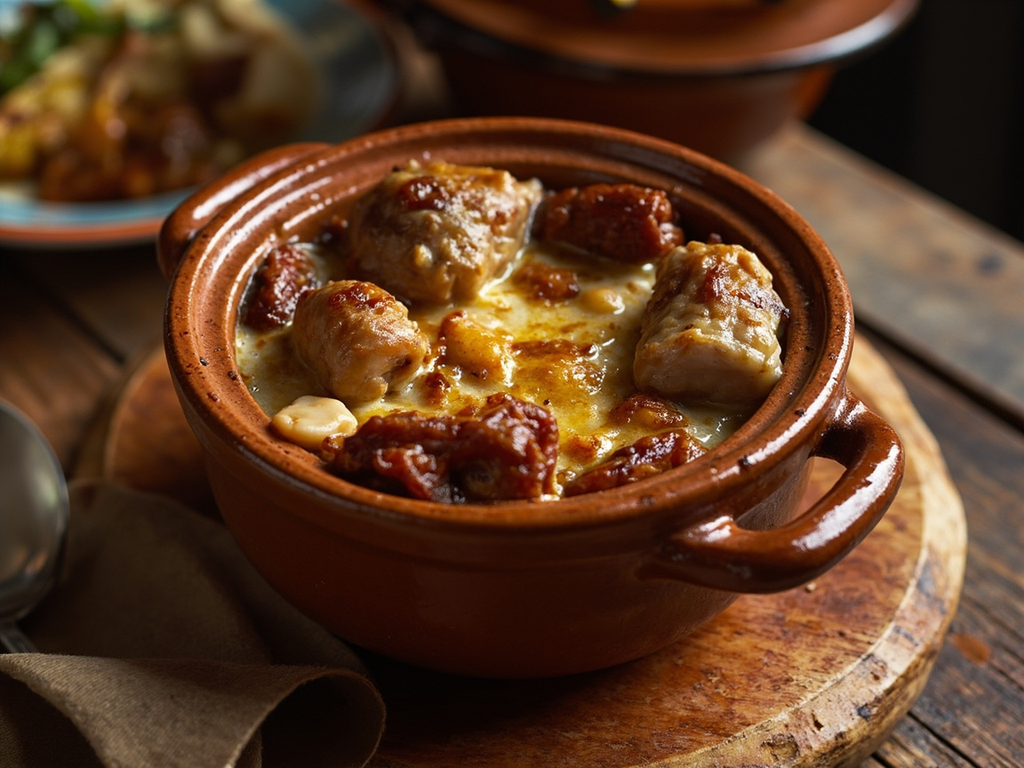
Rue Saint-Benoît Braised Beef
Why this dish? In her apartment on Rue Saint-Benoît, Duras entertained writers and friends (Vittorini, the Left Bank crowd) and insisted on feeding everyone. The braised dish, left to cook while people talked and drank, matches her table of hospitality.
A long-braised beef in wine and aromatics that perfumes the whole house. It is set in the middle of the table, everyone helps themselves, and conversation lasts for hours. This is Duras's cuisine of generosity.
When friends came to Rue Saint-Benoît, I put the beef on to cook in the morning. We talked, we drank, and it simmered alone in its sauce. You must leave this dish alone, not fuss over it, like a truth that comes slowly. In the end the meat falls apart by itself, and that is what it must do: surrender.
- •Beef for braising (chuck, cheek) — one large piece (centerpiece)
- •Red wine — one bottle (braising liquid)
- •Carrots — a few (sweetness)
- •Onions — two or three (aromatic base)
- •Lard or bacon — one piece (fat, depth)
- •Bouquet garni (thyme, bay leaf) — one (aroma)
- •Salt, pepper — to taste (seasoning)
Rue Saint-Benoît Braised Beef
A long-braised beef in wine and aromatics that perfumes the whole house. It is set in the middle of the table, everyone helps themselves, and conversation lasts for hours. This is Duras's cuisine of generosity.
Why this dish? In her apartment on Rue Saint-Benoît, Duras entertained writers and friends (Vittorini, the Left Bank crowd) and insisted on feeding everyone. The braised dish, left to cook while people talked and drank, matches her table of hospitality.
When friends came to Rue Saint-Benoît, I put the beef on to cook in the morning. We talked, we drank, and it simmered alone in its sauce. You must leave this dish alone, not fuss over it, like a truth that comes slowly. In the end the meat falls apart by itself, and that is what it must do: surrender.
Ingredients (period version)
- Beef for braising (chuck, cheek) — one large piece (centerpiece)
- Red wine — one bottle (braising liquid)
- Carrots — a few (sweetness)
- Onions — two or three (aromatic base)
- Lard or bacon — one piece (fat, depth)
- Bouquet garni (thyme, bay leaf) — one (aroma)
- Salt, pepper — to taste (seasoning)
Ingredients
- Beef cheek or chuck — 1.2 kg (centerpiece)
- Full-bodied red wine — 75 cl (braising liquid)
- Carrots — 4 (sweetness)
- Onions — 2 (aromatic base)
- Smoked bacon lardons — 150 g (fat, depth)
- Bouquet garni — 1 (thyme, bay leaf, parsley) (aroma)
- Flour — 2 tablespoons (thickener)
- Salt, pepper — to taste (seasoning)
Method
- Cut the beef into large cubes, season with salt and pepper, and lightly dust with flour.
- Fry the lardons in a Dutch oven, remove, then sear the meat on all sides in the fat until browned.
- Add sliced onions and carrots, sweat for 5 minutes.
- Return the lardons, pour in the wine, add the bouquet garni, and top up with water if needed to cover.
- Bring to a simmer, cover, and cook on very low heat for 3 hours (or in the oven at 150°C).
- Check that the meat falls apart with a fork, adjust seasoning, and serve hot with bread or potatoes.
How it was made : Wine-braised beef was the dish of large gatherings in 20th-century France: economical with tough cuts, it improved on the fire while life went on around it. It was often made the day before.
The contemporary twist : Serve it the next day: like all great stews, it tastes better reheated, when the flavors have had a night to meld.
Sources : Laure Adler, *Marguerite Duras*, Gallimard, 1998 (biography, life on Rue Saint-Benoît)
Marguerite Duras · Charactorium