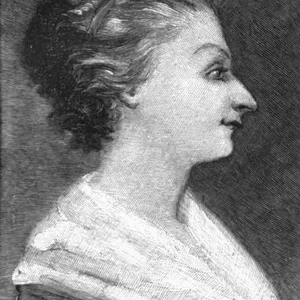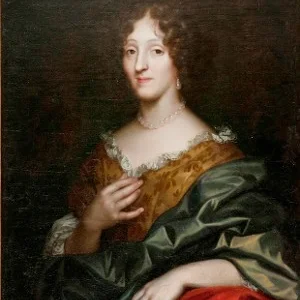

Marie Héricart was the wife of Jean de La Fontaine, whom she married in 1647. Their union, an unhappy one, led to a legal separation of their property. She was the mother of their only son, Charles.
Marie Héricart(1633 — 1709)
Marie Héricart
6 min read
Frequently asked questions
Key Facts
- Married Jean de La Fontaine in 1647, bringing a substantial dowry
- Mother of Charles de La Fontaine, the couple's only son, born in 1653
- The couple had an unhappy marriage that led to a legal separation of property in 1658
- Lived mainly in Château-Thierry while La Fontaine frequented Paris
Works & Achievements
A union that ties Marie to one of the greatest writers of the Grand Siècle and carries her name down to posterity.
Marie raises their only son alone in Château-Thierry, the father being most often absent.
A legal step that secures her the independent management of her estate, a testament to the tensions within the couple.
The letters La Fontaine addresses to her during his exile make up a minor but precious literary work, born of their correspondence.
For more than sixty years, she runs the family home and handles day-to-day affairs in her husband's absence.
Anecdotes
Marie Héricart is only fourteen when she marries Jean de La Fontaine in November 1647: it is an arranged marriage between two families of the minor legal gentry of the Château-Thierry region, as was customary at the time. The future fabulist, for his part, is twenty-six.
The couple gets along so badly that in 1659 they obtain a separation of property: from then on each manages their own fortune independently. La Fontaine settles in Paris near his patrons while Marie remains in Château-Thierry almost all her life, and they end up living apart.
La Fontaine was so absent-minded and so seldom present in his family that, according to an anecdote reported by his contemporaries, he is said to have crossed paths with his own son Charles in a drawing room without recognising him, afterwards asking who that fine-looking young man was.
In 1663, exiled from Paris following the disgrace of his patron Nicolas Fouquet, La Fontaine sent his wife a series of witty letters recounting his journey to the Limousin: these are almost the only direct records of their relationship that posterity has preserved.
Reputed to be pretty, lively and a great reader of romantic novels, Marie was often described by biographers of the seventeenth and eighteenth centuries as a cultivated woman but neglectful of her household — a portrait that is no doubt unfair, fashioned to excuse the absences of her famous husband.
Primary Sources
A series of letters written by La Fontaine to his wife Marie Héricart, recounting to her, with humour, the stages of his journey: “I promised you an account of our journey; I shall begin this very moment.”
A notarial deed setting out the dowry and the terms of the union between Jean de La Fontaine, son of the master of waters and forests of Château-Thierry, and Marie Héricart, daughter of Louis Héricart, lieutenant at La Ferté-Milon.
A collection of portraits and anecdotes about the figures of the Grand Siècle in which the author recounts La Fontaine's absent-mindedness and the life of his household.
Key Places
Small town in the Aisne where Marie Héricart was born, into the family of a local justice officer.
Town in Champagne where Marie married La Fontaine and where she lived for most of her life, until her death in 1709.
Capital where Jean de La Fontaine settled near his patrons after the separation of property, living far from his wife.
Typical Objects

A long tale of love and adventure, like those of Mlle de Scudéry, very much in vogue in the salons. Marie was reputed to be an avid reader of them.

A portable case holding a quill, inkwell, and paper, essential for keeping up family and business correspondence.

The main means of communication for a couple living apart; it was by letter that La Fontaine told Marie about his journey to the Limousin.

The town dress of a lady of the provincial upper bourgeoisie, made of several layers of fabric and worn over a boned bodice.

A piece of furniture with drawers and compartments where papers, notarial deeds, and precious household items were kept.

A notarial deed obtained in 1659 that allowed Marie to manage her fortune independently of her husband, a rare but lawful arrangement under the Ancien Régime.
School Curriculum
Vocabulary & Tags
Key Vocabulary
Daily Life
Morning
The morning of a lady of the comfortable provincial bourgeoisie began with her toilette and prayer, then with the instructions given to the household's few servants. Marie next saw to the accounts of the house and to the affairs left unattended by an often absent husband.
Afternoon
The afternoon was divided among visits, correspondence, and reading, her favorite pastime. She was said to be passionate about romance novels, which she devoured to such a degree that her biographers nearly reproached her for it.
Evening
In the evening, supper was taken early, after which reading or conversation continued by candlelight. In a small town like Château-Thierry, the evenings were quiet, far from the bustle of the Parisian salons frequented by her husband.
Food
Her diet followed that of a well-off provincial family: bread, soups, vegetables from the kitchen garden, poultry, and local fruit, with Champagne wine accompanying the meals. Meat remained a marker of affluence, more present than on the tables of common folk.
Clothing
Marie wore gowns of good cloth, a boned bodice and layered skirts, headdresses and collars in the fashion of the *Grand Siècle*, without the extravagant luxury of the court. Her attire soberly displayed the rank of a family of the *noblesse de robe*.
Housing
She lived in the La Fontaine family home in Château-Thierry, a bourgeois stone dwelling furnished with cabinets, chests, and armchairs. It was there that she spent the greater part of her life, while her husband lodged with his patrons in Paris.
Historical Timeline
Period Vocabulary
Liens externes & ressources
Références
Œuvres
Mariage avec Jean de La Fontaine
1647
Naissance et éducation de Charles de La Fontaine
1653
Séparation de biens
1659
Destinataire de la Relation d'un voyage de Paris en Limousin
1663
Gestion du foyer de Château-Thierry
1647-1709