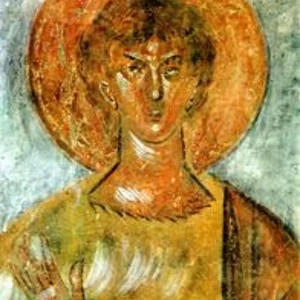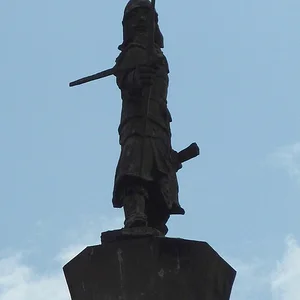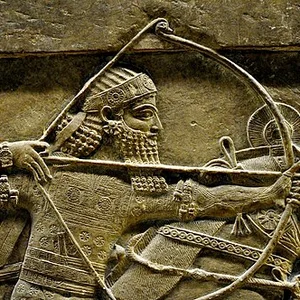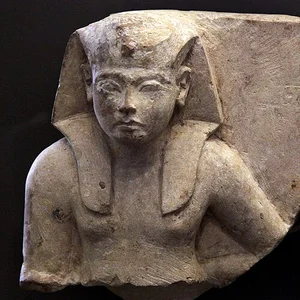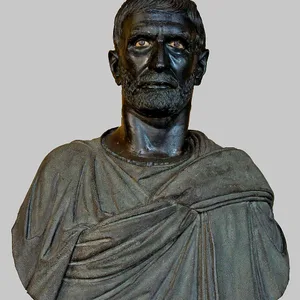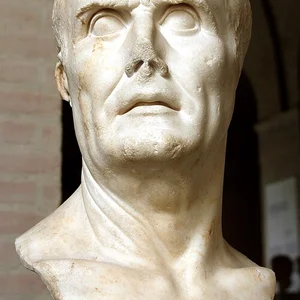

Roman general and statesman, seven times consul. Victor over Jugurtha and over the Cimbri and Teuton invasions, he profoundly reformed the Roman army by opening recruitment to the poorest citizens.
Marius(157 av. J.-C. — 85 av. J.-C.)
Gaius Marius
Rome antique
7 min read
Frequently asked questions
Key Facts
- Born around 157 BC in Arpinum, died in 86 BC in Rome
- First elected consul in 107 BC, he would serve as consul seven times
- Brought the Jugurthine War to an end (105 BC)
- Crushed the Teutons at Aquae Sextiae (102 BC) and then the Cimbri at Vercellae (101 BC)
- Military reform opening the legion to the proletarians (capite censi) and professionalizing the army
Works & Achievements
Opening recruitment to citizens without property (capite censi) and professionalizing the legions. This reform transformed Rome lastingly and bound soldiers to their generals.
End of the long Numidian War through the capture of King Jugurtha. Marius gained immense political prestige from it.
Marius made the silver eagle the sole and sacred emblem of each legion, strengthening the discipline and identity of the troops.
Crushing the Teutonic invasion near Aix-en-Provence. This victory saved Roman Provence from disaster.
Annihilation of the Cimbri on the Po plain, permanently removing the Germanic threat. Marius was hailed as the savior of Rome.
Standardizing the weaponry supplied by the State and intensive training of the legionaries, including the sarcina (individual pack).
Marius was elected consul seven times, five of them consecutively, an absolute record under the Roman Republic.
Anecdotes
Marius was nicknamed "the third founder of Rome" after Romulus and Camillus, because he had saved the city from the Germanic invasions. Yet this hero came from a modest family in Arpinum: he was a "new man" (homo novus), with no consul among his ancestors, which was extremely rare in a Rome dominated by the nobility.
Before the decisive battle against the Teutons at Aix-en-Provence in 102 BC, Marius deliberately had his soldiers camp facing the immense enemy army, which marched past for six whole days. He wanted his men to grow used to the sight and the terrifying war cries of the Germans so they would no longer fear them on the day of battle.
Marius transformed the Roman army by allowing the poorest citizens, the capite censi, to enlist. From then on the State supplied the equipment. Because the soldiers carried all their own gear to lighten the baggage trains, they were jokingly nicknamed "Marius' mules."
Old and fallen from favor, Marius had to flee his enemies and hid for a time in the marshes of Minturnae. According to tradition, a soldier sent to kill him was so awed by the old general's gaze and voice that he fled without daring to strike.
The rivalry between Marius and his former lieutenant Sulla degenerated into civil war, the first in Roman history. In 87 BC, Marius retook Rome by force and had himself elected consul for the seventh time, fulfilling an old prophecy, but he died a few days after taking office.
Primary Sources
Because he was of humble birth and owed everything to his own courage, they called him a new man. His entire life was a struggle against the nobility of Rome.
Marius declared to the people: “To vouch for my loyalty I cannot display the portraits of my ancestors, nor the triumphs and consulships of my family, but, if need be, spears, a banner, military decorations, and scars borne upon my chest.”
The plain of Vercellae was strewn with the dead; it is said that more than a hundred thousand Barbarians were killed or taken prisoner, and Marius received the honours of the most brilliant triumph.
Marius was a man of whom one could not say whether he was greater in war or more disastrous in peace: as much as he saved the State by arms, so much did he tear it apart through his furies.
Key Places
Small town in Latium where Marius was born, also the homeland of Cicero. A symbol of his provincial and humble origins.
Theater of the war against King Jugurtha, where Marius earned his reputation as a great general.
Site of Marius's crushing victory over the Teutons in 102 BC, which saved Gaul and Italy from invasion.
Site of the decisive battle against the Cimbri in 101 BC, who were annihilated by Marius's legions.
Coastal town in Latium in whose marshes Marius hid during his flight from Sulla in 88 BC.
Center of his political career, where he served as consul seven times and where he died in 86 BC at the start of his final term.
Typical Objects

Heavy javelin of the Roman legionary, whose tip bent on impact so it would stay lodged in the enemy's shield. According to Plutarch, Marius modified the pilum so that it would break more easily.

Short double-edged sword, the legionary's main weapon in close combat. Its handiness made it a fearsome weapon in tight formations.

Silver standard in the shape of an eagle, the sacred emblem of each legion. It was Marius who established the eagle as the legions' sole symbol, strengthening their cohesion and pride.

Bundle carried on a man's back containing tools, provisions, and camp equipment. Imposed by the reforms of Marius, it earned the soldiers the nickname “Marius' mules.”

Metal mail armor protecting the soldier's torso. Supplied by the State after the reform, it equipped men too poor to arm themselves.

Toga edged with purple, the official garment of senior magistrates such as the consul. Marius wore it seven times, a record in Roman history.

Bundle of rods surrounding an axe, carried by the lictors who escorted the consul. They symbolized the magistrate's power of coercion and justice.
School Curriculum
Vocabulary & Tags
Key Vocabulary
Daily Life
Morning
On campaign, Marius rose before dawn to inspect the fortified camp and review his troops. Renowned for his endurance, he often shared the labors and frugal meals of his soldiers in order to win their loyalty.
Afternoon
The afternoon was devoted to military exercises, forced marches, and the building of works such as the canal he had dug near the Rhône. In Rome, he received clients and political allies and prepared for sessions of the Senate or the votes of the people.
Evening
In the evening, in the general's tent (the *praetorium*), Marius held council with his officers to plan operations. Less at ease with the refinements of the aristocracy, he preferred the rough company of men of war to elegant banquets.
Food
The legionaries' diet was based on wheat made into porridge (*puls*) or flatbread, bacon, cheese, dried legumes, and wine cut with water (*posca*). Marius boasted of eating the same food as his soldiers the better to command them.
Clothing
In battle, Marius wore the cuirass, the crested helmet, and the red cloak (*paludamentum*) of the generals. In civilian life in Rome, he donned the purple-bordered toga of the consul, a mark of his high magistracy.
Housing
On campaign, he lived in a tent within a methodically fortified Roman camp, entrenched behind a ditch and palisade. In Rome, he owned a wealthy residence (*domus*) acquired through his military spoils and his long career.
Historical Timeline
Period Vocabulary
Liens externes & ressources
Références
Œuvres
Réforme de l'armée romaine
107 av. J.-C.
Victoire sur Jugurtha
105 av. J.-C.
Création de l'aigle comme enseigne légionnaire
vers 104 av. J.-C.
Victoire d'Aquae Sextiae sur les Teutons
102 av. J.-C.
Victoire de Verceil sur les Cimbres
101 av. J.-C.
Standardisation de l'équipement et de l'entraînement
vers 104-102 av. J.-C.
Sept consulats
107-86 av. J.-C.