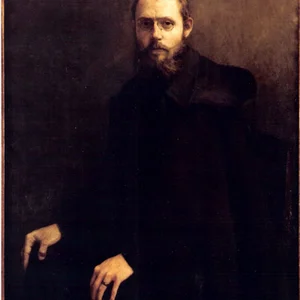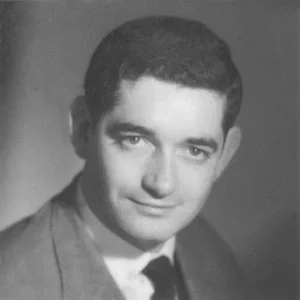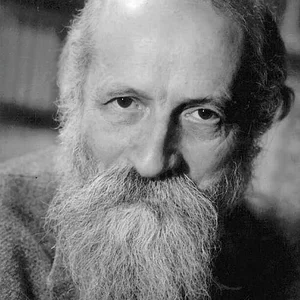

An Austrian and later Israeli Jewish philosopher, Martin Buber is the author of *I and Thou* (1923), a major work of the philosophy of dialogue. A thinker of Judaism and a transmitter of the Hasidic tradition, he left his mark on the religious and existential thought of the 20th century.
Martin Buber(1878 — 1965)
Martin Buber
Autriche, Allemagne, Israël, république de Weimar, Cisleithanie
6 min read
Frequently asked questions
Famous Quotes
« All real living is meeting.»
Key Facts
- Born in 1878 in Vienna, raised in part by his grandfather Salomon Buber, a scholar of the Midrash.
- Published *I and Thou* (Ich und Du) in 1923, founding his philosophy of relation and dialogue.
- Translated and spread the Hasidic tales, helping to make this Jewish mystical tradition known.
- Left Nazi Germany in 1938 and settled in Palestine, where he taught philosophical anthropology at the Hebrew University of Jerusalem.
- Died in 1965 in Jerusalem, after having championed a humanist Zionism advocating Jewish-Arab understanding.
Works & Achievements
A foundational work of the philosophy of dialogue, which distinguishes the I-Thou relation (a living encounter) from the I-It relation (use and possession).
A collection that revealed to Western readers the spiritual and narrative richness of Eastern European Hasidism.
A new German translation of the Hebrew Bible, carried out with Franz Rosenzweig, attentive to the rhythm and orality of the text.
A novel set in the Hasidic world during the Napoleonic era, a meditation on messianism and evil.
A study in which Buber rereads the Exodus as the encounter of a people with a divine demand, poised between history and faith.
A political essay defending a communal and federalist socialism, grounded in real human bonds rather than the centralized State.
A great anthology of the tales and sayings of the Hasidic masters, which lastingly shaped their image in world culture.
A collection on the silence of God in the modern world, a critical dialogue with the philosophy and theology of his time.
Anecdotes
When Martin is three years old, his parents separate and his mother vanishes from his life. Raised by his grandparents in Lemberg, the child clings to the hope of seeing her again, until the day a little girl tells him she will never come back. Buber would later call this moment a “mismeeting” (Vergegnung), and he saw in it the source of all his thinking about the true encounter between beings.
As a teenager, he loved to slip into the stable to stroke a dapple-grey horse: he felt, he said, a living presence answering him beneath his hand. But one day he became aware of his own pleasure in doing so, and that gaze upon himself broke the silent bond. This experience would become a famous example in his philosophy of dialogue.
Around the age of fourteen, Martin was seized with anguish as he tried to imagine a time without beginning and a space without edge. This metaphysical panic tormented him until he discovered Kant, whose work soothed him and steered him decisively toward philosophy.
For thirteen years, Buber retranslated the Hebrew Bible into German with his friend Franz Rosenzweig, seeking to restore the breath and rhythm of the original text. When Rosenzweig died in 1929, Buber carried on this colossal undertaking alone, completing it only in 1961.
In 1939, Buber wrote a long open letter to Mahatma Gandhi, who had advised the Jews to meet Nazism with nonviolent resistance alone. Buber replied to him with respect but firmness that such resistance was powerless against a regime bent on extermination, and that Gandhi failed to grasp the reality of the camps.
Primary Sources
All real living is meeting.
The basic word I-Thou can only be spoken with one's whole being; the basic word I-It can never be spoken with one's whole being.
When two people who are truly present to one another speak, something passes between them that belongs to neither of them and yet concerns them both.
Before his death, Rabbi Zusya said: In the world to come, I will not be asked: why were you not Moses? I will be asked: why were you not Zusya?
Key Places
Buber's birthplace, capital of a cosmopolitan Austro-Hungarian empire and a vibrant intellectual hub.
A city in Galicia where he grew up with his grandparents; his grandfather Salomon Buber was a renowned Midrash scholar there.
He taught at the university here from 1923 and, together with Rosenzweig, carried out his translation of the Bible.
A small German town where Buber lived from 1916 to 1938, until his forced departure under Nazism.
His refuge from 1938 onward, where he taught at the Hebrew University and died in 1965; here he championed Jewish-Arab coexistence.
Liens externes & ressources
Références
Œuvres
Je et Tu (Ich und Du)
1923
Les Récits de Rabbi Nahman
1906
Die Schrift (traduction de la Bible)
1925-1961
Gog et Magog
1941
Sentiers vers l'utopie
1947
Les Récits hassidiques
1947