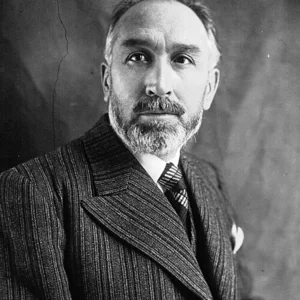

French socialist politician (1888–1941), Minister of the Interior in Léon Blum's government under the Popular Front. He was assassinated by the Cagoule, a clandestine fascist organization.
Marx Dormoy(1888 — 1941)
Marx Dormoy
France
8 min read
Frequently asked questions
Key Facts
- Born on 26 March 1888 in Montluçon, a socialist activist from his youth
- As Minister of the Interior in Léon Blum's government (1936–1937), he dismantled the Cagoule
- Placed under house arrest in Montélimar by the Vichy regime in 1941
- Assassinated on 26 July 1941 in a bomb attack carried out by the Cagoule
- The Marx Dormoy metro station (line 12, Paris) bears his name in his memory
Works & Achievements
A police and judicial operation conducted from the Ministry of the Interior that neutralized France's main fascist terrorist organization, resulting in the seizure of thousands of weapons and the arrest of Cagoulard leaders who were plotting a coup d'état.
As Minister of the Interior, Dormoy oversaw the maintenance of order and the enforcement of the Matignon Agreements across the country, enabling the introduction of paid holidays, the 40-hour workweek, and collective bargaining agreements.
Over six years, Dormoy modernized Montluçon — school facilities, social policies, support for the labor movement — turning this industrial city into a flagship example of French municipal socialism.
As Deputy for the Allier for nearly a decade, Dormoy contributed to debates on the defense of the Republic, the fight against fascist leagues, and the social policy of the Popular Front, leaving an oratorical record in the parliamentary archives.
By refusing to grant full powers to Marshal Pétain — one of only 79 parliamentarians out of 649 to do so — Dormoy carried out one of the most significant acts of republican resistance in the face of defeat, at the risk of his freedom and his life.
Anecdotes
In November 1937, Marx Dormoy pulled off the most spectacular coup of his time as Minister of the Interior: he dismantled the Cagoule, a far-right terrorist organization that had hidden thousands of automatic weapons, machine guns, and explosives in secret caches across Paris. The Cagoulards were planning a fascist coup; Dormoy, by ordering searches and arrests, blew the scandal wide open.
On July 26, 1941, in Montluçon, Marx Dormoy was jolted awake in the middle of the night by an explosion: a time bomb had been slipped under his bed by Cagoulards whom the Vichy regime had released from prison. Under house arrest by Pétain's regime in his own city, he had no means of escape; he died of his wounds, becoming the first political assassination victim of the Occupation among the former ministers of the Popular Front.
During the vote of July 10, 1940, in Vichy, Marx Dormoy was one of the 80 parliamentarians who refused to grant full powers to Marshal Pétain, thereby standing against the burial of the Republic. This courageous act earned him the particular hostility of the Vichy regime, which arrested him shortly afterward and placed him under house arrest in Montluçon.
Mayor of Montluçon since 1935, Dormoy had turned this industrial town in the Allier into a genuine laboratory for municipal socialism: new schools, social programs, support for trade unions. His constituents — mostly workers from the metallurgical factories — voted for him overwhelmingly at every election; to them, he embodied the human face of politics.
As Léon Blum's Minister of the Interior in 1936, Dormoy had to manage an explosive situation: millions of workers were occupying their factories on strike, demanding the implementation of the Matignon Agreements. Rather than resorting to force, he kept dialogue open and maintained public order without violence, allowing the Popular Front's landmark social reforms to come into effect.
Primary Sources
War weapons in considerable quantities have been seized; plots against the security of the State have been foiled. The Republic has the right and the duty to defend itself against those who seek to bring it down by violence.
Socialism is not merely an economic programme — it is a moral imperative. We must build a society in which every worker has access to dignity, to rest, to culture.
Voted against granting full powers: [...] Dormoy (Marx) [...]. These eighty parliamentarians refused to sign the death warrant of the French Republic.
I am still among you, even if they claim to isolate me. The cause of the people is never silenced. Long live the Republic, long live Montluçon.
Key Places
Marx Dormoy's birthplace and the heart of his political commitment: he worked there as a laborer, activist, deputy, and mayor, and it was there that he was assassinated on **July 26, 1941** by the Cagoule.
The ministerial seat where Dormoy served under Léon Blum's government (**1936–1938**). From this mansion in the 8th arrondissement, he coordinated the dismantling of the Cagoule and managed the wave of strikes.
The seat of the Chamber of Deputies, where Dormoy sat as the representative for Allier from **1931 to 1940** and delivered his speeches defending the Republic against fascist leagues.
The site of the historic vote of **July 10, 1940**, when members of parliament granted full powers to Pétain. Dormoy was one of the **80** who refused — an act of republican resistance that led to his arrest by the Vichy regime.
The supervised residence where Dormoy was placed under house arrest by Vichy in **1940–1941**. It was in his room at this establishment that he was assassinated by a bomb during the night of **July 25–26, 1941**.
Typical Objects

The Interior Minister's everyday accessory, it held the secret files on far-right organizations that Dormoy had placed under surveillance. It was in these reports that he accumulated the evidence needed to dismantle the Cagoule.

Dormoy had been a member of the French Section of the Workers' International since his youth. This card symbolized his political commitment and his place within the republican left that brought the Popular Front to power in 1936.

Elected mayor of Montluçon in 1935, Dormoy wore this sash at official ceremonies. It embodied his dual role as a national statesman and a locally elected official who remained close to the workers of his city.

The official press organ of the SFIO, founded in the tradition of Jaurès, which Dormoy read every morning and where he published his political analyses. It was one of the main channels for spreading republican socialist ideas.

Confidential documents accumulated by the intelligence services under Dormoy's authority at the Ministry of the Interior. These files formed the legal basis for the arrests of November 1937.

The bomb slipped under his bed on the night of July 25–26, 1941 was the murder weapon that took Dormoy's life. Built using terrorist methods perfected by the Cagoule, it tragically symbolizes the blowback from his campaign against the fascists.
School Curriculum
Vocabulary & Tags
Key Vocabulary
Daily Life
Morning
Up early, Marx Dormoy began his day reading *Le Populaire* and the regional press to keep up with political and labor news. At the ministry, he received his department heads and general intelligence chiefs as early as 8 a.m. for overnight briefings: strikes, agitation by political leagues, intelligence on far-right movements.
Afternoon
Ministerial afternoons were dedicated to interministerial meetings at Matignon, hearings with prefects, or sessions in the Chamber of Deputies. Dormoy regularly worked on sensitive files — surveillance of fascist organizations, managing strikes with factory occupations — alongside his legal advisors and police inspectors general.
Evening
In the evenings, Dormoy often returned home late after working meetings or political dinners with SFIO leaders. When in Montluçon, he enjoyed mingling with workers in neighborhood cafés, discussing local politics; he was a man of the people, with little interest in Parisian social life.
Food
Dormoy's eating habits reflected his working-class origins: simple meals and regional dishes from the Allier such as *potée bourbonnaise* or green lentils from Berry. He did not frequent upscale Parisian restaurants, preferring the ministry cafeteria or political brasseries in the Saint-Germain neighborhood.
Clothing
As a politician of the Third Republic, Dormoy wore the obligatory dark three-piece suit, accompanied by a hat and a sober tie. Like many socialists of the era, he avoided ostentation: his attire reflected republican respectability without bourgeois excess.
Housing
In Paris during his ministerial term, Dormoy lodged in a modest apartment, far from the splendors of the capital. In Montluçon, he lived in an unpretentious bourgeois house, open to his fellow citizens. Under house arrest in 1940–1941, he occupied a hotel room — the Hôtel des Sports — under the constant surveillance of Vichy authorities.
Historical Timeline
Period Vocabulary
Liens externes & ressources
Références
Œuvres
Application des réformes sociales du Front populaire
1936-1937
Mandat de maire de Montluçon
1935-1941
Activité parlementaire et discours à la Chambre des députés
1931-1940
Vote contre les pleins pouvoirs à Pétain
10 juillet 1940