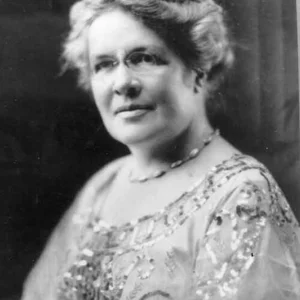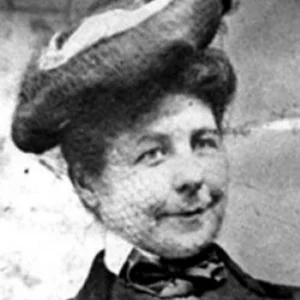

Mary Anderson (1866-1953) was an American inventor. In 1903, she designed and patented the first manual windshield wiper for vehicles, a lever-operated device controlled from inside the cabin.
Mary Anderson(1866 — 1953)
Mary Anderson
États-Unis
5 min read
Frequently asked questions
Key Facts
- Born on February 19, 1866, in Greene County, Alabama (United States)
- Received U.S. patent No. 743,801 in 1903 for her windshield-cleaning device
- Her windshield wiper was a rubber-bladed arm operated manually by a lever from inside the vehicle
- Her patent expired in 1920, before the invention became widespread on automobiles
- Died on June 27, 1953, in Monteagle, Tennessee
Works & Achievements
First patented device for cleaning a windshield from inside the vehicle; the direct ancestor of the windshield wiper found on every modern car.
A farming venture she ran in California, showcasing an entrepreneurial spirit rare for a woman of her time.
She managed a residential building in Birmingham, a source of income she lived on for many years.
Anecdotes
In the winter of 1902, during a visit to New York, Mary Anderson watched from a streetcar as the driver was forced to open his window or stop constantly to scrape off by hand the melting snow that blinded the windshield. Back in Alabama, she sketched a hinged arm fitted with a rubber blade, operated from inside by a lever: the windshield wiper was born.
Her patent was officially granted on November 10, 1903, under the title “Window Cleaning Device.” At the time the automobile was still rare and expensive, and many considered her invention useless, with some even fearing that the moving arm might distract the driver.
Around 1905, Mary Anderson offered her invention to a Canadian firm to bring it to market. The company declined, judging that the device had no sufficient commercial value: she would never earn a penny from her idea.
Her patent expired in 1920, just before mass-market automobiles became widespread. By 1922, manufacturers such as Cadillac were installing windshield wipers as standard equipment on their cars—but Mary Anderson, no longer protected, did not receive a single cent.
A woman entrepreneur at a time when this was rare, she ran a ranch and a vineyard in California, then an apartment building in Birmingham. Her pioneering role was only recognized after her death: she was inducted into the United States National Inventors Hall of Fame in 2011.
Primary Sources
Be it known that I, Mary Anderson, a citizen of the United States, residing at Birmingham, in the county of Jefferson and State of Alabama, have invented a new and useful Window-Cleaning Device... designed to remove snow, ice, or sleet from the window.
The device comprises a swinging arm carrying a rubber blade, operated from inside the vehicle by means of a lever, and returned to position by a spring in order to sweep the glazed surface.
Key Places
Rural region of the American South where Mary Anderson was born in 1866.
Booming industrial city where Mary Anderson lived, filed her patent, and later managed an apartment building.
It was during a stay in the metropolis, in the winter of 1902, that she came up with the idea for the windshield wiper while watching a streetcar.
Region where Mary Anderson ran a cattle ranch and a vineyard in the 1890s.
Resort town in the Tennessee mountains where Mary Anderson died in 1953.
Typical Objects

An articulated arm holding a rubber blade that swept across the windshield to clear away snow and rain. The first device of its kind, patented by **Mary Anderson** in **1903**.

A handle mounted inside the cabin, connected to the wiper arm, which the driver operated by hand without opening the window.

A strip of rubber attached to the arm that scraped water and snow off the glass surface. The key element behind the invention's effectiveness.

Patent US 743,801, accompanied by technical diagrams, which legally protected **Mary Anderson**'s invention with the U.S. Patent Office.

A rail car powered by an overhead line, very common in American cities around 1900. It was while watching its driver that **Mary Anderson** had her idea.

The front pane protecting the driver from wind and bad weather, whose widespread adoption made the windshield wiper indispensable.
School Curriculum
Vocabulary & Tags
Key Vocabulary
Tags
Daily Life
Morning
An active woman in Birmingham, Mary Anderson started her day early, checking that the building she managed was in good order and handling routine matters with the tenants. Mail and bookkeeping took up a good part of the morning.
Afternoon
The afternoon might be devoted to errands in town, visits to suppliers or, during her younger years in California, to overseeing the ranch and the vineyard. It was this practical sense that led her to devise concrete solutions like the windshield wiper.
Evening
In the evening, by the light of kerosene and later electric lamps, she read newspapers and magazines reporting on the progress of the automobile and of inventions, in an America fascinated by technology.
Food
Food in the American South around 1900 was based on corn, pork, chicken, vegetables from the garden and cornbread. Coffee was the daily drink, and fresh fruit was plentiful in summer.
Clothing
Like the well-to-do women of her time, she wore long dresses with a fitted waist, full skirts, bodices buttoned up to the neck, as well as hats and gloves when going out in town.
Housing
She lived in Birmingham in comfortable urban dwellings, including the building she managed, gradually fitted with the electric lighting, heating and running water that were spreading through American cities.
Historical Timeline
Period Vocabulary
Liens externes & ressources
Références
Œuvres
Essuie-glace manuel (brevet US 743,801)
1903
Exploitation d'un ranch et d'un vignoble à Fresno
années 1890
Gestion de l'immeuble Fairmont à Birmingham
à partir des années 1900