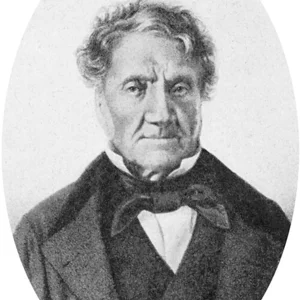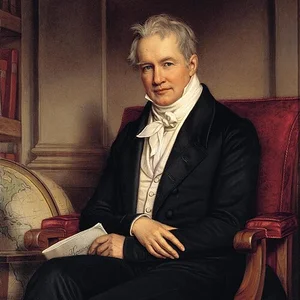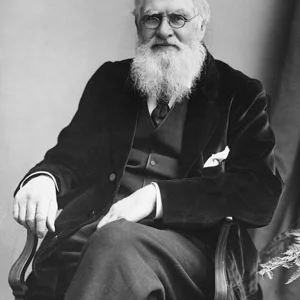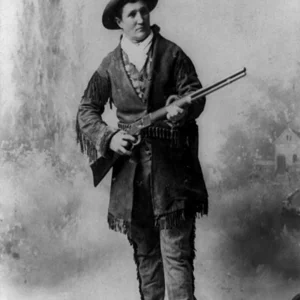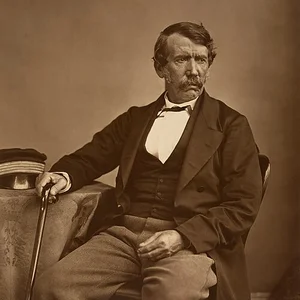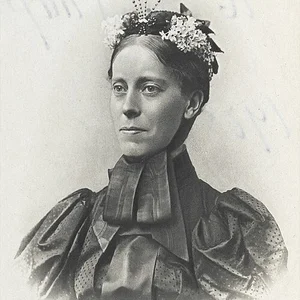

British explorer and ethnographer (1862–1900), Mary Kingsley was one of the first European women to travel alone in West Africa. She brought back invaluable observations on the cultures and wildlife of Gabon and the Congo, and championed African societies against colonial prejudice.
Mary Kingsley(1862 — 1900)
Mary Kingsley
Royaume-Uni de Grande-Bretagne et d'Irlande
8 min read
Frequently asked questions
Famous Quotes
« I went to West Africa to die, but life had decided otherwise.»
Key Facts
- 1862: Born in Islington, London
- 1893–1894: First voyage to West Africa (Sierra Leone, Angola)
- 1895: Second voyage; ascent of Mount Cameroon and crossing of Gabon
- 1897: Publication of Travels in West Africa, a landmark reference work on African ethnography
- 1900: Died at Simon's Town (South Africa) during the Boer War, aged 37
Works & Achievements
A travel account of West Africa (Gabon, Congo, Cameroon) that made Kingsley a celebrity. Combining ethnographic and zoological observations with criticism of colonial policy, it was an immediate bestseller and remains a landmark of Victorian travel literature.
An analytical work in which Kingsley sets out her vision of African societies, defends their traditional legal and religious systems, and argues against missionary methods. Less popular but more intellectually ambitious than her first book.
A historical and geographical overview of West Africa aimed at a broad audience. Kingsley traces the history of contact between Europe and the African coast, offering a more nuanced account than the prevailing colonial narrative.
A collection of freshwater fish specimens gathered along the Ogooué and Mungo rivers, comprising eighteen species new to science. Several bear her name, including *Ctenopoma kingsleyae*.
Anecdotes
During her expedition through the Gabonese forest in 1895, Mary Kingsley fell into a game trap lined with sharp stakes. She escaped unharmed thanks to her thick Victorian skirts, which cushioned the impact, and noted with characteristic humor that her outfit had “saved her skin” — where lighter clothing would have proved fatal.
To cross Fang territory — a people then feared by Europeans for their warlike practices — Mary Kingsley adopted an unconventional strategy: she presented herself as an ordinary trader, offering tobacco, cloth, and rubber. This status as a “trader” opened doors that neither missionaries nor colonial administrators could pass through.
In September 1895, Mary Kingsley climbed Mount Cameroon (4,095 m) by an entirely new route, reaching the summit in full Victorian dress — long skirt, corset, and hat. She narrowly beat the previous ascent record held by male explorers and became the first woman to achieve this feat.
Tasked with collecting specimens for the British Museum, Kingsley brought back eighteen species of fish previously unknown to European scientists. In recognition of her rigorous scientific work, several species bear her name today, including Ctenopoma kingsleyae, a freshwater fish from the Congo Basin.
Mary Kingsley died at the age of 37 on 3 June 1900 in Simon's Town, South Africa, from typhoid fever contracted while voluntarily nursing wounded Boer prisoners. In accordance with her final wishes, she was buried at sea, far from shore — as if to remain forever bound to the continent that had defined her life.
Primary Sources
Fortunately I had on a good thick skirt. Save for a good many bruises I was not hurt at all. It is at such moments that one realises the value of a good, stout, well-made dress.
The African has a law — a body of common law, unwritten yet perfectly understood and acted upon. To dismiss it as fetish or superstition is to miss the point entirely; it is a rational system governing social life, property and justice.
I had been told the Fan were ferocious cannibals, but I found them to be men who would trade fairly and deal honourably when dealt with on their own terms. Their customs, however strange to European eyes, have their own internal logic.
I bring back from Africa things that England will not easily believe, for they run counter to everything that is assumed about the African peoples — their intelligence, their laws, their sense of honour.
Key Places
Mary Kingsley's birthplace in 1862. She grew up here in an intellectually minded middle-class family, receiving no formal schooling and educating herself through her father's library.
The central artery of her 1895 expedition. Kingsley paddled up the Ogooué by canoe to the Ndjolé rapids and beyond, into territory no European had ever crossed. It was here that she collected the bulk of her zoological specimens and made sustained contact with the Fang people.
A 4,095-metre peak she climbed on 25 September 1895 by a previously unrecorded route, wearing full Victorian dress. The ascent, described in *Travels in West Africa*, has become one of the defining symbols of her fearlessness.
The main base of her stays in Gabon, this coastal city was where she resupplied, met traders and colonial officials, and organised her expeditions into the interior.
The place where Mary Kingsley died on 3 June 1900, having travelled there to nurse Boer prisoners of war in a military hospital. She contracted typhoid fever and died at the age of 37; in accordance with her wishes, she was buried at sea.
Typical Objects

Mary Kingsley carried jars filled with formaldehyde to preserve fish and reptile specimens destined for the British Museum. These fragile containers somehow survived the journeys by dugout canoe and portages through the equatorial forest.

Kingsley categorically refused to adopt masculine or practical clothing, always wearing her long skirt even in the equatorial forest. She argued that this attire earned her consideration and respect from local populations, and had once saved her life when she fell into a game trap.

She recorded her ethnographic, botanical, and zoological observations daily in notebooks carefully protected from tropical humidity. These notes formed the raw material for her two major works.

To move freely through unknown territory, Kingsley operated as a merchant, exchanging tobacco, fabric, and small manufactured goods for food, shelter, and protection. This status as a “trader” opened doors that were closed to missionaries and colonial administrators.

The primary mode of transport on the great Gabonese rivers such as the Ogooué, the dugout canoe allowed her to penetrate regions inaccessible by land. She taught herself to paddle and to read the currents.

Like most explorers of her era, Kingsley traveled armed with a light rifle, used for hunting and for protection in highly remote regions. She mentioned it with a mixture of humor and pragmatism in her accounts.
School Curriculum
Vocabulary & Tags
Key Vocabulary
Tags
Daily Life
Morning
On expedition in the Gabonese forest, Mary Kingsley rose before dawn to take advantage of the relative cool. She recorded the previous day's observations in her notebooks, checked the state of her collection jars, and negotiated with her porters or local guides about the day's stages.
Afternoon
Afternoons were devoted to travel — on foot through the forest or by dugout canoe on the rivers — and to collecting specimens. She observed aquatic fauna, took ethnographic notes, and, when staying in a village, took part in trade exchanges to maintain her cover as a “trader.”
Evening
Evenings were often spent around the fire in Fang villages or in traders' trading posts. Kingsley listened to stories, asked questions about local customs, and wrote up her detailed notes by the light of an oil lamp before sleeping in whatever was available — hammock, mat, or rudimentary bunk.
Food
In West Africa, Kingsley ate what her hosts ate: boiled plantain, cassava, smoked fish, game, and sometimes bushmeat. She noted local eating habits without disgust or judgement, and rarely fell back on the European rations she carried in reserve.
Clothing
Kingsley wore her Victorian dress to the very end: a long black serge skirt, high-collared blouse, jacket, and hat. She categorically refused trousers or masculine bush clothing, arguing that her attire guaranteed her respect and safety, and had even saved her life when she fell into an animal trap.
Housing
While travelling, she lodged wherever presented itself: mud-and-leaf huts in villages, trading post warehouses on the riverbanks, or cabins aboard steam vessels on the coastal rivers. Back in London, she lived modestly, preferring to devote her resources to her next journeys.
Historical Timeline
Period Vocabulary
Liens externes & ressources
Références
Œuvres
Travels in West Africa
1897
West African Studies
1899
The Story of West Africa
1899
Collection ichtyologique pour le British Museum
1895-1896