 flip
flipSalt-Water Oat Porridge
Salt-Water Oat Porridge
Why this dish? Mary's grounding indicates a diet of bread, vegetables, cheese, porridge and tea, typical of the London middle classes in the 1780s-1790s. Porridge opened her working day at the table in Newington Green or Somers Town: nourishing, cheap, faithful to her modest means as a woman of letters.
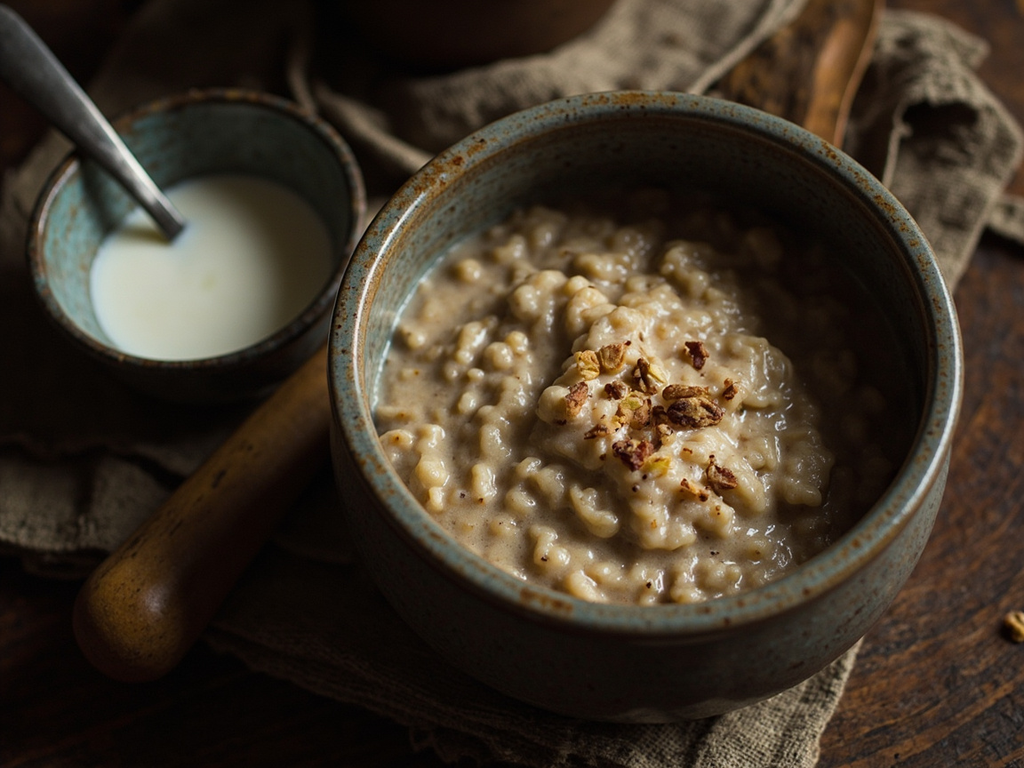
Thick oat porridge cooked long in salted water, served piping hot with a dash of milk when the purse allowed. A no-fuss breakfast that sticks to the ribs until dinner.
I never had a taste for the refinements of the table, and my bowl of porridge suffices me amply. See: one throws a handful of oatmeal into salted water, and stirs without ceasing over the fire until the porridge thickens and sets. A little milk, if the week was good, and nothing more — for the mind that would rise must not be weighed down by superfluous dishes. A reasonable woman eats to think, not to indulge.
- •Oatmeal (groats) — a good handful per person (nourishing base)
- •Spring water — three measures of water to one of oatmeal (cooking)
- •Salt — a pinch (seasoning)
- •Milk — a dash, according to means (optional garnish)
Salt-Water Oat Porridge
Thick oat porridge cooked long in salted water, served piping hot with a dash of milk when the purse allowed. A no-fuss breakfast that sticks to the ribs until dinner.
Why this dish? Mary's grounding indicates a diet of bread, vegetables, cheese, porridge and tea, typical of the London middle classes in the 1780s-1790s. Porridge opened her working day at the table in Newington Green or Somers Town: nourishing, cheap, faithful to her modest means as a woman of letters.
I never had a taste for the refinements of the table, and my bowl of porridge suffices me amply. See: one throws a handful of oatmeal into salted water, and stirs without ceasing over the fire until the porridge thickens and sets. A little milk, if the week was good, and nothing more — for the mind that would rise must not be weighed down by superfluous dishes. A reasonable woman eats to think, not to indulge.
Ingredients (period version)
- Oatmeal (groats) — a good handful per person (nourishing base)
- Spring water — three measures of water to one of oatmeal (cooking)
- Salt — a pinch (seasoning)
- Milk — a dash, according to means (optional garnish)
Ingredients
- Rolled oats (or pinhead oats) — 50 g per person (base)
- Water — 300 ml (cooking)
- Fine salt — 1 pinch (seasoning)
- Whole milk — 50 ml (for serving) (garnish)
Method
- Bring the salted water to a simmer in a saucepan.
- Sprinkle in the oats while stirring immediately with a wooden spoon.
- Cook for 5–8 minutes (rolled oats) or 20–25 minutes (pinhead oats) over low heat, stirring often to prevent sticking.
- When the porridge is thick and creamy, pour into a bowl and drizzle with cold milk at serving time.
How it was made : Porridge was prepared in a cast-iron pot over the hearth fire, stirred with a wooden stick called a spurtle in Scotland. The poorest made do with water and salt; milk, honey or treacle were occasional luxuries. Cold porridge was sometimes sliced into pieces for the next meal.
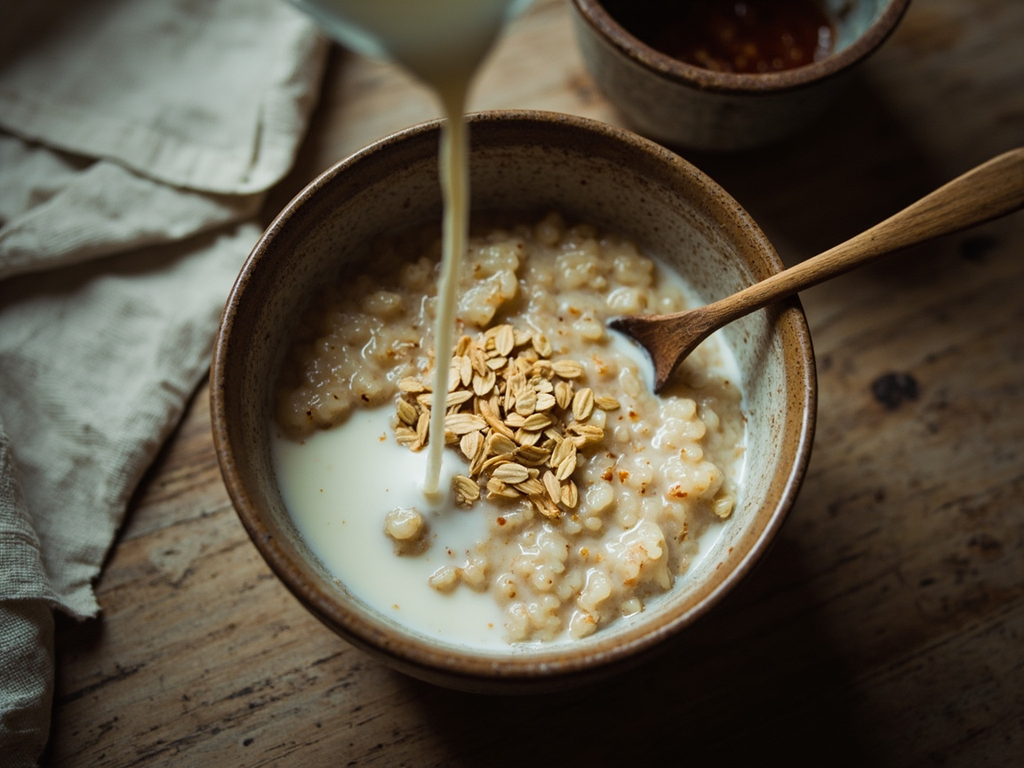
The contemporary twist : Served in a raw stoneware bowl with a swirl of steaming milk poured in a spiral — unapologetic Georgian austerity, without sugar or frills.
Sources : Hannah Glasse, The Art of Cookery Made Plain and Easy (1747) · C. Anne Wilson, Food and Drink in Britain (1973)
Mary Wollstonecraft · Charactorium