 flip
flipChickpea and Chard Minestra
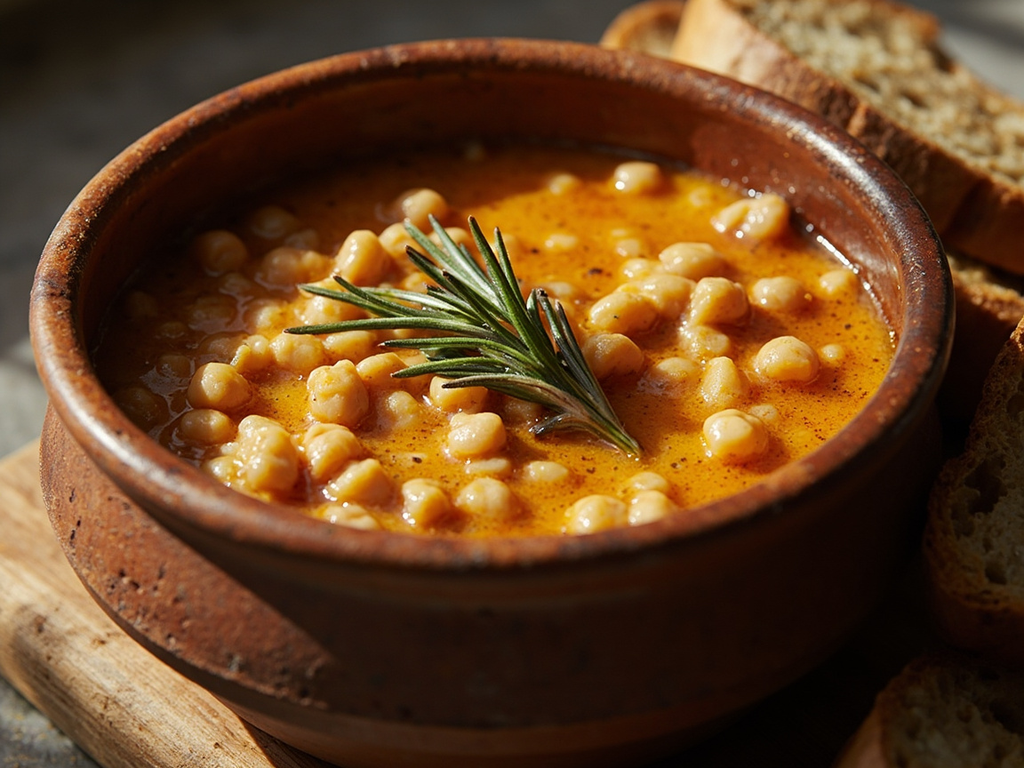
Chickpea and Chard Minestra
Why this dish? Daughter and widow of painters, Artemisia ran a workshop in Rome and later in Naples, where she fed apprentices and models with the fare of artisans: legumes soaked the night before, bitter market greens, a drizzle of oil. A pot that simmers while one grinds pigments.
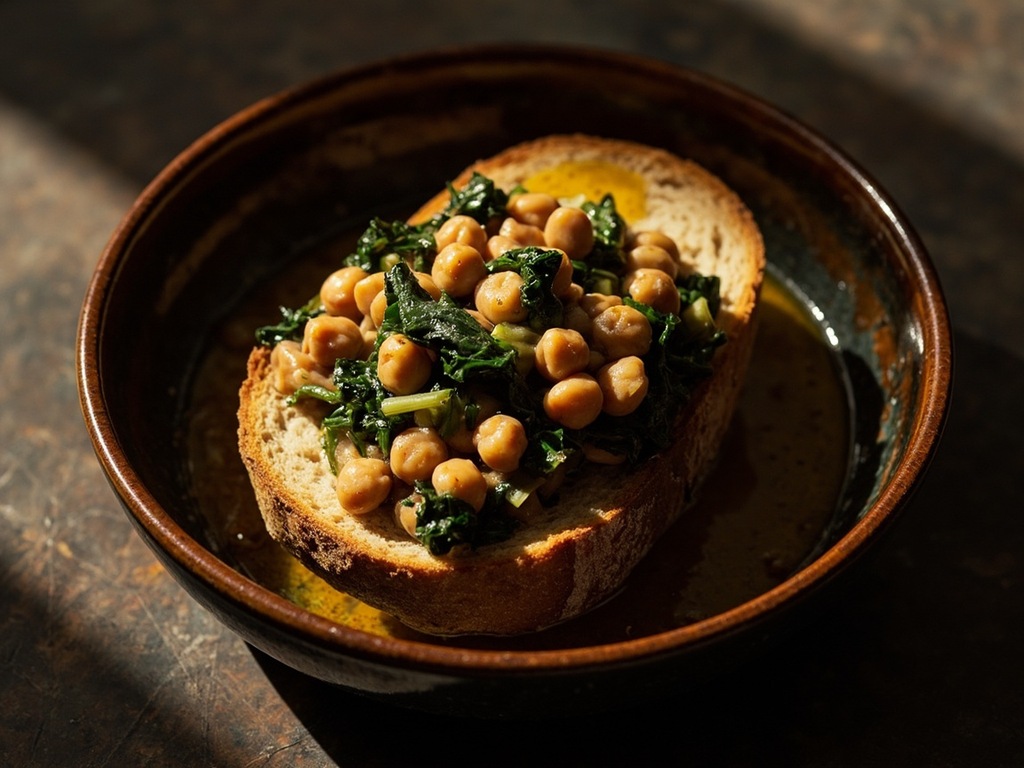
A thick, nourishing pottage: tender chickpeas, slightly bitter chard, flavored with garlic, rosemary, and olive oil. It is eaten over a slice of stale bread placed at the bottom of the bowl, which soaks up the broth.
Know, you who read me, that before holding the brush one must fill the belly, and mine was often that of a house full of boys to paint and to feed. I would soak my chickpeas from the evening, as my mother did in Rome, and in the morning they would cook gently with a sprig of rosemary while I ground my earths and ochres. The bitter chard, I threw in at the end, a thread of oil over it, and all onto a crust of stale bread — that is enough to keep one standing until nightfall. Do not despise this poor man's dish: it has borne more than one masterpiece.
- •Dried chickpeas — a good bowlful (nourishing base)
- •Chard (or other bitter seasonal greens) — one bunch (bitter greens)
- •Garlic — a few cloves (aromatic)
- •Rosemary — one sprig (flavoring)
- •Olive oil — a good drizzle (binding and flavor)
- •Stale bread — some slices (base in the bowl)
- •Salt — to taste (seasoning)
Chickpea and Chard Minestra
A thick, nourishing pottage: tender chickpeas, slightly bitter chard, flavored with garlic, rosemary, and olive oil. It is eaten over a slice of stale bread placed at the bottom of the bowl, which soaks up the broth.
Why this dish? Daughter and widow of painters, Artemisia ran a workshop in Rome and later in Naples, where she fed apprentices and models with the fare of artisans: legumes soaked the night before, bitter market greens, a drizzle of oil. A pot that simmers while one grinds pigments.
Know, you who read me, that before holding the brush one must fill the belly, and mine was often that of a house full of boys to paint and to feed. I would soak my chickpeas from the evening, as my mother did in Rome, and in the morning they would cook gently with a sprig of rosemary while I ground my earths and ochres. The bitter chard, I threw in at the end, a thread of oil over it, and all onto a crust of stale bread — that is enough to keep one standing until nightfall. Do not despise this poor man's dish: it has borne more than one masterpiece.
Ingredients (period version)
- Dried chickpeas — a good bowlful (nourishing base)
- Chard (or other bitter seasonal greens) — one bunch (bitter greens)
- Garlic — a few cloves (aromatic)
- Rosemary — one sprig (flavoring)
- Olive oil — a good drizzle (binding and flavor)
- Stale bread — some slices (base in the bowl)
- Salt — to taste (seasoning)
Ingredients
- Dried chickpeas — 250 g (soaked 12 h) (nourishing base)
- Chard (stems and leaves) — 400 g (bitter greens)
- Garlic — 3 cloves (aromatic)
- Rosemary — 1 sprig (flavoring)
- Extra-virgin olive oil — 4 tbsp (binding and flavor)
- Rustic stale bread — 4 slices (base in the bowl)
- Salt — to taste (seasoning)
Method
- The night before, soak the chickpeas in a large volume of cold water.
- The next day, drain them and cook in unsalted water with the crushed garlic and rosemary, over low heat, for 1.5 to 2 hours, until very tender.
- Season with salt only at the end of cooking (salt hardens the skin if added too early).
- Wash the chard, separate the stems (add 5 min before) from the leaves (2 min), and poach them in the broth.
- Place a slice of stale bread at the bottom of each bowl, ladle the boiling pottage over it, drizzle generously with raw olive oil, and serve.
How it was made : Legumes (chickpeas, fava beans, lentils) and green tops made up the bulk of the popular *minestra* in 17th-century Italy. They were boiled in water, mostly without meat, and stale bread prevented waste: placed at the bottom of the bowl, it became the heartiest part of the meal.
The contemporary twist : A turn of the pepper mill and a few shavings of pecorino on top, served in a deep earthenware bowl — shadow and light in the bowl.
Sources : Bartolomeo Scappi, Opera dell'arte del cucinare, Venice, 1570 · Bartolomeo Sacchi (Platina), De honesta voluptate et valetudine, 1474
Artemisia Gentileschi · Charactorium