 flip
flipHoney-Roasted Goose with Figs and Coriander
Honey-Roasted Goose with Figs and Coriander
Why this dish? Fat goose was the prestige poultry of Egyptian banquets, raised on royal estates and offered in abundance on offering tables. At Nefertiti's table, roast duck and goose were among the noble meats, glazed with honey and perfumed with garden herbs.
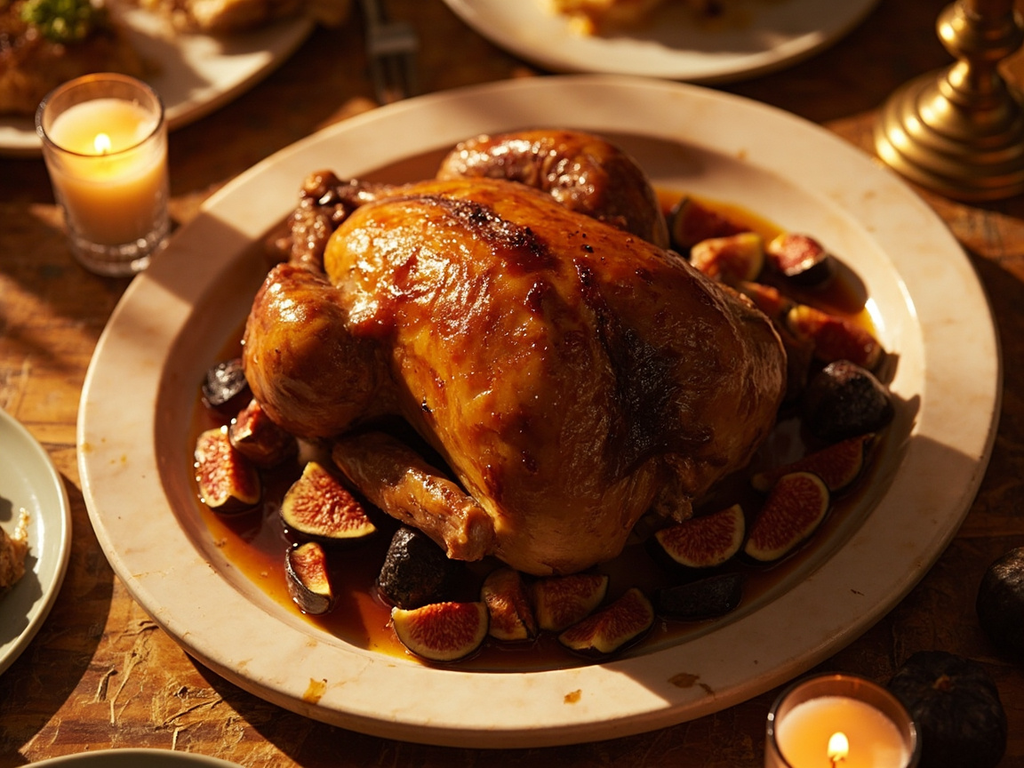
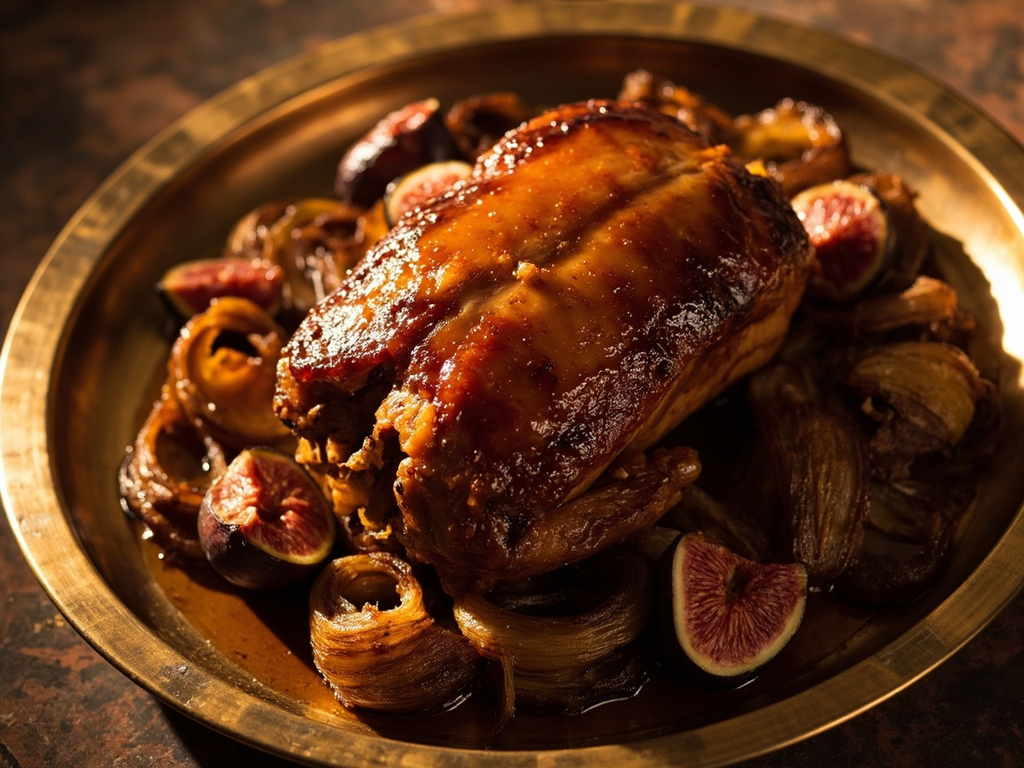
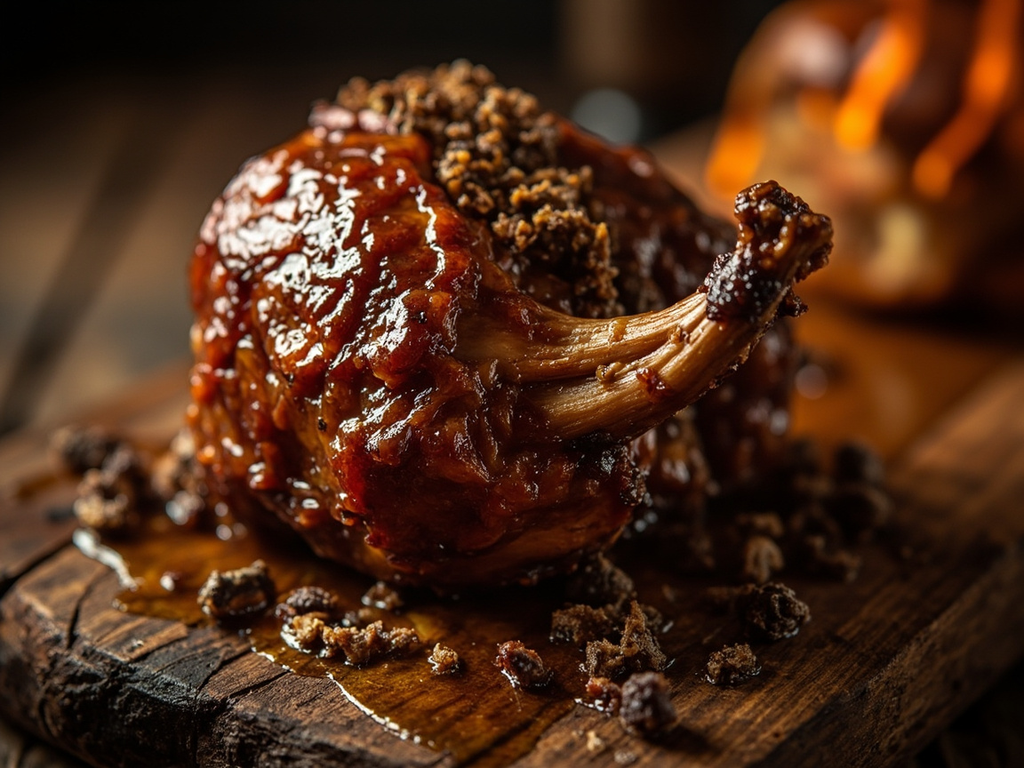
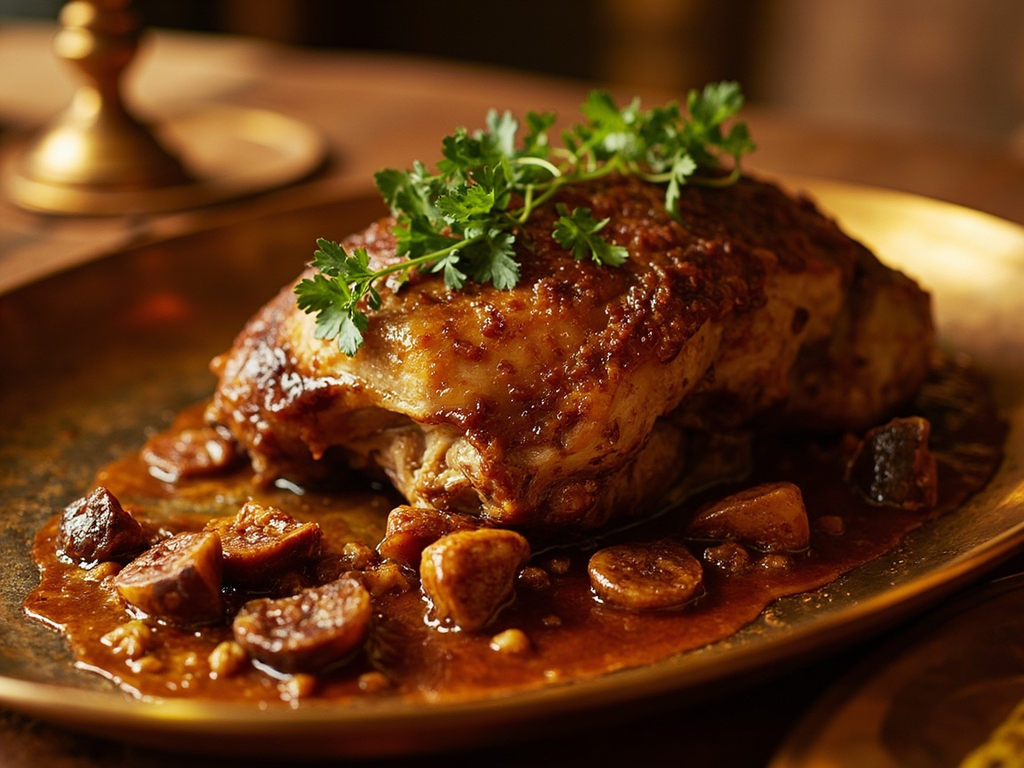
A golden, honey-lacquered goose with crispy skin and melting flesh, spiced with coriander and figs confit in its juices. A festive dish worthy of a banquet under the solar disk.
See this goose I offer my guests during the feasts of Aten! It was fattened on my estates, then slowly roasted until its skin shone like the gold of my cups. My cooks glaze it with honey from my hives and toss in figs and coriander, for a queen receives her guests with what the earth gives most generously. When the disk floods the hall, we eat, and joy is great.
- •Fattened goose — one whole bird (centerpiece)
- •Honey — generously (glaze)
- •Fresh and dried figs — a scattering (sweet garnish)
- •Coriander (seeds and leaves) — a handful (aroma)
- •Onions — a few (base)
- •Oasis salt — by hand (seasoning)
Honey-Roasted Goose with Figs and Coriander
A golden, honey-lacquered goose with crispy skin and melting flesh, spiced with coriander and figs confit in its juices. A festive dish worthy of a banquet under the solar disk.
Why this dish? Fat goose was the prestige poultry of Egyptian banquets, raised on royal estates and offered in abundance on offering tables. At Nefertiti's table, roast duck and goose were among the noble meats, glazed with honey and perfumed with garden herbs.
See this goose I offer my guests during the feasts of Aten! It was fattened on my estates, then slowly roasted until its skin shone like the gold of my cups. My cooks glaze it with honey from my hives and toss in figs and coriander, for a queen receives her guests with what the earth gives most generously. When the disk floods the hall, we eat, and joy is great.
Ingredients (period version)
- Fattened goose — one whole bird (centerpiece)
- Honey — generously (glaze)
- Fresh and dried figs — a scattering (sweet garnish)
- Coriander (seeds and leaves) — a handful (aroma)
- Onions — a few (base)
- Oasis salt — by hand (seasoning)
Ingredients
- Duck legs and breasts (or goose if available) — 1.5 kg (centerpiece)
- Honey — 4 tbsp (glaze)
- Fresh figs — 8 (sweet garnish)
- Dried figs — 6 (sweet garnish)
- Ground coriander seeds — 1 tsp (aroma)
- Fresh coriander — a few sprigs (finish)
- Onions — 2 (base)
- Salt — to taste (seasoning)
Method
- Rub the poultry with salt and ground coriander; let rest for 1 hour.
- Slice the onions and line a roasting pan; place the meat on top, skin side up.
- Roast at 180°C for 1 hour 15 minutes, basting regularly with the juices.
- Halfway through, add the dried figs cut in half to the pan.
- Mix honey with a little cooking juice and brush the skin; add the fresh figs.
- Increase oven to 210°C for the last 15 minutes to lacquer and caramelize.
- Sprinkle with fresh coriander before serving.
How it was made : Banquet scenes painted in Theban tombs show roast geese and ducks on tables. Egyptians already force-fed geese to fatten their livers. Without sugar, honey and dried fruits (figs, dates, raisins) were used to glaze and sweeten meats. Cooking was done on spits or in clay ovens.
The contemporary twist : Arrange on a large copper platter, burst figs all around and a drizzle of hot honey at the last moment, 'Feast of Akhetaten' style.
Sources : Pierre Tallet, La cuisine des pharaons (Actes Sud, 2015) · Joyce Tyldesley, Nefertiti: Egypt's Sun Queen (Penguin, 1998)
Nefertiti · Charactorium