 flip
flipRoast Goose with Honey, Dates, and Coriander
Roast Goose with Honey, Dates, and Coriander
Why this dish? Tomb paintings show force-fed geese roasted for court banquets. During the great religious festivals of Thebes, Ramesses II offered feasts where courtiers and dignitaries shared these fatty birds, symbols of abundance and royal favor.
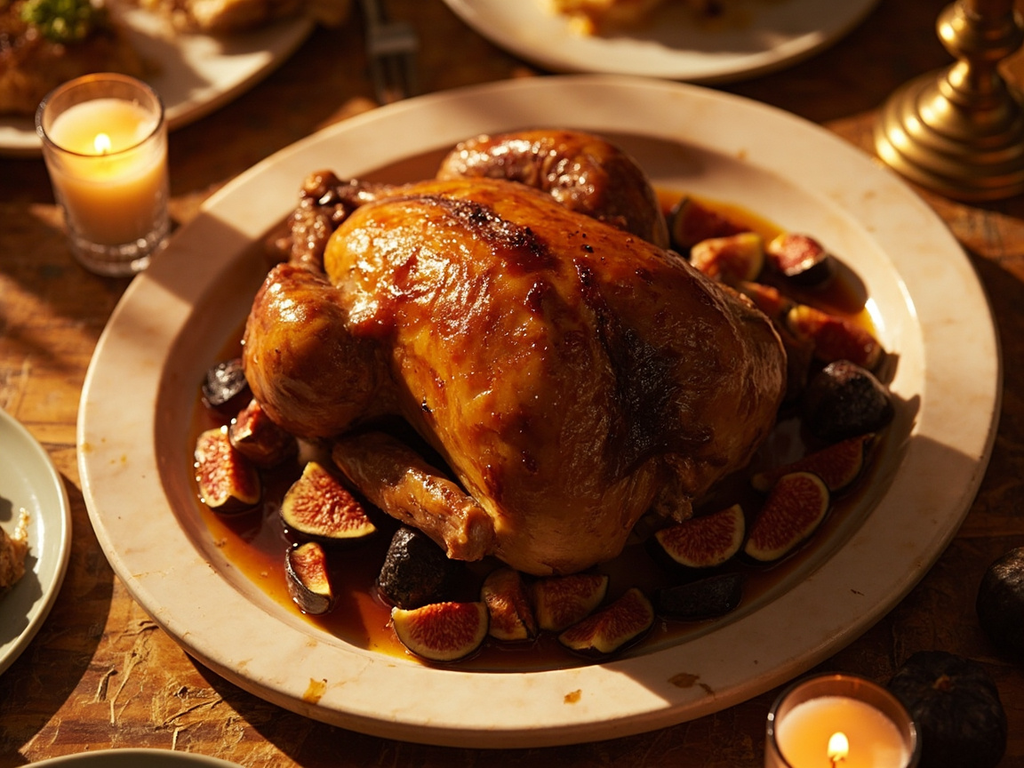
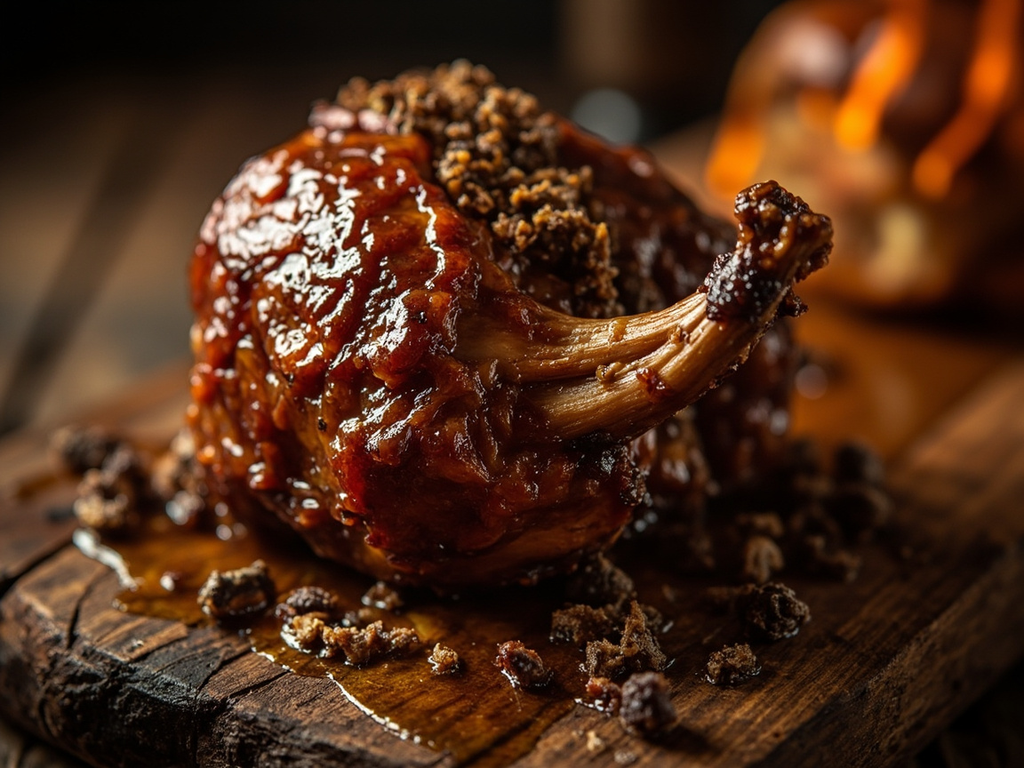
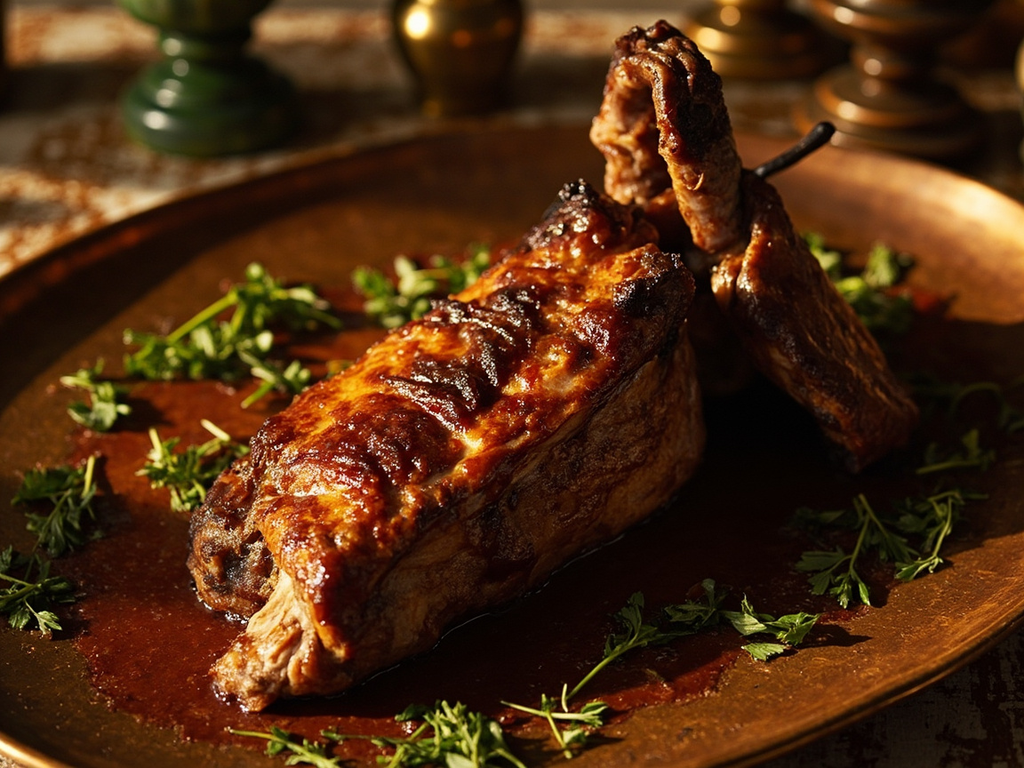
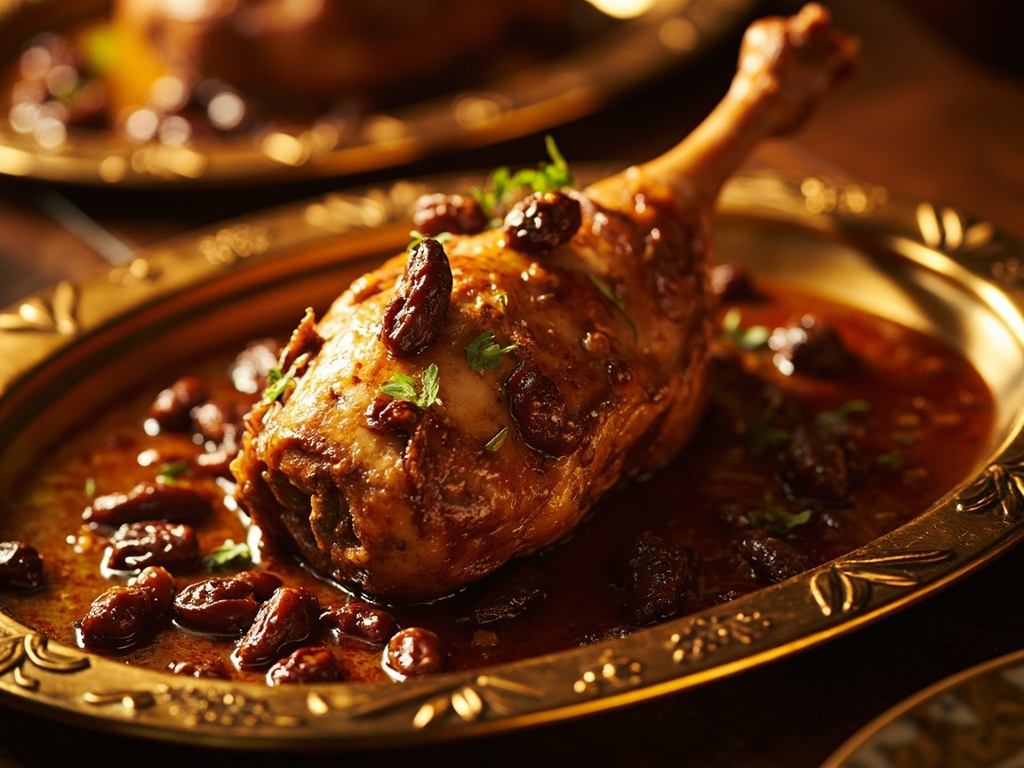
A goose lacquered with honey and date syrup, perfumed with coriander and cumin, golden and glistening. The showpiece dish of the pharaonic banquet.
When Amun comes forth from his sanctuary at Karnak and the river is covered with boats, I open my table to the great ones of Egypt. Let the geese of the Delta be brought, fat as befits the king's table! They are coated with the honey of wild bees and the juice of dates, perfumed with the sweet-smelling seed, and the fire turns them ruddy like the disk of Ra. Believe me: a dignitary who has eaten at my table never forgets to whom he owes his fortune.
- •Fat goose — one (centerpiece)
- •Wild honey — to coat (sweet glaze)
- •Dates — a handful (syrup) (sweetness)
- •Coriander seed — ground (perfume)
- •Cumin — ground (perfume)
- •Palm or grape wine — a splash (degreasing)
Roast Goose with Honey, Dates, and Coriander
A goose lacquered with honey and date syrup, perfumed with coriander and cumin, golden and glistening. The showpiece dish of the pharaonic banquet.
Why this dish? Tomb paintings show force-fed geese roasted for court banquets. During the great religious festivals of Thebes, Ramesses II offered feasts where courtiers and dignitaries shared these fatty birds, symbols of abundance and royal favor.
When Amun comes forth from his sanctuary at Karnak and the river is covered with boats, I open my table to the great ones of Egypt. Let the geese of the Delta be brought, fat as befits the king's table! They are coated with the honey of wild bees and the juice of dates, perfumed with the sweet-smelling seed, and the fire turns them ruddy like the disk of Ra. Believe me: a dignitary who has eaten at my table never forgets to whom he owes his fortune.
Ingredients (period version)
- Fat goose — one (centerpiece)
- Wild honey — to coat (sweet glaze)
- Dates — a handful (syrup) (sweetness)
- Coriander seed — ground (perfume)
- Cumin — ground (perfume)
- Palm or grape wine — a splash (degreasing)
Ingredients
- Goose legs and breasts (or whole goose 4 kg) — serves 6 (centerpiece)
- Honey — 4 tbsp (sweet glaze)
- Medjool dates — 10, pitted (sweetness / syrup)
- Coriander seeds — 2 tsp (perfume)
- Ground cumin — 1 tsp (perfume)
- Dry white wine — 150 ml (degreasing)
- Salt — to taste (seasoning)
Method
- Blend 6 dates with a little hot water to make a thick syrup; reserve the others whole.
- Rub the goose with salt, crushed coriander and cumin. Let rest 1 h.
- Roast at 180 °C, basting regularly with rendered fat (allow ~25 min/500 g for a whole goose).
- Halfway through, brush with the honey+date syrup mixture; add whole dates around.
- At the end, deglaze the juices with white wine, reduce, and glaze the shiny bird.
How it was made : Geese and cranes were force-fed from the Old Kingdom onward; poultry was roasted on spits over embers or cooked in large ovens. Honey, a precious commodity harvested from terracotta hives and taxed by the state, marked the rank of those who could glaze their meat with it.
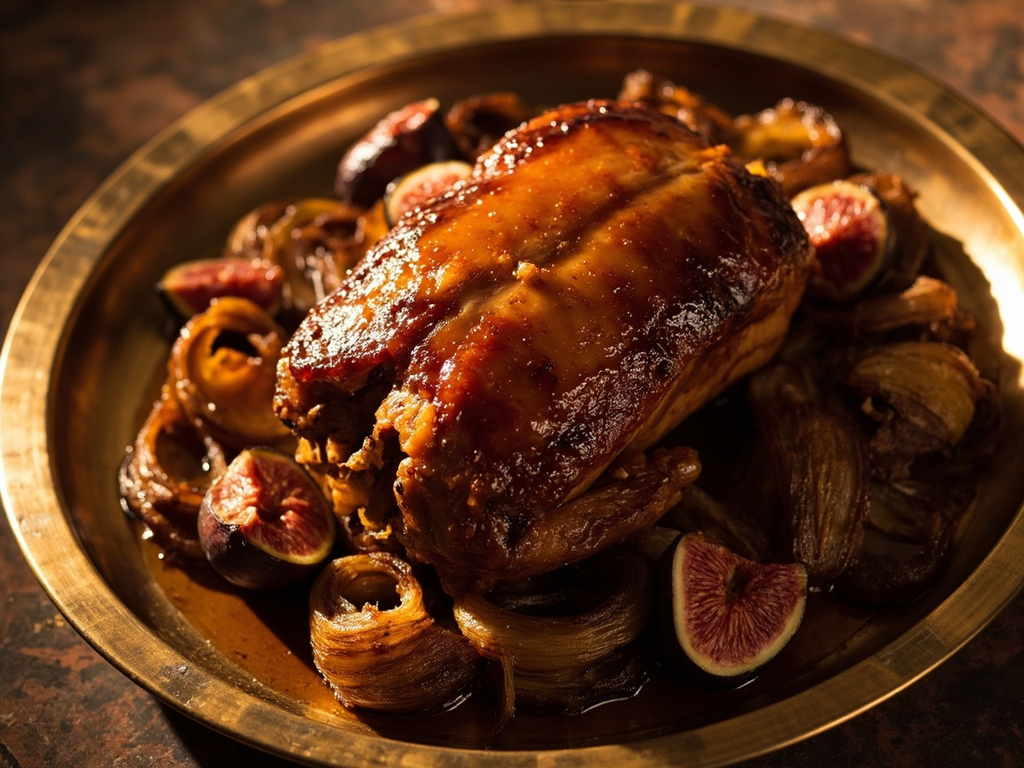
The contemporary twist : Plate on a bed of roasted dates and caramelised onion petals, a veil of fresh coriander—a Pi-Ramesses banquet revisited.
Sources : Joyce Tyldesley, Ramesses: Egypt's Greatest Pharaoh · Paintings from the tomb of Nakht (TT52), Thebes — force-feeding and banquet scenes
Ramesses II · Charactorium