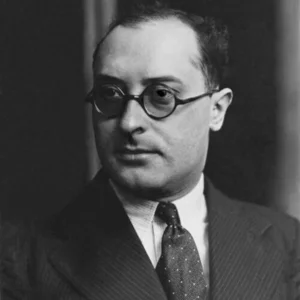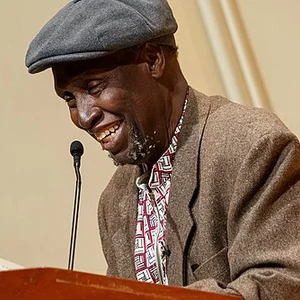

Major Kenyan writer, novelist, playwright, and essayist. First published in English under the name James Ngugi, he chose, from the late 1970s onward, to write in Kikuyu and Swahili in order to decolonize African literatures. A central figure of postcolonial thought.
Ngũgĩ wa Thiong'o(1938 — 2025)
Ngugi wa Thiong'o
Kenya
7 min read
Frequently asked questions
Famous Quotes
« The choice of language and the use to which language is put is central to a people's definition of themselves.»
Key Facts
- Born in 1938 in Kamiriithu (Kenya), into a Kikuyu family during the British colonial period
- Published his first novel, Weep Not, Child, in 1964, the first major novel in English by an East African author
- Imprisoned without trial in 1977-1978 after the Kikuyu-language play Ngaahika Ndeenda (I Will Marry When I Want)
- Decided to abandon English to write in Kikuyu, a stance theorized in the essay Decolonising the Mind (1986)
- Forced into exile from 1982 onward, he taught in the United States and was regularly mentioned as a Nobel Prize contender
Works & Achievements
The first novel in English published by an East African writer; it recounts the childhood of a Kenyan boy against the backdrop of the Mau Mau uprising.
A novel exploring the wrenching conflict between Kikuyu traditions and colonial Christianity in a village in the highlands.
A choral novel about the sacrifices and betrayals on the eve of Kenya's independence, regarded as one of his masterpieces.
A novel denouncing the inequalities and corruption of postcolonial Kenya; its publication came shortly before his arrest.
A play in Kikuyu performed by villagers in Kamiriithu; its social criticism led to his detention without trial.
The first modern novel written in Kikuyu, composed in prison on toilet paper; a biting satire of neocolonial capitalism.
A collection of essays that became a worldwide manifesto on the place of African languages in literature and thought.
A sprawling satirical novel in Kikuyu about power and dictatorship in an imaginary Africa, an ambitious fresco of his maturity.
Anecdotes
Imprisoned without trial in 1977 in the maximum-security Kamiti prison, Ngugi refused to stop writing. With no paper available, he wrote his entire novel Caitaani Mũtharaba-inĩ (Devil on the Cross) on coarse, sturdy prison toilet paper, which he found perfectly suited to the task. It was the first modern novel composed in the Kikuyu language.
First published under the name James Ngugi, the writer abandoned this Christian and colonial first name around 1970 to reclaim his full name, Ngũgĩ wa Thiong'o (“Ngugi son of Thiong'o”). This gesture went hand in hand with his famous decision: to stop writing in English and write only in Kikuyu and Swahili.
In 1977, his play Ngaahika Ndeenda (I Will Marry When I Want) was performed in the open air at Kamiriithu by the village's peasants and workers rather than by professional actors. The play's success and its social criticism so alarmed those in power that the community theatre was razed by the authorities and the author thrown in prison.
As a child, Ngugi grew up during the Mau Mau uprising and the British state of emergency. His family was hit hard: a half-brother joined the fighters in the forest, his mother was interrogated and tortured, and his deaf brother Gitogo was shot dead by colonial soldiers because he had not heard the order to stop.
In 1968, as a young lecturer at the University of Nairobi, Ngugi co-signed a resounding text titled “On the Abolition of the English Department.” In it he proposed placing African and oral literatures at the centre of study, rather than English authors alone — an idea that transformed the teaching of literature across Africa.
Primary Sources
The bullet was the means of the physical subjugation. Language was the means of the spiritual subjugation.
This book… is my farewell to English as a vehicle for any of my writings. From now on it is Gikuyu and Kiswahili all the way.
The Kamiti toilet paper was meant to punish the prisoners… but it was very tough and excellent for writing on.
I believe that my writing in the Gikuyu language, a Kenyan language, an African language, is part and parcel of the anti-imperialist struggles of Kenyan and African peoples.
Key Places
Ngugi's native village, in the heart of the Kikuyu highlands. It was there that he later founded a community theater, demolished by the authorities in 1982.
University where Ngugi studied English literature in the late 1950s. In 1962 he took part there in a landmark conference of African writers.
British institution where Ngugi continued his studies in the 1960s and discovered the Marxist and anticolonial ideas that would shape his work.
Site of his detention without trial from 1977 to 1978, near Nairobi. It was in his cell that he wrote his first novel in Kikuyu, on toilet paper.
American university where Ngugi taught during his long exile, as a professor of comparative literature. There he continued his intellectual struggle on behalf of African languages.
American town where Ngũgĩ wa Thiong'o passed away in 2025, at the age of 87, far from his native Kenya but celebrated throughout the world.
Typical Objects

A makeshift medium on which Ngugi secretly wrote his novel *Devil on the Cross* during his imprisonment. It became a symbol of resistance through writing.

The everyday tool of the writer and scholar for composing novels, plays, and essays. It accompanied his long career as an author and exile.

A book written in an African language rather than in English, a choice at the heart of his struggle. The object embodies his desire to make literature accessible to Kenyan peasants.

An essential farming tool in the Kikuyu countryside, which also became the emblematic weapon of the Mau Mau fighters. It links the work of the land to the anticolonial revolt that marked Ngugi's childhood.

An administrative document allowing an opponent to be imprisoned without trial. Ngugi's, signed in late 1977, illustrates the repression of critical speech in postcolonial Kenya.

A schoolbook used in colonial schools to teach English and religion. It symbolizes the education that Ngugi received and then questioned throughout his life.
School Curriculum
Vocabulary & Tags
Key Vocabulary
Daily Life
Morning
An early riser and a disciplined man, Ngugi often devoted his mornings to writing, with a notebook or typewriter within reach. As a child in Limuru, his mornings began instead with family chores and a long walk to the missionary school.
Afternoon
A committed academic, he spent his afternoons teaching literature, leading seminars and debating with students and colleagues. During his years in exile, these hours were also given over to lectures and interviews all over the world.
Evening
Evenings were devoted to reading, revising his texts and spending time with his family. In Kamiriithu, evenings could be set aside for community theatre rehearsals with the villagers.
Food
Coming from the Kikuyu countryside, he grew up with simple cooking based on maize and beans, such as githeri, ugali (maize porridge) and leafy greens, washed down with tea. As an adult and a traveller, he discovered a wide variety of cuisines through his universities and his exile.
Clothing
As a poor child, he wore the modest clothes of the rural world, then the uniform of the missionary schools. As an adult, he was seen in the Western suit of an academic, but also in African dress that he claimed as part of his identity.
Housing
He was born on a large family homestead of thatched-roof huts, his father having several wives and many children. His adult life then took him from the urban housing of Nairobi to a cell in Kamiti prison, and on to academic homes in exile in the United States and Europe.
Historical Timeline
Period Vocabulary
Liens externes & ressources
Références
Œuvres
Weep Not, Child (Enfant, ne pleure pas)
1964
The River Between (La Rivière de vie)
1965
A Grain of Wheat (Et le blé jaillira)
1967
Petals of Blood (Pétales de sang)
1977
Ngaahika Ndeenda (Je me marierai quand je voudrai)
1977
Caitaani Mũtharaba-inĩ (Le Diable sur la croix)
1980
Decolonising the Mind (Décoloniser l'esprit)
1986