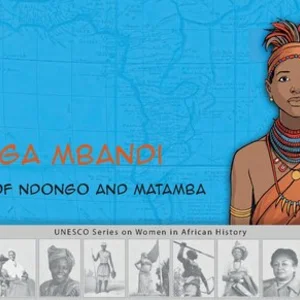

Warrior queen of Angola (c. 1583–1663), Njinga of Matamba fiercely resisted Portuguese colonization in Central Africa. A skilled diplomat, she negotiated directly with the Portuguese while forging alliances with the Dutch. She ruled the kingdom of Matamba for more than thirty years.
Njinga of Matamba
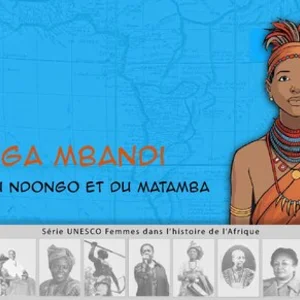
Njinga Mbandi, Queen of Ndongo and Matamba
8 min read
Frequently asked questions
Key Facts
- c. 1583: born in the kingdom of Ndongo (present-day Angola)
- 1622: personally negotiates with Portuguese governor João Correia de Sousa in Luanda
- 1624: ascends the throne of Ndongo following her brother's death
- 1630–1631: conquers the kingdom of Matamba and makes it her base of resistance
- 1663: dies in Matamba, having kept her kingdom independent until the end of her life
Works & Achievements
Njinga negotiated an agreement recognizing the sovereignty of Matamba and guaranteeing the release of Angolan prisoners. This treaty is considered a major diplomatic victory, achieved after decades of armed resistance.
Njinga forged a military alliance with the Dutch West India Company when they captured Luanda. This large-scale diplomacy illustrates her ability to play European powers against one another.
After losing Ndongo, Njinga transformed Matamba into an organized state that welcomed escaped captives and refugees fleeing Portuguese enslavement, making it a unique center of political and military resistance in Central Africa.
Njinga incorporated Imbangala warriors — formidable nomadic fighters — into her armies by bringing them under her authority. This unprecedented military strategy allowed her to maintain resistance against the better-equipped Portuguese forces.
Following the 1657 peace, Njinga invited Capuchin missionaries and supported the establishment of a school, seeking to modernize her kingdom while preserving its independence.
Anecdotes
In 1622, Njinga traveled to Luanda to negotiate with the Portuguese governor João Correia de Sousa. He had prepared no seat for her, hoping to humiliate her by forcing her to remain standing. Njinga promptly ordered one of her attendants to kneel on all fours and sat upon her back, refusing to be treated as an inferior. This scene has become one of the most celebrated symbols of African resistance to European domination.
Njinga converted to Christianity during her stay in Luanda in 1622, taking the baptismal name Ana de Sousa in honor of the governor's wife, who served as her godmother. The conversion was partly diplomatic: it allowed her to be recognized as a legitimate ruler by the Portuguese. She later renounced the faith when she broke with Portugal, before genuinely reconverting toward the end of her life.
To assert her authority in a patriarchal society, Njinga adopted behaviors associated with male chiefs: she had herself called 'king' rather than 'queen,' wore war attire, and personally led her troops into battle. She also surrounded herself with a personal guard of women warriors dressed as men — a formation that would later fascinate European observers and foreshadow the emergence of female military units.
After losing Ndongo to the Portuguese around 1629, Njinga did not surrender. She conquered the neighboring kingdom of Matamba and made it her new base of resistance. There she incorporated escaped captives from Portuguese slave traders into her armies — particularly the Imbangala — and governed the territory for more than thirty years with remarkable stability.
In her sixties, Njinga signed a peace treaty with the Portuguese in 1657, securing the return of her territory and the release of her sister Funji, who had been held captive for years. She reconverted to Catholicism and invited Capuchin missionaries to her court. She died in 1663 at around eighty years of age, having received the last rites, leaving behind an independent kingdom.
Primary Sources
I am queen of Matamba and Ndongo, lands that belong to me by right of birth and conquest. I demand that my captive subjects be returned, and that peace be established between our peoples on equal terms.
Queen Jinga, a woman of great intellect and remarkable worth, governed her kingdoms with a wisdom and firmness that astonished the Europeans themselves. She received the Capuchin fathers with goodwill and permitted the preaching of the Gospel throughout her lands.
This Black queen displayed uncommon valor and military skill, holding Portuguese armies in check for many years and forging alliances with the Dutch to better resist our domination.
Queen Dona Ana de Sousa of Matamba, more than seventy years of age, attends Mass every day with exemplary devotion. She has ordered the idols in her palace destroyed and encourages her subjects to be baptized.
Key Places
Capital of the Kingdom of Ndongo, Njinga's homeland and seat of her royal family's power. This is where she grew up and learned the art of governance before being driven out by the Portuguese.
Portuguese colonial capital where Njinga traveled in 1622 to negotiate with the governor. This city was the setting of the famous human-throne scene and her baptism.
A kingdom Njinga conquered around 1631 after fleeing Ndongo. She made it her capital of resistance and ruled it for over thirty years, transforming it into a prosperous and independent state.
Njinga's strategic refuge during periods of Portuguese military pressure. The island provided a naturally defensible position that was difficult to attack.
Typical Objects

An insignia of royal power in Ndongo and Matamba, the ceremonially adorned axe symbolized the military and political authority of the ruler. Njinga carried it during ceremonies to assert her status as a sovereign in her own right, transgressing the gender norms of her time.

Njinga was renowned for her mastery of archery and combat techniques. She personally led her troops into battle, armed like her warriors, which earned her considerable prestige among her soldiers.

Central African rulers wore elaborate headdresses made of rare feathers and imported glass beads, symbols of status and wealth. Njinga appears in Capuchin representations of the period wearing such adornments, blending local traditions with prestige objects of European origin.

European glass beads were a currency of exchange and a mark of prestige in seventeenth-century Central Africa. Njinga used them both as royal ornament and as a diplomatic tool to forge alliances with other chiefs.

The sacred drum was the foremost symbol of royal power among Bantu peoples of Central Africa. It accompanied state ceremonies, calls to arms, and the religious rituals of the Matamba court.

Following her sincere reconversion to Catholicism around 1657, Njinga embraced Christian devotional practices. The Capuchin missionaries describe her reciting the rosary daily — a symbol of the coexistence between her African and Christian identities.
School Curriculum
Vocabulary & Tags
Key Vocabulary
Tags
Daily Life
Morning
Njinga began her day with political rituals and, in her later years, with Christian prayer alongside her Capuchin chaplains. She would then receive her military advisors and spies to review Portuguese movements and the state of her borders. Major strategic decisions were made early, before the heat of midday.
Afternoon
Afternoons were devoted to diplomatic audiences — receiving ambassadors, negotiating with allied chiefs or European envoys. Njinga also oversaw the training of her troops, particularly her personal guard composed of women warriors. She would sometimes join military drills herself to maintain her prestige among her soldiers.
Evening
Evenings brought the court together around communal meals where music and the stories of griots held a central place. Ngoma drums set the rhythm of state ceremonies. In her later years, Njinga attended vespers sung by her missionaries before retiring to her royal chambers.
Food
The diet at the Matamba court was built around local staples: feunji (cassava or sorghum flour), beans, leafy vegetables, fish from the Kwanza River, and game hunted in the surrounding forest. At diplomatic banquets, palm wine and sorghum beer were served in abundance as a sign of royal generosity.
Clothing
Njinga wore prestige garments that combined local textiles made from plant fibers dyed in red and black with fabrics imported from Europe or Brazil through trade. She adorned herself with copper and glass-bead jewelry, an elaborate headdress of rare feathers, and ivory bracelets — all symbols of her royal status. For wartime occasions, she wore male combat attire.
Housing
The royal court of Matamba was a complex of large wooden and wattle-and-daub structures with thatched roofs, enclosed within a palisaded wall. The royal palace included distinct spaces for public audiences, council meetings, guard quarters, and the queen's private apartments. After 1657, a chapel was added for Catholic worship.
Historical Timeline
Period Vocabulary
Visual Style
Style baroque colonial du XVIIe siècle mêlant esthétique de la cour d'Afrique centrale et influence des gravures européennes de l'époque, dans des tons chauds d'ocre et de brun rouge.
Sound Ambience
L'ambiance sonore du palais royal de Matamba mêle les tambours de cour, les langues africaines et le lointain écho des conflits armés avec les Portugais.
Liens externes & ressources
Références
Œuvres
Traité de paix avec les Portugais
1657
Alliance avec les Hollandais
1641
Fondation du royaume de Matamba comme État de résistance
vers 1631
Politique d'intégration des Imbangala
vers 1630-1650
Fondation d'une école chrétienne à Matamba
vers 1658