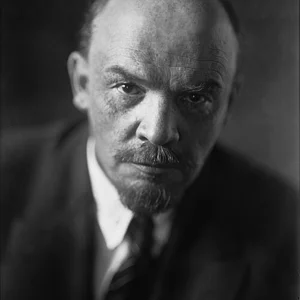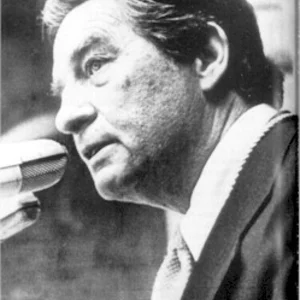

Octavio Paz (1914-1998) was a Mexican poet, essayist, and diplomat who won the Nobel Prize in Literature in 1990. A major figure in Hispano-American letters, he blended reflection on Mexican identity, Surrealism, and critical political thought.
Octavio Paz(1914 — 1998)
Octavio Paz
Seconde République espagnole, Nasdas
6 min read
Frequently asked questions
Famous Quotes
« Solitude is the profoundest fact of the human condition.»
« Merit and demerit are notions equally foreign to love.»
Key Facts
- Born in 1914 in Mexico City, into a family marked by the Mexican Revolution
- Published his major essay 'The Labyrinth of Solitude' on Mexican identity in 1950
- Resigned in 1968 from his post as ambassador to India to protest the Tlatelolco massacre
- Founded the intellectual review 'Vuelta' in 1976
- Won the Nobel Prize in Literature in 1990
Works & Achievements
Collection gathering his early poetry; in it he asserts an original voice, between lyricism and formal freedom.
Famous essay exploring the identity and psychology of the Mexican people; a classic of Latin American thought.
A sweeping reflection on the nature of poetry and its role in society; a key work in poetics.
A long poem inspired by the Aztec calendar, regarded as one of his masterpieces for its circular structure.
Essay written after the Tlatelolco massacre, extending his critical reflection on power in Mexico.
A magazine he founded and directed, which became a major intellectual platform in the Spanish language.
A vast biography of the 17th-century Mexican poet, blending history, literature, and reflection on freedom.
An award crowning his entire body of work, the first ever granted to a Mexican writer.
Anecdotes
As a child, Octavio Paz grew up in Mixcoac, in the house of his grandfather Ireneo Paz, a writer and former soldier. There he discovered a vast, dusty library where he devoured the Spanish and French classics, shaping his calling as a poet from a very early age.
In 1937, at just 23 years old, Paz traveled to Spain in the midst of the civil war to take part in the International Congress of Anti-Fascist Writers. There he supported the Republic and mingled with great politically engaged poets, an experience that left a lasting mark on his political conscience.
After the Second World War, posted in Paris as a young diplomat, Paz struck up a friendship with André Breton and the Surrealist group. These encounters filled his poetry with dreamlike images, playful uses of chance, and great freedom of form.
In October 1968, the Mexican army opened fire on students gathered in the Plaza de Tlatelolco, killing many. As Mexico's ambassador to India, Paz resigned immediately in protest: a rare and courageous act for a career diplomat.
In 1990, Octavio Paz received the Nobel Prize in Literature, becoming the first Mexican writer to earn this distinction. In his speech, he urged his contemporaries to “seek the present” and to reconcile themselves with the time in which they live.
Primary Sources
To all of us, at some moment, our existence has appeared as something singular, untransferable, and precious.
a crystal willow, a poplar of water, / a tall fountain the wind arches over...
Development has become for us a veritable straitjacket.
The search for the present is neither the pursuit of an earthly paradise nor that of a timeless eternity: it is the search for a real reality.
Key Places
Paz's birthplace and place of death, the capital where most of his intellectual life unfolded. It was here that he ran his magazines and wrote his major essays.
A neighborhood in southern Mexico City where he grew up in his grandfather's family home. Its library awakened his passion for reading and poetry.
The city that hosted the International Congress of Anti-Fascist Writers in 1937, in which the young Paz took part. A key milestone in his political engagement.
His postwar diplomatic posting, where he associated with André Breton and the Surrealists. The city deeply shaped his writing and his thought.
The capital where Paz served as Mexico's ambassador from 1962 to 1968. Indian culture inspired several of his works before he resigned in protest.
Typical Objects

The everyday tool of the twentieth-century writer, on which Paz typed essays, poems, and magazine articles. It symbolizes the relentless work of the man of letters.

A printed book gathering his verses, such as Libertad bajo palabra or Sunstone. The object through which his words reach the public.

Periodicals such as Taller, Plural, and Vuelta, which he founded or edited. They served as a venue for intellectual and political debate in Latin America.

The diplomat's document, which opened the doors of France, Japan, and India to him. It accompanied his dual career as a writer and representative of Mexico.

A gold award presented in Stockholm in 1990 for his life's work. It marks the worldwide recognition of Mexican literature.

A personal writing instrument for drafts and corrections by hand. It evokes the poet's intimate gesture facing the page.
School Curriculum
Vocabulary & Tags
Key Vocabulary
Daily Life
Morning
Paz often devoted his mornings to writing and reading, in the quiet of his study surrounded by books. There he worked on his poems, his essays, and the correspondence connected to his magazines.
Afternoon
His afternoons were divided between diplomatic duties, when he held a post, and the editorial work of his magazines. There he received writers, translators, and collaborators.
Evening
In the evening, he enjoyed *tertulias*, those gatherings where intellectuals and artists discussed literature and politics. Conversations, readings, and debates extended his working day.
Food
A man of the 20th century and a great traveler, Paz appreciated traditional Mexican cuisine based on corn, chili peppers, and chocolate. His stays in France, Japan, and India also introduced him to other flavors.
Clothing
As a diplomat, he wore the dark suit, tie, and city coat befitting his official role. In private, he adopted the simpler attire of a man of letters.
Housing
He lived in urban apartments in Mexico City as well as in embassy residences abroad. His homes were always filled with books, paintings, and objects brought back from his travels.
Historical Timeline
Period Vocabulary
Liens externes & ressources
Références
Œuvres
Liberté sur parole (Libertad bajo palabra)
1949
Le Labyrinthe de la solitude (El laberinto de la soledad)
1950
L'Arc et la lyre (El arco y la lira)
1956
Pierre de soleil (Piedra de sol)
1957
Postdata (Posdata)
1970
Revue Vuelta
1976
Sœur Juana Inès de la Cruz ou les pièges de la foi
1982