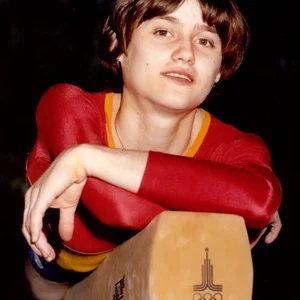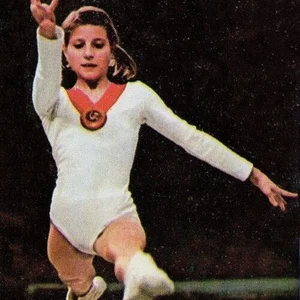

Olga Korbut is a Soviet gymnast, born in 1955 in Belarus. Nicknamed “the Sparrow of Minsk,” she revolutionized artistic gymnastics at the 1972 Munich Olympic Games, where she won three gold medals and captivated audiences worldwide with her daring and her freshness.
Olga Korbut(1955 — ?)
Olga Korbut
États-Unis, Union soviétique
5 min read
Frequently asked questions
Key Facts
- Born on 16 May 1955 in Hrodna (Soviet Belarus)
- Won 3 gold medals at the 1972 Munich Olympic Games
- Popularized daring moves such as the “Korbut flip” on the uneven bars
- Earned 2 additional medals at the 1976 Montreal Olympic Games
- Emigrated to the United States in the 1990s
Works & Achievements
A revolutionary move in which the gymnast tips backward from the high bar. So spectacular that it bears her name.
A backward somersault performed on the balance beam, a world first that pushed the limits of the discipline.
Gold on the beam, the floor exercise, and in the team event. These titles made her the sensation of the Games and a worldwide icon.
Victory in the vault at the World Championships, confirming her status as an exceptional gymnast.
The last major Olympic title of her career, in a competition now dominated by Nadia Comăneci.
An account of her life and career, a testimony about Soviet sport and early fame.
Anecdotes
At the 1972 Munich Olympics, Olga Korbut performed a daringly original move on the uneven bars: standing on the high bar, she let herself fall backward to catch the bar again. This move, dubbed the “Korbut Flip,” captivated audiences and left its mark on the history of gymnastics.
During the all-around final in Munich, Olga botched her dismount on the uneven bars and burst into tears in front of cameras broadcasting around the world. Aired live, those tears instantly made her famous and deeply human in the eyes of millions of viewers.
With her small stature (5 ft) and childlike look complete with pigtails, Olga Korbut overturned the conventions of a sport then dominated by elegant adult women. She ushered in the era of teenage gymnasts, paving the way for Nadia Comăneci four years later.
In 1973, during a triumphant tour of the United States at the height of the Cold War, Olga Korbut was welcomed at the White House by President Richard Nixon. The “little Soviet athlete” became an unwitting ambassador of a thaw between the two blocs.
In 2017, Olga Korbut auctioned off her Olympic medals from Munich and Montreal, which sold for more than 300,000 dollars. The decision surprised the sports world and revealed the financial hardships faced by former Soviet champions.
Primary Sources
The seventeen-year-old Soviet girl won over the crowd with a boldness and grace that gymnastics had never seen before.
I simply wanted to do something no one had ever done, to show the world that gymnastics could be art as much as sport.
Everywhere she goes, crowds gather to catch a glimpse of the “Sparrow from Minsk,” who in just a few months has become the most famous female athlete in the world.
Key Places
Olga Korbut's hometown, in the Byelorussian Soviet Socialist Republic. This is where she grew up and took up gymnastics.
The Belarusian capital where Korbut trained intensively; it was here that she earned her nickname, the “Sparrow from Minsk.”
Host city of the 1972 Olympic Games, where Olga Korbut triumphed and became a worldwide star.
Site of the 1976 Olympic Games, Korbut's last Games, where she won team gold.
The American city where Olga Korbut settled after the collapse of the USSR, emigrating in the 1990s.
Typical Objects
Gymnastics apparatus made up of two parallel bars set at different heights. It is on this apparatus that Olga Korbut performs her famous “loop.”
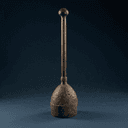
A narrow raised wooden beam on which gymnasts link together jumps and balancing figures. Korbut presents elements of unprecedented difficulty on it in Munich.
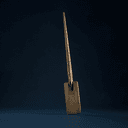
A tight-fitting outfit worn by gymnasts during events. Korbut's, in the colors of the USSR, became an iconic image of the 1972 Games.
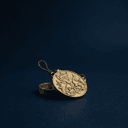
The supreme reward awarded to the winners of the Olympic Games. Korbut wins several of them in Munich and Montreal.
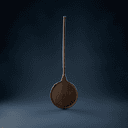
Magnesium carbonate powder that gymnasts apply to their hands to improve their grip on the apparatus. Essential on the bars.
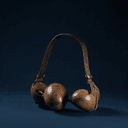
A hairstyle with two pigtails tied with ribbons that becomes Olga Korbut's visual signature. It reinforces her image as a mischievous teenager.
School Curriculum
Vocabulary & Tags
Key Vocabulary
Tags
Daily Life
Morning
Olga's day began early with warm-up and flexibility exercises at the gymnasium in Minsk. Even before breakfast, she would move through stretches and repetitions under the demanding eye of her coach Renald Knysh.
Afternoon
The afternoon was devoted to technical training on each apparatus: bars, beam, floor, and vault. The routines were repeated dozens of times until perfect, with the very strict discipline typical of Soviet sport.
Evening
In the evening, after several hours of effort, came body care, recovery stretches, and schoolwork. Like any state athlete, she had to balance intensive training with her education.
Food
The diet of Soviet gymnasts was strictly controlled to maintain a very light body weight. Meals were balanced but small, rich in protein, with careful monitoring by the sports staff.
Clothing
In training, Olga wore a simple leotard and hand guards for the bars. In competition, she wore the leotard in the colors of the USSR, her hair tied in pigtails adorned with ribbons.
Housing
She lived in Soviet Belarus, splitting her time between the family home in Grodno and the training centers. Elite athletes were housed in dedicated facilities provided by the State.
Historical Timeline
Period Vocabulary
Liens externes & ressources
Références
Œuvres
Boucle Korbut (barres asymétriques)
1972
Salto Korbut (poutre)
1972
Trois médailles d'or à Munich
1972
Titre de championne du monde
1974
Médaille d'or par équipe à Montréal
1976
My Story (autobiographie)
1992