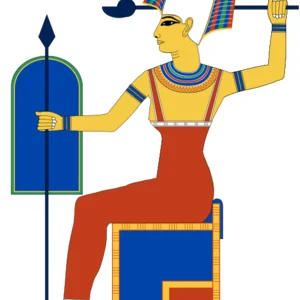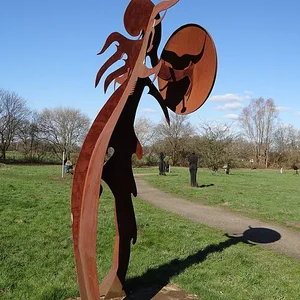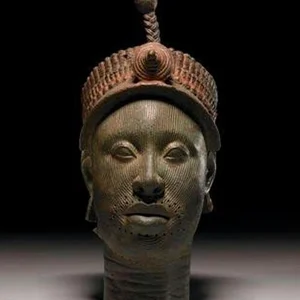

Olokun is a Yoruba deity of the ocean depths, venerated in West Africa and in Afro-diasporic traditions. Orisha of the abyss, he symbolizes wealth, unfathomable mysteries, and the power of the deep waters.
Olokun
Olokun
8 min read
Frequently asked questions
Key Facts
- Olokun is one of the most powerful orishas in the Yoruba pantheon, associated with the inaccessible ocean floor
- His veneration spread to the Americas through the slave trade, integrated into Brazilian candomblé and Cuban santería
- Olokun can be represented as masculine, feminine, or androgynous depending on local traditions
- His cult is particularly vibrant in Benin City (Nigeria), where he is regarded as a tutelary deity
- Olokun is associated with both material prosperity and mental illness, reflecting the unpredictability of the ocean
Works & Achievements
The 256 Odus of the Ifa corpus constitute the preeminent sacred Yoruba text. Several Odus describe Olokun, his attributes, his powers, and the rituals used to honor him, forming a coherent theology of the deity of the abyss.
Artisans at the Benin court created hundreds of bronzes and sculpted plaques depicting scenes related to Olokun — marine deities, aquatic serpents, fish. These works are today held in major museums around the world.
The masks worn during the annual Olokun festivals in the Kingdom of Benin constitute a major form of ritual art. Adorned with beads, marine motifs, and metal, they embody the divine presence during royal processions.
The *oriki* — Yoruba praise poems — dedicated to Olokun form a vast oral literary repertoire. Recited by priests during ceremonies, they describe divine attributes, founding myths, and the blessings granted to the faithful.
Ceremonies of possession by Olokun, in which the deity takes form in the body of a priest or priestess, constitute one of the most vibrant ritual practices. These rites maintain a direct link between the human world and the divine depths.
Anecdotes
According to Yoruba myth, Olokun once challenged Obatala, the orisha of creation, claiming supremacy over all the earth. Olodumare, the supreme god, had to intervene to chain Olokun to the ocean floor, fearing that the waters would swallow all of humanity. This legend explains why the oceans remain mysterious and unreachable in their depths.
Olokun is one of the rare Yoruba deities whose gender varies depending on regional traditions: sometimes portrayed as male in the Edo tradition of the Kingdom of Benin, sometimes as female or androgynous in other communities. This fluidity symbolizes the unfathomable nature of the ocean depths, which resist any human categorization.
In the Afro-diasporic traditions of the Americas, Olokun became the guardian of the souls of the millions of Africans who died during the transatlantic slave trade. The enslaved people thrown overboard during the Middle Passage are said to rest in Olokun's realm. Olokun thus became a powerful symbol of collective memory and cultural resilience.
In the Kingdom of Benin, ceremonies honoring Olokun are among the most spectacular: elaborate masks covered in coral beads and marine imagery are worn during annual rituals. The Oba (king) of Benin himself venerates Olokun as the source of his royal legitimacy and the prosperity of his people.
It is said that Olokun challenged Olodumare by claiming to surpass the supreme god in magnificence and wealth. Olodumare sent a chameleon to compare their splendid garments. Each time the chameleon arrived, Olokun had put on a new costume — but the chameleon, shifting its colors, showed that Olodumare always matched it perfectly. Defeated, Olokun bowed before divine power.
Primary Sources
Olokun dwells where no human eye can see, where sunlight never penetrates. Their riches are as infinite as the waters, their mysteries as deep as the bottomless abyss.
In Benin, the cult of Olokun is inseparable from royalty: the Oba receives the insignia of power — coral beads and royal ornaments — as a gift from Olokun, master of oceanic prosperity.
Olokun, master of the sea, is invoked for fertility and wealth; their worshippers wear blue and white beads as a sign of devotion, and their priests jealously guard the secrets of the rituals.
In the Ifa narratives, Olokun appears as a primordial force that even the other orishas fear; their domain is not only the physical ocean, but also the mysteries of the unconscious and the depths of being.
Olokun and Yemoja share the aquatic domain: Yemoja governs the surface waters and coastal seas, while Olokun reigns over the unfathomable depths, where life and death become indistinguishable.
Key Places
Capital of the ancient Kingdom of Benin, Benin City is the main center of Olokun worship. The royal palace preserves shrines dedicated to this deity, and annual ceremonies held in Olokun's honor are still celebrated there today.
Sacred city of the Yoruba people, regarded as the cradle of humanity and the place where the orishas took their mythological form. The Ifa corpus, which codifies the stories of Olokun, was developed there over the centuries.
Olokun's cosmological domain, the Atlantic is their realm par excellence. In Afro-diasporic traditions, it is also the liquid graveyard of the victims of the Transatlantic Slave Trade, over whom Olokun stands as guardian.
The world capital of Candomblé, Salvador is a major center of Olokun veneration in the African diaspora. Its terreiros (temples) have kept alive Yoruba rituals adapted to the Americas since the 17th century.
Nigeria's main coastal metropolis, Lagos is built at the very edge of Olokun's domain. Its Yoruba inhabitants have long maintained a spiritual bond with the lagoons and waters that surround the city.
Typical Objects

Coral bead necklaces and ornaments are the sacred emblems of Olokun par excellence. Worn by priests and during ceremonies, they symbolize the riches of the ocean floor and divine favor.

A large clay jar filled with seawater or fresh water, placed inside Olokun's shrine. It represents the ocean in miniature and serves as a receptacle for divine energy during ceremonies.

The ceremonial masks of the Kingdom of Benin depict Olokun with aquatic motifs — fish, sea serpents, and waves carved into wood or cast in bronze. Worn during annual festivals, they embody the divine presence.

Olokun's colors are the deep blue of the ocean and the white of seafoam. Priests and worshippers dress in these colors during rituals, and lengths of blue and white fabric are laid out as offerings.

According to myth, Olokun was chained by Olodumare to contain the power of the waters. Representations of chains appear on certain altars, evoking both Olokun's immense power and the limits imposed by the divine.

The products of the sea — fish, shells, sea salt — make up the preferred offerings to Olokun. Laid at the water's edge or inside the shrine, they establish the link between the human world and the divine depths.
School Curriculum
Vocabulary & Tags
Key Vocabulary
Daily Life
Morning
At sunrise, Olokun rests in the depths of the ocean, where no light penetrates. In mythology, his dwelling is an underwater palace of infinite riches — corals, pearls, treasures from shipwrecks — guarded by giant fish and sea serpents. The priests (awos), meanwhile, begin their day with ritual ablutions and libations of seawater on the altar.
Afternoon
According to myth, Olokun spends his days ruling the creatures of the abyss and amassing fabulous riches. In the human world, ceremonies in his honor often take place at symbolic moments tied to the tides. Ifa diviners consult the oracles to convey Olokun's messages to worshippers seeking prosperity, fertility, or healing.
Evening
At sunset, when the boundary between the world of the living and that of spirits grows thin, Olokun is especially invoked. Offerings — seafood, blue fabrics, pearls — are placed at the water's edge. In some traditions, this is the hour when priests enter a trance to receive divine messages from the depths.
Food
The food offerings to Olokun reflect his marine domain: fish, seafood, sea salt, and ocean water are dedicated to him above all else. In some rituals, white foods such as rice or coconut symbolize the purity of the depths. Seawater is regarded as his fundamental and sacred nourishing element.
Clothing
Olokun is depicted wearing attire of unparalleled magnificence: coral bead robes, blue and white fabrics embroidered with marine motifs, and adornments of gold and bronze symbolizing the treasures of the abyss. During ceremonies, priests don these colors and ornaments to embody the deity during possession rituals.
Housing
Olokun's palace is described in myth as a dwelling in the unfathomable depths of the ocean, unreachable by humans. Built of corals, pearls, and precious metals carried by ocean currents, it is guarded by fabulous sea creatures. On land, his sanctuary is a sacred space containing a vessel of seawater, blue and white beads, and representations of the marine creatures sacred to him.
Historical Timeline
Period Vocabulary
Liens externes & ressources
Références
Œuvres
Corpus Ifa — Odus mentionnant Olokun
Tradition orale, millénaires av. J.-C.
Bronzes du Bénin représentant Olokun
XIVe-XVIIe siècle
Masques cérémoniels Olokun (tradition Edo)
XVe-XIXe siècle
Chants et prières d'Olokun (oriki)
Tradition orale continue
Rituels de possession et de transe
Tradition continue depuis l'Antiquité