 flip
flipVictoria sponge for afternoon tea
Victoria sponge for afternoon tea
Why this dish? The Victoria sponge, the emblematic cake of the Victorian era named after the queen herself, reigned on the tea tables that Wilde frequented assiduously. He, who made social tea a theatre, tasted in it the British art of tender pastry.
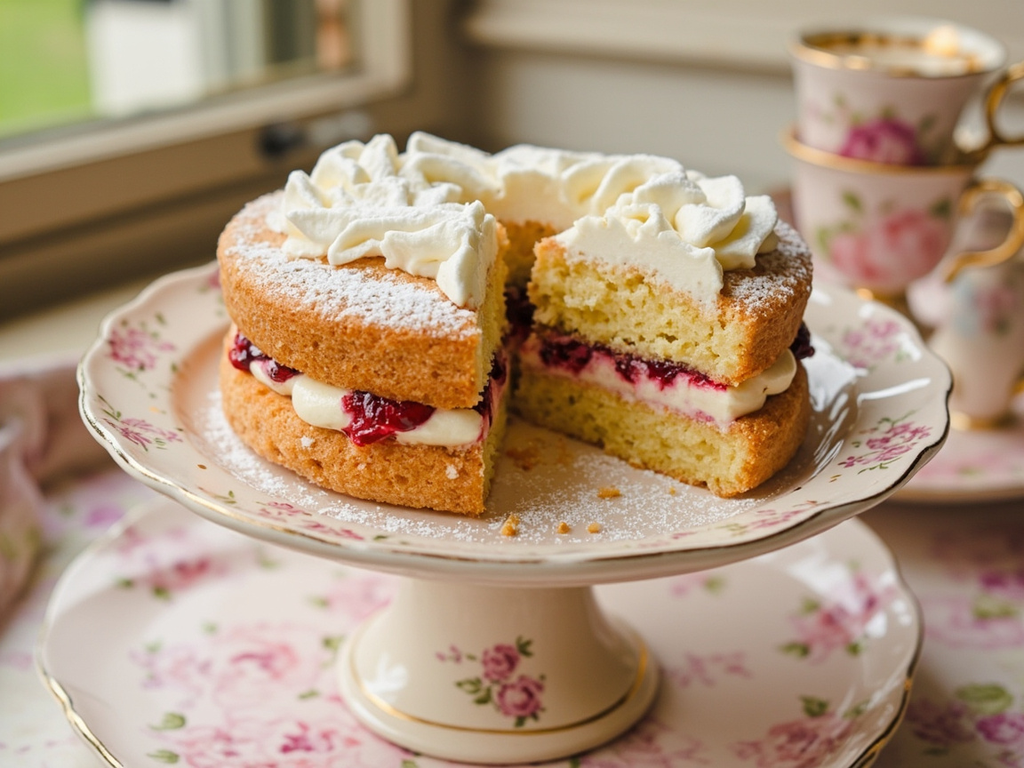
Two discs of butter sponge, light and golden, filled with raspberry jam and sometimes whipped cream, dusted with icing sugar. Sweet, buttery, with the fresh acidity of raspberry. The perfect cake to accompany a cup of tea and brilliant conversation.
Serve it simply, I beg you: a cake too decorated is like a man too sincere, perfectly insufferable. Two layers of sponge, a heart of raspberry jam, a veil of sugar — perfection consists precisely in knowing where to stop, a talent I have never possessed in anything else. At the tea table, you see, everything can be forgiven except a dry cake and a silence. Cut a generous slice: gluttony is the only vice that has never ruined a reputation for wit.
- •Fresh butter — equal weight to eggs (moistness)
- •Sugar — same weight (sweetness)
- •Eggs — weighed, base of recipe (binder and rise)
- •Flour — same weight (structure)
- •Raspberry jam — as needed (filling)
Victoria sponge for afternoon tea
Two discs of butter sponge, light and golden, filled with raspberry jam and sometimes whipped cream, dusted with icing sugar. Sweet, buttery, with the fresh acidity of raspberry. The perfect cake to accompany a cup of tea and brilliant conversation.
Why this dish? The Victoria sponge, the emblematic cake of the Victorian era named after the queen herself, reigned on the tea tables that Wilde frequented assiduously. He, who made social tea a theatre, tasted in it the British art of tender pastry.
Serve it simply, I beg you: a cake too decorated is like a man too sincere, perfectly insufferable. Two layers of sponge, a heart of raspberry jam, a veil of sugar — perfection consists precisely in knowing where to stop, a talent I have never possessed in anything else. At the tea table, you see, everything can be forgiven except a dry cake and a silence. Cut a generous slice: gluttony is the only vice that has never ruined a reputation for wit.
Ingredients (period version)
- Fresh butter — equal weight to eggs (moistness)
- Sugar — same weight (sweetness)
- Eggs — weighed, base of recipe (binder and rise)
- Flour — same weight (structure)
- Raspberry jam — as needed (filling)
Ingredients
- Unsalted butter, softened — 200 g (moistness)
- Caster sugar — 200 g (sweetness)
- Eggs — 4 (approx. 200 g) (binder)
- Self-raising flour (or plain flour + 2 tsp baking powder) — 200 g (structure)
- Raspberry jam — 150 g (filling)
- Double cream (optional) — 200 ml (filling)
- Icing sugar — for dusting (finish)
Method
- Preheat the oven to 180°C. Butter and line two 20 cm round cake tins.
- Beat the butter and sugar until pale and fluffy.
- Add the eggs one at a time, then gently fold in the sifted flour (and baking powder).
- Divide the batter between the tins and bake for 20–25 minutes, until a skewer comes out clean.
- Let cool. Spread the jam (and whipped cream) on one disc, top with the other, and dust with icing sugar.
How it was made : Queen Victoria enjoyed a slice of this cake with her tea, hence its name. Its popularity owes much to the invention of baking powder and cheap refined sugar in the mid-19th century, which democratized home baking. Mrs Beeton published versions in her manual.
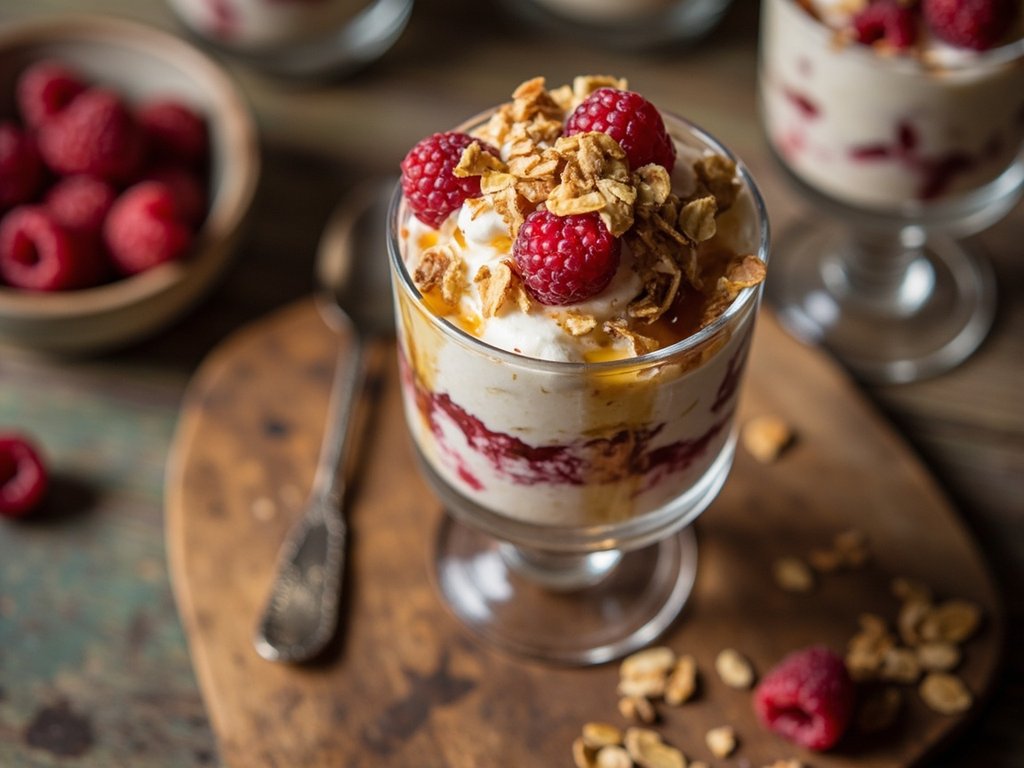
The contemporary twist : Garnish with fresh raspberries and vanilla cream; a stage name for the buffet: "the cake Algernon didn't have time to eat."
Sources : Isabella Beeton, Mrs Beeton's Book of Household Management, 1861 · Felicity Cloake, "How to make the perfect Victoria sponge", The Guardian, 2013
Oscar Wilde · Charactorium