 flip
flipGratin of Jerusalem artichokes from times of scarcity
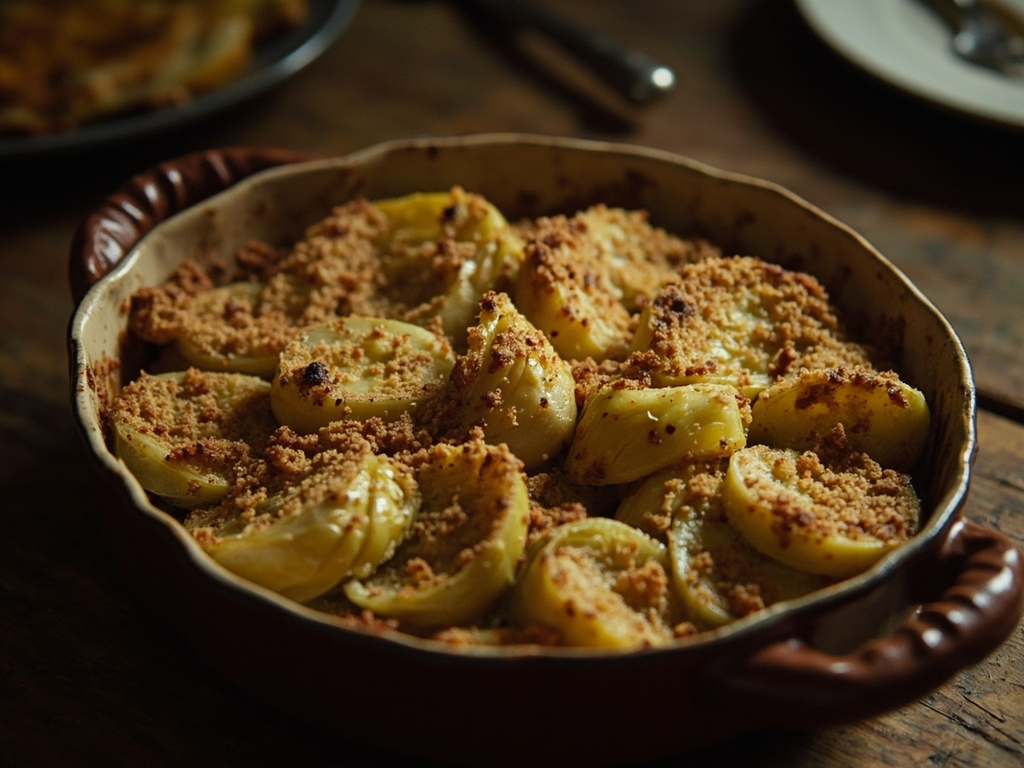
Gratin of Jerusalem artichokes from times of scarcity
Why this dish? During the Occupation, as Éluard wrote 'Liberté' and joined the Resistance, Paris was cold and hungry. The Jerusalem artichoke, which resists frost and keeps in the cellar all winter, became the survival vegetable — the very one his verses evoke in their silences.
Tender Jerusalem artichokes, gratinéed with whatever little fat was available. A make-do dish born of rationing, with a slightly bitter sweetness.
Don't make a face: in those winters, the Jerusalem artichoke was a king disguised as a pauper. We kept it in the cellar, under sand, and it defied frost when everything else was missing. A knob of fat, a little milk cut with water, and we drew comfort from almost nothing. I wrote on the kitchen table while it gratinéed — hunger sharpens words as much as appetite. Eat, and remember that even starving, we stood tall.
- •Jerusalem artichokes — a full basin (base)
- •Milk cut with water — whatever you have (binder)
- •Fat or butter — a rare knob (fat)
- •Stale bread crumbs — a handful (gratin topping)
- •Salt, pepper — to taste (seasoning)
Gratin of Jerusalem artichokes from times of scarcity
Tender Jerusalem artichokes, gratinéed with whatever little fat was available. A make-do dish born of rationing, with a slightly bitter sweetness.
Why this dish? During the Occupation, as Éluard wrote 'Liberté' and joined the Resistance, Paris was cold and hungry. The Jerusalem artichoke, which resists frost and keeps in the cellar all winter, became the survival vegetable — the very one his verses evoke in their silences.
Don't make a face: in those winters, the Jerusalem artichoke was a king disguised as a pauper. We kept it in the cellar, under sand, and it defied frost when everything else was missing. A knob of fat, a little milk cut with water, and we drew comfort from almost nothing. I wrote on the kitchen table while it gratinéed — hunger sharpens words as much as appetite. Eat, and remember that even starving, we stood tall.
Ingredients (period version)
- Jerusalem artichokes — a full basin (base)
- Milk cut with water — whatever you have (binder)
- Fat or butter — a rare knob (fat)
- Stale bread crumbs — a handful (gratin topping)
- Salt, pepper — to taste (seasoning)
Ingredients
- Jerusalem artichokes — 800 g (base)
- Milk — 25 cl (binder)
- Crème fraîche — 10 cl (creaminess)
- Butter — 30 g (fat)
- Garlic clove — 1 (flavor)
- Breadcrumbs — 3 tbsp (gratin topping)
- Salt, pepper, nutmeg — to taste (seasoning)
Method
- Peel and slice the Jerusalem artichokes into thin rounds.
- Cook them for 15 minutes in the milk with garlic, salt, pepper and nutmeg, until tender.
- Pour into a buttered dish, add the cream and mix.
- Sprinkle with breadcrumbs and dots of butter.
- Gratiné in the oven at 200°C for 20 minutes until the top is golden.
How it was made : Jerusalem artichokes and rutabagas, long reserved for livestock, became the symbol vegetables of the 1940-1944 restrictions, due to the lack of available potatoes. They were cooked in a thousand ways to break the monotony: gratins, purées, soups.
The contemporary twist : A grating of Comté cheese and a few crushed hazelnuts transform this scarcity dish into a gourmet autumn gratin.
Paul Éluard · Charactorium