 flip
flipBlack tapenade made in a mortar
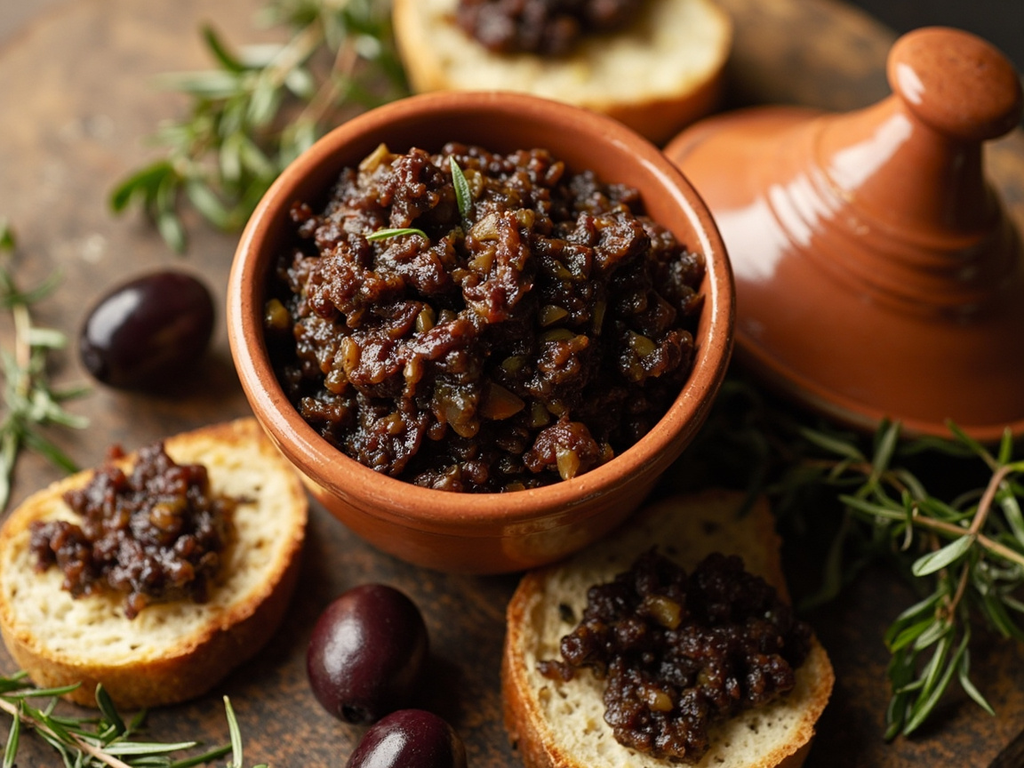
Black tapenade made in a mortar
Why this dish? Ponge loved the authentic, unadorned things of his Provence: olive oil, local products. Tapenade — a paste of black olives, capers, and anchovies pounded in a mortar — is the quintessential Provençal preserve, kept cool under a layer of oil and served with bread, another Pongian object.
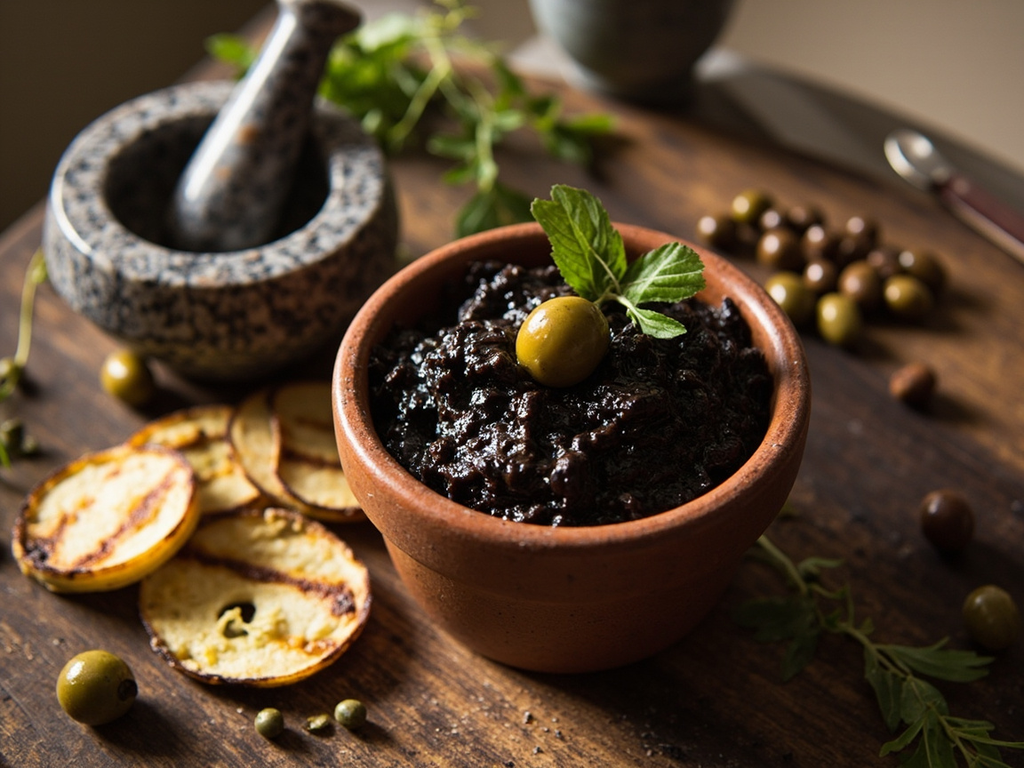
A dense black paste of olives, capers, anchovies, and olive oil, pounded in a mortar, brightened with a dash of lemon. It keeps in a pot under oil and is spread on warm fougasse.
Here is a black and silent thing, which must be reduced in the mortar so that it finally speaks. You pound the wrinkled olives like little pebbles, the capers — which give the paste its name, tapéno in Provençal —, a few anchovies, and you bind it all with oil until you get a glossy, salty, almost bitter mud. Put in a pot under a finger of oil, it keeps for weeks in the cellar. Spread it thick on bread: it is the whole Midi concentrated in a spoonful.
- •Pitted black Provençal olives — two handfuls (base)
- •Salt-packed capers — a good spoonful (signature (tapéno))
- •Salt anchovies — a few (umami)
- •Olive oil — as needed (binder, preservation)
- •Garlic — one clove (aromatic)
Black tapenade made in a mortar
A dense black paste of olives, capers, anchovies, and olive oil, pounded in a mortar, brightened with a dash of lemon. It keeps in a pot under oil and is spread on warm fougasse.
Why this dish? Ponge loved the authentic, unadorned things of his Provence: olive oil, local products. Tapenade — a paste of black olives, capers, and anchovies pounded in a mortar — is the quintessential Provençal preserve, kept cool under a layer of oil and served with bread, another Pongian object.
Here is a black and silent thing, which must be reduced in the mortar so that it finally speaks. You pound the wrinkled olives like little pebbles, the capers — which give the paste its name, tapéno in Provençal —, a few anchovies, and you bind it all with oil until you get a glossy, salty, almost bitter mud. Put in a pot under a finger of oil, it keeps for weeks in the cellar. Spread it thick on bread: it is the whole Midi concentrated in a spoonful.
Ingredients (period version)
- Pitted black Provençal olives — two handfuls (base)
- Salt-packed capers — a good spoonful (signature (tapéno))
- Salt anchovies — a few (umami)
- Olive oil — as needed (binder, preservation)
- Garlic — one clove (aromatic)
Ingredients
- Pitted Nyons or Nice black olives — 250 g (base)
- Rinsed capers — 50 g (signature)
- Anchovy fillets in oil — 5 (umami)
- Garlic — 1 clove, germ removed (aromatic)
- Olive oil from Provence — 8 tbsp (binder)
- Lemon juice — 1 tsp (freshness)
- Fresh thyme — a few leaves (flavor)
Method
- Pound the garlic and capers in the mortar with the anchovies until a paste forms.
- Add the olives by handfuls, continue pounding roughly (or pulse in a food processor).
- Pour in the oil in a stream while working the paste, until smooth but still textured.
- Season with a dash of lemon and thyme; taste (the anchovies already provide salt).
- Pack into a pot, cover with a film of olive oil; store cool and serve on toasted bread.
How it was made : Tapenade as we know it was codified at the end of the 19th century (attributed to Marseilles chef Meynier, around 1880), but it extends an ancient tradition of olive purées. Its name comes from the Provençal tapéno, caper. Under oil, it served as a preserve to keep the taste of olives all year round.
The contemporary twist : Serve it as a quenelle on a slate board with a river pebble beside it — a nod to Ponge's 'Le Galet', two black and smooth things face to face.
Sources : Francis Ponge, « Le Galet », dans Le Parti pris des choses, Gallimard, 1942 · J.-B. Reboul, La Cuisinière provençale, 1897
Francis Ponge · Charactorium