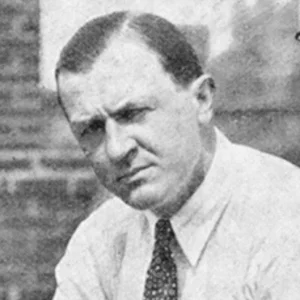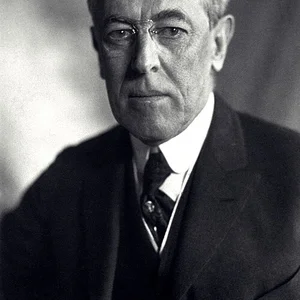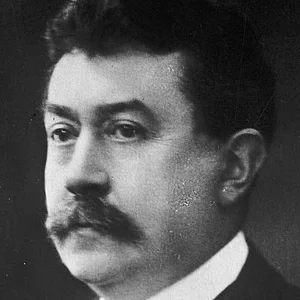

A renowned French mathematician, Paul Painlevé (1863–1933) is known for his work on differential equations. He entered politics and served twice as President of the Council in 1917 and 1925, as well as Minister of War.
Paul Painlevé(1863 — 1933)
Paul Painlevé
France
9 min read
Frequently asked questions
Key Facts
- 1863: born in Paris
- 1900: elected to the Académie des sciences for his work in mathematical analysis
- 1910: elected deputy for Paris, marking the beginning of a dual scientific and political career
- 1917: President of the Council during the First World War (two distinct terms)
- 1925: again President of the Council and Minister of Finance
Works & Achievements
Delivered as a course in Stockholm in 1895 and published in 1897, this work presents a systematic treatment of differential equations whose singularities are fixed. It stands as Painlevé's masterpiece in mathematics and remains a foundational reference in complex analysis.
A landmark publication in which Painlevé establishes the existence of six new classes of irreducible transcendental equations, now known as the Painlevé transcendents (PI through PVI). These functions are today studied in theoretical physics and random matrix theory.
Painlevé played an active role in establishing this institute dedicated to aeronautical research, persuading public authorities to support the development of aviation. This initiative illustrates his ability to harness science in the service of the national interest.
A major political decision taken by Painlevé as Minister of War, which brought an end to the bloody stalemate at the Chemin des Dames. By appointing Pétain as commander-in-chief, he enabled the restoration of morale in the French army and the adoption of a more defensive strategy.
By forming his first cabinet in the midst of war, Painlevé sought to give France firm political leadership during one of the most critical periods of the conflict. His government lasted two months before being brought down and replaced by that of Georges Clemenceau.
Painlevé returned to the presidency of the Council for a second time amid a financial and colonial crisis (the Rif War). His government exemplified the prominent role of republican intellectuals in the political life of the interwar period, before the return of Poincaré.
Anecdotes
On October 6, 1908, Paul Painlevé took flight with Wilbur Wright aboard a biplane from the Camp d'Auvours, near Le Mans. The flight lasted 1 hour and 9 minutes, breaking the duration record of the time. This mathematician thus became one of the first French civilians to experience the aeronautical revolution firsthand, and one of its most ardent advocates in Parliament.
Appointed Minister of War in March 1917, Painlevé had to confront one of the gravest crises of the Great War: the mutinies that broke out in the French army following the bloody failure of the Nivelle Offensive on the Chemin des Dames. He played a decisive role by replacing General Nivelle with Philippe Pétain, enabling the gradual restoration of discipline and troop morale.
Between 1895 and 1910, Painlevé discovered a family of new differential equations whose solutions cannot be expressed using known mathematical functions, thereby defining new functions called the "Painlevé transcendents." A century later, these equations have found unexpected popularity in theoretical physics, particularly in the study of random matrices and statistical physics.
Painlevé represented an exceptionally rare figure in French public life: a leading mathematician who became a statesman. His scientific colleagues were often baffled by his passion for politics, while his political allies struggled to follow his abstract reasoning. He nonetheless succeeded in bridging these two worlds, championing state support for science and aeronautics.
In 1925, as France was navigating a severe financial crisis and the Rif War in Morocco was draining state finances, Painlevé formed his second government as President of the Council. His efforts helped stabilize the situation temporarily before Raymond Poincaré secured the decisive financial recovery.
Primary Sources
Among second-order differential equations whose critical points are fixed, there exist some whose general integral defines new transcendents, irreducible to the classical functions known to this day.
We establish that there exist six classes of irreducible transcendental equations possessing this remarkable property: their critical points are fixed in advance and do not enter into the constants of integration.
The offensive that has just been carried out has cost France precious blood without achieving its stated objectives. I consider it the responsibility of the government to draw the consequences of this failure and to change the direction of operations.
The aeroplane is no longer a scientific curiosity; it is henceforth an instrument of war and peace that France cannot do without. It falls to the State to support its construction and to train the pilots necessary for its defense.
Key Places
The birthplace and lifelong home of Paul Painlevé, who spent the greater part of his existence there between scientific work, political office, and public engagement. He was born there in 1863, died there in 1933, and was buried in Père-Lachaise Cemetery.
The prestigious scientific and military academy where Painlevé taught analytical mechanics and differential equations to generations of engineers and scholars. It was there that he built his reputation as a gifted teacher and rigorous researcher.
The seat of the Chamber of Deputies, where Painlevé served for more than thirty years — first as a deputy, then as President of the Assembly. From this podium he championed military appropriations, aviation policy, and the great political balances of the Third Republic.
The military airfield where Wilbur Wright gave his historic demonstrations in France in the autumn of 1908. It was here that Painlevé flew with him on 6 October 1908, becoming one of the first civilian passengers ever to ride in a powered aeroplane.
The ridge overlooking the Aisne valley, scene of the Nivelle Offensive of April 1917, which ended in disaster and triggered the French Army mutinies. As Minister of War, Painlevé was forced to face the political and military consequences of the failure.
Typical Objects

Large slate board covered in differential equations written in chalk, the scholar's everyday tool for developing and presenting his proofs. Painlevé used it both for his lectures at the École Polytechnique and for working alone in his study.

A double-winged aircraft powered by an internal combustion engine and two propellers, built by the Wright brothers. It was aboard such a machine that Painlevé made his memorable flight with Wilbur Wright in October 1908 at Auvours.

Thick cardboard folders containing general staff reports, intelligence notes, and diplomatic correspondence, which piled up on the War Minister's desk. Painlevé reviewed them each morning to stay informed of the military situation.

A bound volume of higher mathematics filled with formulas and proofs, representing both the tools and the results of Painlevé's research. His lectures on differential equations were published and circulated in European scientific circles.

A telephone with a handset and crank handle, which became indispensable in ministries and military headquarters during the Great War for coordinating operations in real time. Painlevé used it to communicate directly with generals and allied counterparts.

The quintessential ceremonial garment of politicians under the Third Republic, worn during sessions at the Chamber of Deputies, official audiences, and public ceremonies. Painlevé wore it as a mark of belonging to the republican and intellectual bourgeoisie.
School Curriculum
Vocabulary & Tags
Key Vocabulary
Daily Life
Morning
Painlevé rose early and devoted the first hours of the day to his mathematical research, working in silence on proofs or drafting his lectures. When he held ministerial office, he would quickly scan the telegrams and reports that had arrived overnight before heading to his cabinet.
Afternoon
His afternoons were divided between sessions at the Chamber of Deputies, parliamentary committee meetings, and audiences at his ministerial cabinet. Discussions with generals, ambassadors, or parliamentary colleagues took up most of his time, punctuated by brief consultations on day-to-day affairs.
Evening
In the evenings, Painlevé frequented Parisian intellectual and scientific circles, where he mingled with mathematicians, physicists, and men of letters. He sometimes attended political dinners bringing together leading figures of the republican left, then retired to read or return to a few mathematical notes before bed.
Food
Like many Parisians of the *Belle Époque* and the interwar years, Painlevé followed the dining habits of the republican bourgeoisie: coffee and toast in the morning, lunch often taken at a meeting or the parliamentary restaurant, and a lighter dinner in the evening. During the war, he shared the food restrictions imposed on the home front.
Clothing
As a minister and public figure, Painlevé wore the standard dress of the **Third Republic**: a frock coat or black morning coat for official sessions, and a top hat or bowler depending on the occasion. In his private life as a scholar, he preferred simple, comfortable clothes, paying little attention to his appearance.
Housing
Painlevé lived in a bourgeois apartment in Paris that allowed him to receive colleagues and visitors. His library, filled with mathematical treatises and scientific journals, bore witness to the enduring scholar behind the politician. Rooted in the intellectual and political life of the capital, he had no notable country residence.
Historical Timeline
Period Vocabulary
Liens externes & ressources
Références
Œuvres
Leçons sur la théorie analytique des équations différentielles
1897
Mémoire sur les équations différentielles dont l'intégrale générale est uniforme
1900
Fondation de l'Institut aérotechnique de Saint-Cyr
1909
Remplacement du général Nivelle par le général Pétain
Mai 1917
Premier gouvernement Painlevé
Septembre — Novembre 1917
Second gouvernement Painlevé
Avril — Novembre 1925