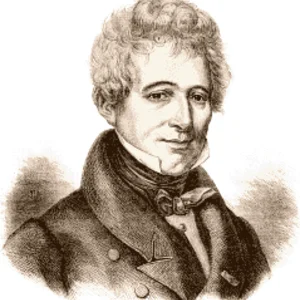

Pausanias was a Greek geographer and traveler of the 2nd century AD. His work, the “Description of Greece” (Periegesis), describes in detail the monuments, sanctuaries, cults, and works of art of the Greek cities. It is a primary archaeological and religious source.
Pausanias
Pausanias
6 min read
Frequently asked questions
Key Facts
- Active in the 2nd century AD, probably a native of Asia Minor (the region of Lydia)
- Author of the “Description of Greece” (Periegesis) in ten books, around 160-180 AD
- Methodically describes the cities, temples, and works of art of mainland Greece (Attica, Corinthia, Laconia, Arcadia...)
- A major source on the cults and depictions of the deities, including that of Ares
- His descriptions guided modern archaeological excavations (Olympia, Delphi)
Works & Achievements
Opening of the work devoted to Athens and its surroundings. A major source on the ancient Acropolis and Agora.
Describes Corinth, Mycenae and Epidaurus. Invaluable for the history of the healing sanctuary of Asclepius.
Covers Sparta and the history of the Messenian Wars, which he is one of the few authors to recount in detail.
A double book on the sanctuary of Olympia, the Games and the statue of Zeus. An essential reference for the archaeology of the site.
Describes the cities of the northern and central Peloponnese, rich in local cults and rural legends.
The last surviving book, focused on the oracle of Delphi. The only testimony on the lost frescoes of Polygnotus.
Anecdotes
Pausanias travelled on foot across most of mainland Greece to write his *Description of Greece*. He visited every sanctuary, recorded the statues and inscriptions, and listened to local guides: his text is so precise that archaeologists still use it today to identify ruins.
Thanks to Pausanias, we know what the gigantic statue of **Zeus** at **Olympia** looked like — one of the Seven Wonders of the World, sculpted by **Phidias**. Since the statue vanished in antiquity, his detailed description is one of our rare sources on this masterpiece of gold and ivory.
Pausanias was sometimes sceptical about the legends he was told. When a myth seemed implausible to him, he pointed it out, but he still reported the local beliefs out of respect for the religious traditions of the cities.
At the sanctuary of **Delphi**, Pausanias carefully described the paintings by **Polygnotus** depicting the Trojan War and the Underworld. Since these frescoes have completely disappeared, his account is the only way to imagine them today.
Pausanias was also interested in natural curiosities and unusual objects: he mentions the bones of “giants” (probably fossils of prehistoric animals) that the Greeks interpreted as the remains of mythical heroes.
Primary Sources
On the Greek mainland, coming from the Cyclades islands and the Aegean Sea, you reach Cape Sounion, a promontory of the land of Attica. When you have rounded the cape, there is a harbour and a temple of Athena Sounias at the summit of the headland.
The god is seated on a throne; he is made of gold and ivory. On his head rests a wreath imitating the shoots of the olive tree. In his right hand he holds a Victory, also of ivory and gold.
On the wall Polygnotus has painted the capture of Ilium and the departure of the Greeks; on the other side, Odysseus descended to the Underworld to question the spirit of Tiresias about his homecoming.
Key Places
Probable region of origin of Pausanias, near Mount Sipylus. He refers to it several times as his homeland.
Great sanctuary of Zeus in the Peloponnese, to which Pausanias devotes two entire books. There he describes the statue by Phidias and the course of the Games.
Sanctuary of Apollo and seat of the oracle, meticulously described in Book X. Pausanias details the paintings by Polygnotus and the treasuries of the city-states.
The city whose visit opens his work (Book I). There he describes the Acropolis, the Agora and the recent monuments funded by the Roman emperors.
Commercial crossroads of the Peloponnese, rebuilt by Rome after its destruction in 146 BC. There Pausanias observes the blending of Greek and Roman cultures.
A city of Arcadia that Pausanias describes with particular care, providing valuable information about the cults and local history of this mountainous region.
Typical Objects

Writing medium on which Pausanias recorded his observations and that ancient readers unrolled to read his work. The Description of Greece comprised ten books, that is, ten scrolls.

A note-taking tool used in the field: the traveller scratched words into the wax with the point of the stylus, then erased them with the other end. Essential for jotting down inscriptions and descriptions as visits unfolded.

A colossal work by Phidias in gold and ivory that he describes in detail at Olympia. Now lost, it is known only through his account and a few ancient coins.

Precious objects (tripods, statuettes, weapons) left by worshippers in the sanctuaries, which Pausanias carefully catalogues. They bear witness to the wealth and history of the Greek cities.

A stone slab engraved with inscriptions (dedications, lists of victors, decrees) that Pausanias read and copied out. These texts served him as reliable historical sources.

Sturdy hobnailed sandals worn by travellers to cover the roads and paths of Greece on foot. A symbol of the geographer's tireless journeying.
School Curriculum
Vocabulary & Tags
Key Vocabulary
Daily Life
Morning
When traveling, Pausanias rose early to take advantage of the cool air and walk toward the next sanctuary or city. He often began by questioning a local guide or a priest about the history of the places.
Afternoon
The afternoon was devoted to careful observation: he examined statues, temples, and inscriptions, taking notes on his tablets. He compared what he saw with the accounts of the ancient authors he had read.
Evening
In the evening, lodged at an inn or with a host, he wrote up his observations on scrolls. It was also the time to talk with the locals and gather oral traditions.
Food
Like the Greeks of his day, he lived mainly on barley or wheat bread, olives, cheese, dried pulses, and fish, all washed down with wine diluted with water. Meat remained reserved for days of feasting and sacrifice.
Clothing
He wore the tunic (chiton) and, over it, the woolen cloak (himation) draped across the shoulder, the classic garment of the cultivated Greek man. For the road, he put on sturdy sandals and shielded himself from the sun with a wide-brimmed hat (petasos).
Housing
While traveling, he stayed at inns, at sanctuaries that welcomed pilgrims, or with hosts according to the rules of Greek hospitality. Coming from a well-off background, he most likely owned a home in Asia Minor where he could write in peace.
Historical Timeline
Period Vocabulary
Liens externes & ressources
Références
Œuvres
Description de la Grèce, Livre I — L'Attique et la Mégaride
vers 155-160 apr. J.-C.
Description de la Grèce, Livre II — Corinthe et l'Argolide
vers 160 apr. J.-C.
Description de la Grèce, Livres III-IV — Laconie et Messénie
vers 160-165 apr. J.-C.
Description de la Grèce, Livres V-VI — L'Élide et Olympie
vers 170-175 apr. J.-C.
Description de la Grèce, Livres VII-VIII — Achaïe et Arcadie
vers 175 apr. J.-C.
Description de la Grèce, Livre X — La Phocide et Delphes
vers 175-180 apr. J.-C.