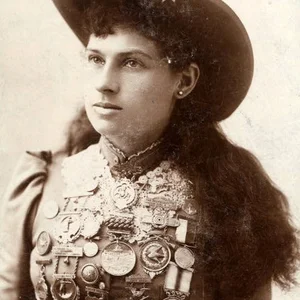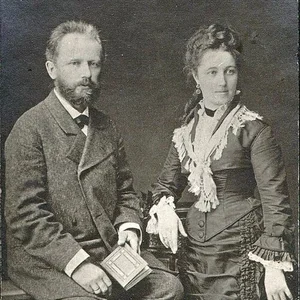

Pearl Hart was a Canadian-born American outlaw, famous for committing one of the last stagecoach robberies in the history of the American West, in Arizona in 1899. A media figure in her own lifetime, she embodies the myth of the dying Wild West.
Pearl Hart(1871 — 1928)
Pearl Hart
Canada
6 min read
Frequently asked questions
Key Facts
- Born around 1871 in Canada (Ontario), she emigrated to the United States while young
- In May 1899, she and an accomplice (Joe Boot) held up a stagecoach near Globe, Arizona: one of the last stagecoach robberies of the West
- Arrested shortly afterward, she became a media celebrity thanks to the press of the time
- Convicted and then imprisoned, she was released around 1902 before disappearing from public life
Works & Achievements
One of the last stagecoach robberies in the history of the American West, which made Pearl Hart famous across the entire country.
An illustrated feature that spread her image as the “bandit queen” and turned her into a national media figure.
A brief, spectacular escape that added to her reputation as an elusive outlaw before her trial.
Her statement refusing to be judged by laws written without the voice of women made her a figure cited in the history of women's emancipation.
After her release, her story was brought to the stage in Western shows, keeping alive the myth of the last female bandit of the Frontier.
Anecdotes
On May 30, 1899, Pearl Hart and her accomplice Joe Boot held up the stagecoach running between Globe and Florence, in Arizona. It was one of the very last stagecoach robberies in the history of the West: to go unnoticed, Pearl had cut her hair short and dressed as a man. The haul came to only 431 dollars, and she is said to have returned one dollar to each passenger so they could buy something to eat.
After the robbery, the two bandits got lost in the desert and wandered in circles for several days. A sheriff and his posse found them asleep beside a campfire and arrested them without a fight: a thoroughly inglorious ending for a pair of outlaws.
Jailed in Tucson while awaiting trial, Pearl escaped in October 1899 by digging a hole through her cell wall with another inmate. She was quickly recaptured, but the episode cemented her reputation as a fearless bandit.
At her trial, the first jury, charmed by the young woman, acquitted her of the robbery. Furious, the judge had her tried again on a different charge — stealing the driver's revolver — and this time she was sentenced to five years at Yuma Penitentiary. She is credited with a famous retort: she refused to be judged under laws that women, denied the right to vote, had had no part in writing.
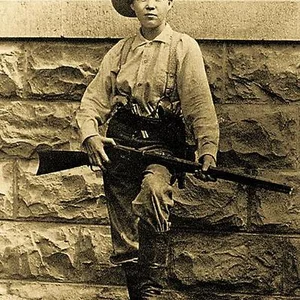
During her time in prison, journalists came to interview her and photograph her posing proudly with a rifle. The New York magazine Cosmopolitan ran an article about her in 1899, turning her into a genuine celebrity: the “bandit queen.”
Primary Sources
Illustrated article featuring staged photographs in which Pearl Hart poses with a rifle and recounts her stagecoach robbery, helping to forge her legend as a woman outlaw of the West.
“I shall not consent to be tried under a law in which my sex had no voice in making.”
Booking record documenting the identity, description, and sentence of Pearl Hart, one of the few women incarcerated in this Arizona prison.
Newspaper articles recounting the holdup of the Globe-Florence stagecoach, the arrest of the two accomplices, and the course of the hearings.
Key Places
Small Canadian town where Pearl Hart was born around 1871, before she left for the United States.
Mining town from which the stagecoach attacked by Pearl Hart and Joe Boot in 1899 departed.
Destination of the Globe-Florence stagecoach; the robbery took place along this route, in a desert canyon.
Where Pearl Hart was held before her trial, and from which she briefly escaped in 1899.
Reputed to be the harshest prison in the West, where Pearl Hart served her sentence and was one of the few women ever incarcerated.
Typical Objects

An iconic handgun of the American West, reliable and rugged. Pearl Hart is said to have used one to threaten the stagecoach passengers.
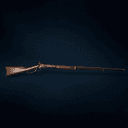
A repeating rifle widely used across the West, nicknamed “the gun that won the West.” Pearl poses with one in her famous prison photographs.

A horse-drawn coach carrying passengers, mail and sometimes money between the towns of the Far West. Being a favorite target of bandits made it a symbol of the dying West.
The men's trousers, shirt and hat that Pearl Hart put on, her hair cut short, to carry out her holdup without being recognized as a woman.

A wooden, iron-banded strongbox carried by stagecoaches to protect money and valuables. A prime target of holdups in the West.

Cheap, popular little books that told tales of cowboys and outlaws, turning figures like Pearl Hart into legendary heroes.
School Curriculum
Vocabulary & Tags
Key Vocabulary
Tags
Daily Life
Morning
In the Arizona mining towns where Pearl lives, days begin early, to the sound of horses and wagons. People light the stove, brew coffee, and make breakfast before the crushing heat of the desert sets in.
Afternoon
Afternoons are spent in town or around the camps: shops, saloons, the comings and goings of stagecoaches linking the isolated settlements. For a woman of no means like Pearl, it is often an uncertain quest for work and money.
Evening
In the evening, life centers on the kerosene-lit saloons, where people play cards, drink, and talk. It is in this rough world of gamblers and adventurers that Pearl rubs shoulders with disreputable men.
Food
Frontier food is simple and filling: beans, salt pork, corn cakes, beef or wild game, strong coffee. Fresh fruit and vegetables are scarce in these desert regions.
Clothing
Women generally wear long dresses and petticoats, but Pearl Hart does not hesitate to put on men's clothing — trousers, a shirt, and a hat — to pull off her heist and pass unnoticed.
Housing
People live in houses of wood or adobe, sometimes simple prospectors' cabins, without modern comforts. Imprisonment, however, takes place in the scorching stone cells of the Yuma penitentiary.
Historical Timeline
Period Vocabulary
Liens externes & ressources
Références
Œuvres
Vol de la diligence Globe-Florence
30 mai 1899
Article de Cosmopolitan Magazine
octobre 1899
Évasion de la prison de Tucson
octobre 1899
Plaidoyer au procès sur le droit des femmes
1899
Tournées de spectacles inspirés de sa vie
années 1900