Legends of the American West
Outlaws, marshals, Native chiefs, pioneers, trappers and Wild West Show stars — from Billy the Kid to Sitting Bull, the figures of the American frontier.
30 characters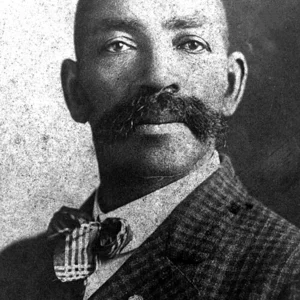
30 characters
Bass Reeves
1838 — 1910
Bass Reeves (1838-1910) was the first African American deputy U.S. marshal west of the Mississippi. Born into slavery, he became one of the most famous lawmen of the Wild West, credited with more than 3,000 arrests over a thirty-two-year career.
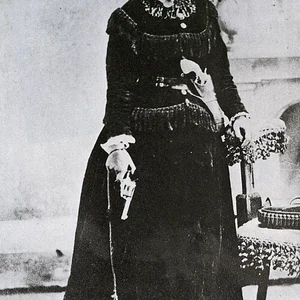
Belle Starr
1848 — 1889
Belle Starr (1848-1889) was an American outlaw of the Wild West, nicknamed the “Bandit Queen.” A fence, horse thief, and associate of several gangs in the Indian Territory, she became a legendary figure popularized by the sensationalist press and dime novels.
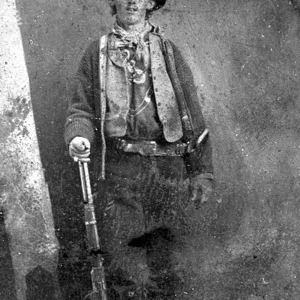
Billy the Kid
1859 — 1881
American outlaw of the Wild West, famous for his skill as a gunfighter and his involvement in the Lincoln County War. Killed at age 21 by Sheriff Pat Garrett, he became a legendary figure of the conquest of the American West.
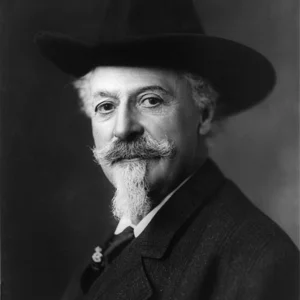
Buffalo Bill
1846 — 1917
William Cody (1846-1917), known as Buffalo Bill, was a scout for the U.S. Army and a bison hunter before becoming a worldwide showman. His Wild West Show staged the conquest of the West before millions of spectators in America and Europe.
Butch Cassidy
1866 — 1908
An American outlaw of the Old West, Butch Cassidy was the leader of the Wild Bunch gang, which specialized in robbing banks and trains. Hunted by detective agencies, he fled to South America, where he is believed to have met his death in Bolivia.
Calamity Jane
1852 — 1903
Martha Jane Cannary (c. 1852-1903), known as Calamity Jane, was a scout, stagecoach driver, and iconic figure of the American conquest of the West. A legend in her own lifetime, she performed in Wild West shows and was associated with the gunfighter Wild Bill Hickok.
Chief Joseph
1840 — 1904
Chief of the Nez Perce Native American tribe. In 1877, he led his people on a desperate retreat of nearly 1,700 km to escape the U.S. Army and reach Canada, before surrendering just a few kilometers from the border.
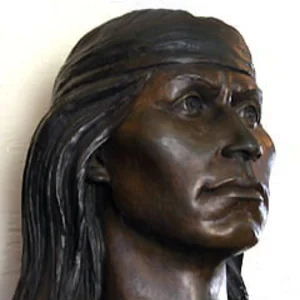
Cochise
1812 — 1874
An Apache chief of the Chiricahua band, Cochise led the armed resistance against the U.S. Army in the Southwest for more than ten years. A major figure of the Apache Wars, he finally made peace in 1872.
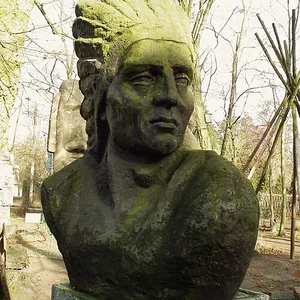
Crazy Horse
1849 — 1877
Oglala Lakota war chief and a leading figure of Native American resistance against the expansion of the United States. Victor over Custer at Little Bighorn in 1876, he was killed the following year while being held at Fort Robinson.
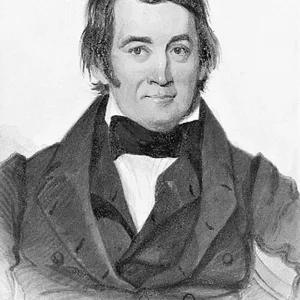
Davy Crockett
1786 — 1836
American pioneer, hunter, and politician, elected several times to Congress for the state of Tennessee. Having become a legendary figure of the conquest of the West, he died defending Fort Alamo during the Texas Revolution in 1836.
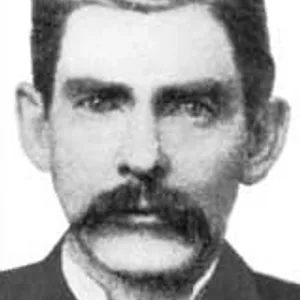
Doc Holliday
1851 — 1887
American dentist turned professional gambler and gunfighter, an iconic figure of the Wild West. A friend and ally of Wyatt Earp, he took part in the Gunfight at the O.K. Corral in 1881 in Tombstone, Arizona.
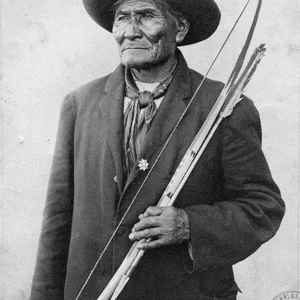
Geronimo
1829 — 1909
A Chiricahua Apache war leader and medicine man, Geronimo led the armed resistance against the expansion of the United States and Mexico in the American Southwest. His surrender in 1886 marked the end of the great Indian Wars.
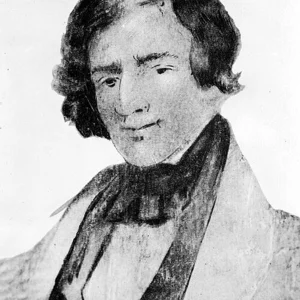
Jedediah Smith
1799 — 1831
American trapper, explorer, and cartographer. The first known man to cross the Sierra Nevada range and the Great Basin desert overland, he helped map the American West before his early death at age 32.
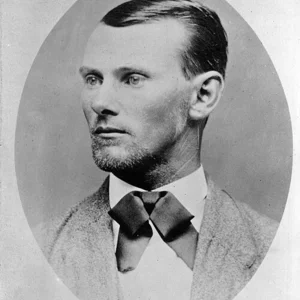
Jesse James
1847 — 1882
American outlaw, a former Confederate guerrilla who became the leader of the James-Younger gang. A robber of banks and trains across the Midwest after the American Civil War, he was assassinated in 1882 and became a legendary figure of Western folklore.
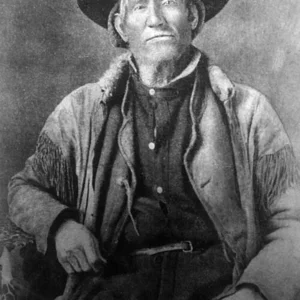
Jim Bridger
1804 — 1881
American trapper, guide, and explorer, an iconic figure among the “mountain men” of the Rockies. In 1824, he was one of the first Anglo-Americans to reach the Great Salt Lake. He founded Fort Bridger, a key way station on the western trails.
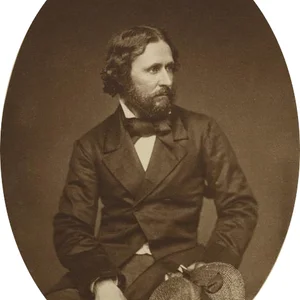
John C. Frémont
1813 — 1890
American explorer, military officer and politician nicknamed “the Pathfinder.” He mapped the American West and the Oregon Trail, played a role in the conquest of California, and then became the first Republican candidate in the 1856 presidential election.
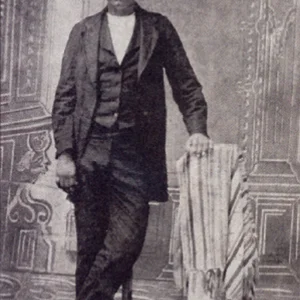
John Wesley Hardin
1853 — 1895
American outlaw from Texas, regarded as one of the most feared gunfighters of the Wild West. He claimed more than 40 killings before being imprisoned, then became a lawyer after his release, before being shot dead in 1895.
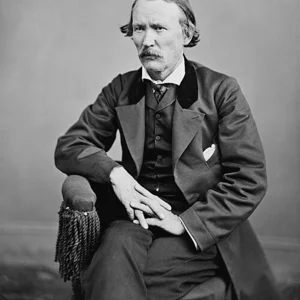
Kit Carson
1809 — 1868
American trapper, guide, and soldier, an iconic figure of the conquest of the West. As guide for John C. Frémont's expeditions to the Rockies and California, he later became a Union Army officer and Indian agent, marked by the deportation of the Navajo.
Lozen
1840 — 1889
Chiricahua Apache warrior and shaman, sister of Chief Victorio. Renowned for her skill in combat and her spiritual power to locate the enemy, she fought the American and Mexican armies, then alongside Geronimo until the surrender of 1886.
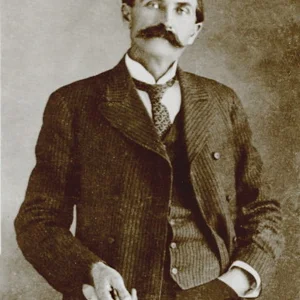
Pat Garrett
1850 — 1908
Pat Garrett was an American lawman of the Old West, who became famous for tracking down and killing the outlaw Billy the Kid in 1881. A former cowboy and buffalo hunter, he embodied the figure of the law during the Lincoln County War in New Mexico.
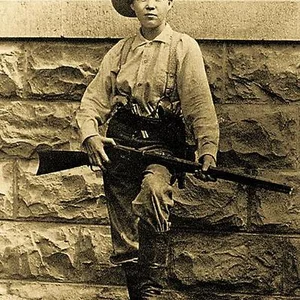
Pearl Hart
1871 — 1928
Pearl Hart was a Canadian-born American outlaw, famous for committing one of the last stagecoach robberies in the history of the American West, in Arizona in 1899. A media figure in her own lifetime, she embodies the myth of the dying Wild West.
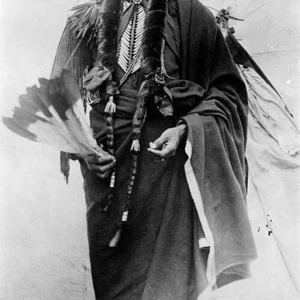
Quanah Parker
1845 — 1911
Quanah Parker was the last great chief of the Quahadi Comanches. The son of Chief Peta Nocona and Cynthia Ann Parker, a white captive, he led armed resistance against the advance of settlers and the U.S. Army, before becoming a respected mediator between his people and the United States government.
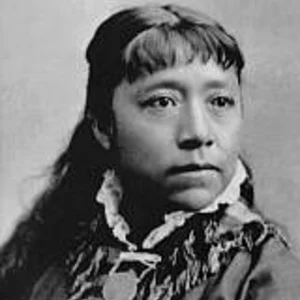
Sarah Winnemucca
1844 — 1891
A Paiute activist and author from Nevada, Sarah Winnemucca defended the rights of her Native American people in the face of American colonization. In 1883, she became the first Native American woman to publish a book in English, a major testimony on the condition of Indigenous nations.
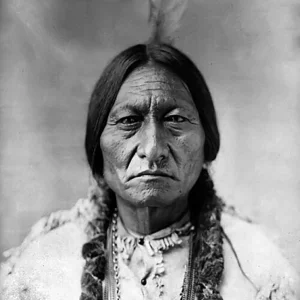
Sitting Bull
1831 — 1890
Sitting Bull (c. 1831-1890) was a chief and medicine man (wičháša wakȟáŋ) of the Hunkpapa clan of the Lakota Sioux. A leading figure of Native American resistance against the expansion of the United States, he embodied the defense of the territory and the way of life of the Plains.
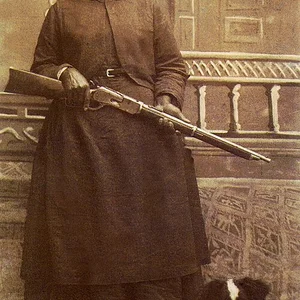
Stagecoach Mary
1832 — 1914
Born into slavery in Tennessee around 1832, Mary Fields became in 1895 the first African American woman mail carrier (Star Route) in the United States, in Montana. Nicknamed “Stagecoach Mary,” she became a legendary figure of the American conquest of the West.
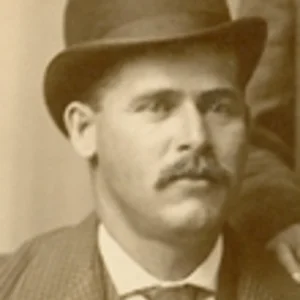
Sundance Kid
1867 — 1908
The Sundance Kid was an American Old West outlaw and a member of the famous Wild Bunch gang. A loyal sidekick of Butch Cassidy, he took part in numerous train and bank robberies before fleeing to South America.
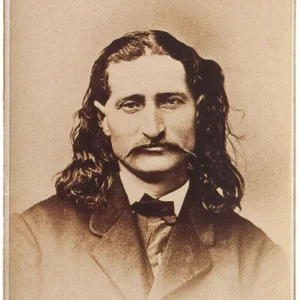
Wild Bill Hickok
1837 — 1876
An iconic figure of the American West, James Butler Hickok was in turn a Union scout, a Kansas lawman, a professional gambler, and a stage performer. A renowned gunfighter, he became a living legend before being shot in the back in 1876.
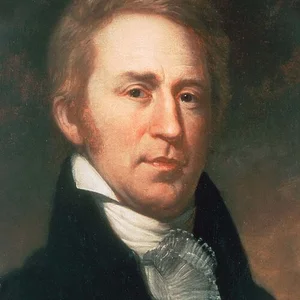
William Clark
1770 — 1838
An American army officer and explorer, William Clark co-led the Corps of Discovery expedition (1804–1806) with Meriwether Lewis, commissioned by President Jefferson. The expedition crossed North America to the Pacific Ocean, paving the way for the settlement of the American West.
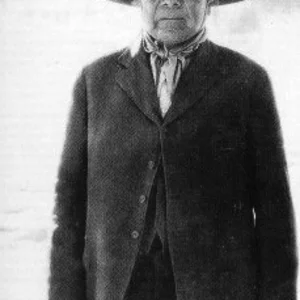
Wovoka
1856 — 1932
A Paiute prophet from Nevada, Wovoka founded the Ghost Dance in 1889, a messianic religious movement that spread among the Native American peoples of the Great Plains. His preaching, which foretold the return of the dead and the disappearance of the settlers, became associated with the Wounded Knee Massacre of 1890.
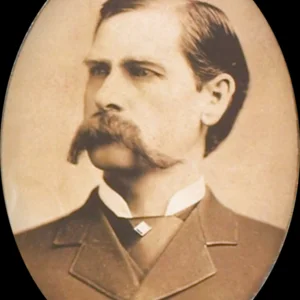
Wyatt Earp
1848 — 1929
Wyatt Earp (1848-1929) is an iconic figure of the American conquest of the West. A roving lawman, gambler, and entrepreneur, he owes his fame to the Gunfight at the O.K. Corral in 1881, which became a founding myth of the Wild West.