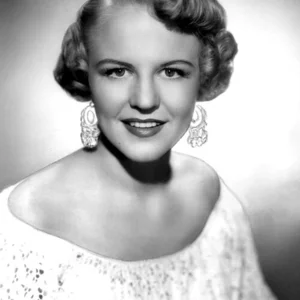

Peggy Lee (1920-2002) was an American jazz and pop singer, songwriter, and actress. Discovered with Benny Goodman's orchestra, she established herself as a soloist with hits like "Fever" and "Is That All There Is?".
Peggy Lee(1920 — 2002)
Peggy Lee
États-Unis
8 min read
Frequently asked questions
Key Facts
- Born May 26, 1920 in Jamestown, North Dakota, as Norma Deloris Egstrom.
- Joined Benny Goodman's orchestra in 1941 and had her first major success with "Why Don't You Do Right?" (1942).
- Co-wrote songs for the Disney animated film *Lady and the Tramp* (1955), for which she also lent her voice to several characters.
- Recorded her signature tracks "Fever" (1958) and "Is That All There Is?" (1969), the latter winning a Grammy Award.
- Died January 21, 2002 in Bel Air, California.
Works & Achievements
Peggy Lee's first major success, recorded at age 22. This song launched her to fame and allowed her to leave Benny Goodman's orchestra for a solo career.
An original composition by Peggy Lee showcasing her songwriting talent. The song became a jazz standard and demonstrated her ability to write memorable melodies.
Peggy Lee lent her voice to the character of Peg (the streetwise dog) in this Disney animated classic. Her performance of "The Siamese Cat Song" became iconic and introduced her voice to millions of children.
An upbeat, danceable song that introduced Peggy Lee to a younger audience. The success demonstrated her artistic versatility beyond standard jazz.
A landmark album gathering some of her finest performances. The album received critical acclaim and solidified her reputation as a great jazz singer.
Her greatest commercial and artistic success. "Fever" became a cult classic in popular music, won the Grammy Award, and remains one of the most covered songs in the repertoire.
An introspective and philosophical song revealing Peggy Lee's artistic depth at age 49. The song shows her evolution and ability to reinvent herself artistically.
Anecdotes
Peggy Lee began her career in 1941 singing with Benny Goodman's orchestra, one of the greatest bandleaders of the swing era. Despite being shy, she managed to assert her soft, intimate voice, which inspired Benny Goodman to create a special arrangement for her. This encounter launched a career that would last over sixty years.
In 1942, at just 22 years old, Peggy Lee recorded "Why Don't You Do Right?", one of her early major successes. The song became a hit and allowed her to launch herself as an independent soloist, which was rare for a woman in the music industry at that time.
Peggy Lee lent her voice to the character of the Siamese cat in the Disney animated film *Lady and the Tramp* (1953). She sang one of the film's most memorable songs, "The Siamese Cat Song", creating one of the most iconic animated characters in animation cinema.
In 1958, at age 38, Peggy Lee released her song "Fever", which became her biggest commercial success. Although the song was originally written in 1956, her version became the definitive interpretation and won a Grammy Award, proving that an artist's career can reach new heights at any age.
Peggy Lee was also a composer and writer, authoring several of her songs and musical arrangements. She received multiple Grammy Awards and music prizes, and was a pioneering woman in the music industry by controlling her own productions and compositions.
Primary Sources
I've always believed that my voice was a gift, not something I earned. When I sing a song, I want people to feel what I'm feeling. Fever is about vulnerability, and that's what makes it real.
Miss Peggy Lee represents the finest traditions of American song interpretation, combining technical excellence with emotional authenticity that audiences across the nation have come to cherish.
Peggy Lee's voice as the Siamese Cat brings sultry sophistication to the film. Her performance is both menacing and seductive, a masterclass in character voice acting that elevates the entire sequence.
I grew up in a small town in North Dakota, where singing was my escape from a difficult childhood. Music became my voice when I had no other way to express myself.
Key Places
Small town where Peggy Lee was born in 1920. It was in this rural and humble environment that she developed her passion for music before leaving for Chicago in search of a musical career.
Large American metropolis where Peggy Lee launched her musical career in the 1930s–1940s. Chicago was the center of swing jazz and big bands before the music industry moved to California.
Center of the film and recorded music industries. Peggy Lee moved to Los Angeles to take part in film productions and recording sessions at Capitol Records.
Famous concert hall and nightclub where Peggy Lee regularly performed in the 1940s–1950s. The Cocoanut Grove was one of the most prestigious show venues on the American West Coast.
Legendary recording studio where Peggy Lee recorded most of her hit albums, notably 'Fever'. Capitol Records was one of America's largest music labels.
Resort town and residence of many Hollywood celebrities. Peggy Lee owned a house there and rested between tours and recordings.
Typical Objects
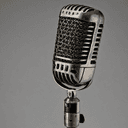
An essential tool for jazz singers. Peggy Lee used the microphone to explore the nuances of her voice and create intimacy with the audience, which was revolutionary for the time.

Peggy Lee was known for her glamorous and sophisticated style. Her stage gowns, often made of silk or satin, reflected the elegance of the 1940s–1950s and were an integral part of her stage presence.

The dominant format for recorded music at the time. Peggy Lee's albums were among the most popular on vinyl, allowing fans to enjoy her music at home.

Peggy Lee was also a composer and arranger. She wrote and annotated her own sheet music, which was rare for a woman in the music industry of her era.
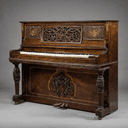
An instrument for composition and practice. Peggy Lee used the piano to develop her melodies and musical arrangements.

A fixture in recording studios and rehearsal rooms. Sophisticated lighting was essential for creating the atmosphere in Peggy Lee's promotional photos and videos.

A common habit among jazz musicians of the 1940s–1950s. Peggy Lee smoked regularly, which was seen as part of the sophisticated jazz persona.
School Curriculum
Vocabulary & Tags
Key Vocabulary
Tags
Daily Life
Morning
Peggy Lee wakes up around 9-10 AM after late performances. She has coffee and reads music reviews in the day's newspapers, often accompanied by her sheet music to study new songs. She spends one to two hours on vocal exercises and piano rehearsals to keep her voice in top condition.
Afternoon
After a light lunch, she devotes herself to studio recording sessions or rehearsals with musicians and orchestras. These sessions can last several hours. In the late afternoon, she prepares physically and mentally for the evening performance, resting and relaxing before the show.
Evening
In the evening, Peggy Lee puts on makeup and wears an elegant evening gown before taking the stage in a jazz club, concert hall, or theater. She typically performs from 9 PM to midnight or late into the night. After the show, she often stays to greet the audience and meet fans before returning home to unwind.
Food
Peggy Lee follows a balanced diet typical of the American middle class in the 1950s: light breakfast (eggs, toast, coffee), simple lunch (sandwich, salad), heartier dinner with meat, vegetables, and starches. She drinks coffee and tea throughout the day. She avoids heavy meals before performances to preserve her voice and comfort on stage.
Clothing
Peggy Lee dresses sophisticatedly in daily life: elegant dresses, tailored suits, high-quality wool sweaters. For performances, she wears evening gowns in silk, satin, or glacé fabric, often adorned with discreet but precious jewels. In private, she prefers comfort while maintaining a certain elegance: casual but refined outfits.
Housing
Peggy Lee lives in a comfortable house in Los Angeles or Palm Springs, reflecting her financial success. Her interior is tastefully furnished, with a concert grand piano, a high-fidelity stereo system, and walls decorated with photographs and posters of her performances. She has an acoustically isolated vocal practice space for her daily private rehearsals.
Historical Timeline
Period Vocabulary
Visual Style
Style visuel des années 1940-1950 : glamour sophistiqué du jazz américain, robes de soirée en soie et satin, maquillage dramatique, cheveux ondulés, photographie de studio avec éclairage chaud et intimiste, palette de couleurs chaudes (or, bourgogne, crème, noir profond).
Sound Ambience
Sonorités typiques des clubs de jazz et des studios d'enregistrement des années 1940-1950 : voix riche et grave de Peggy Lee, orchestration swingante avec cuivres chauds, piano délicat, applaudissements du public et ambiance intime du jazz sophistiqué.