 flip
flipHypocras of the Court of Camelot
Hypocras of the Court of Camelot
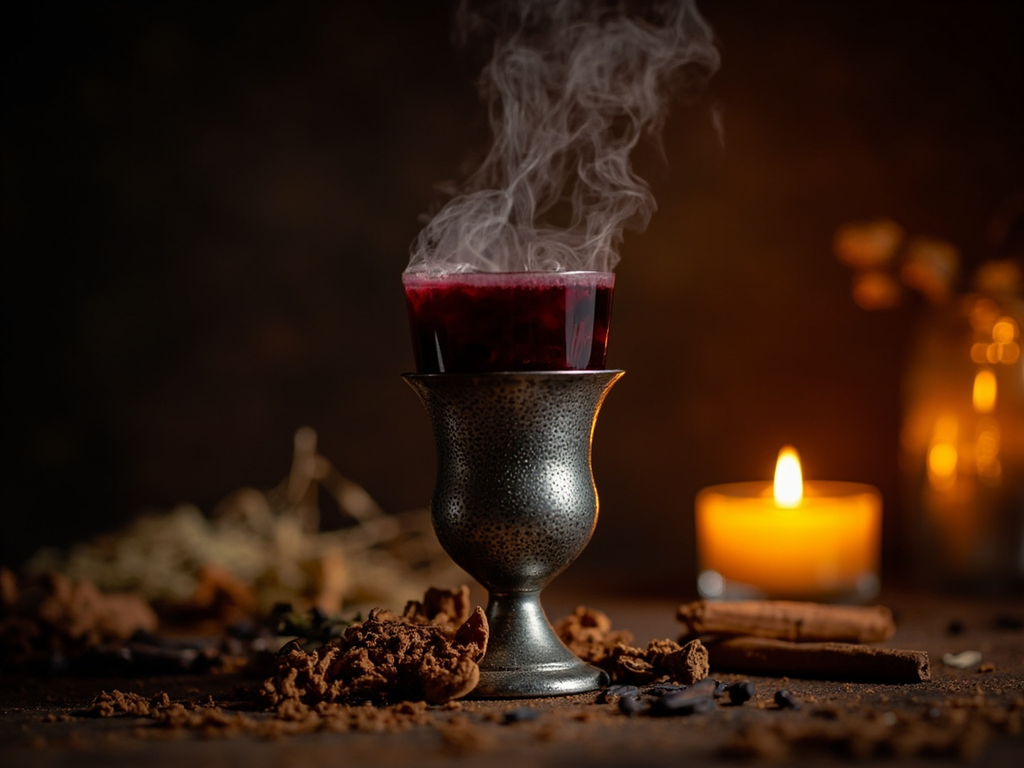
Why this dish? At Camelot, when Perceval returns from his exploits, the feast ends with "the issue of table": they serve hypocras, sweetened and spiced wine that seals the friendship of the Knights of the Round Table. It is the drink of great occasions, the one offered to the hero being celebrated.
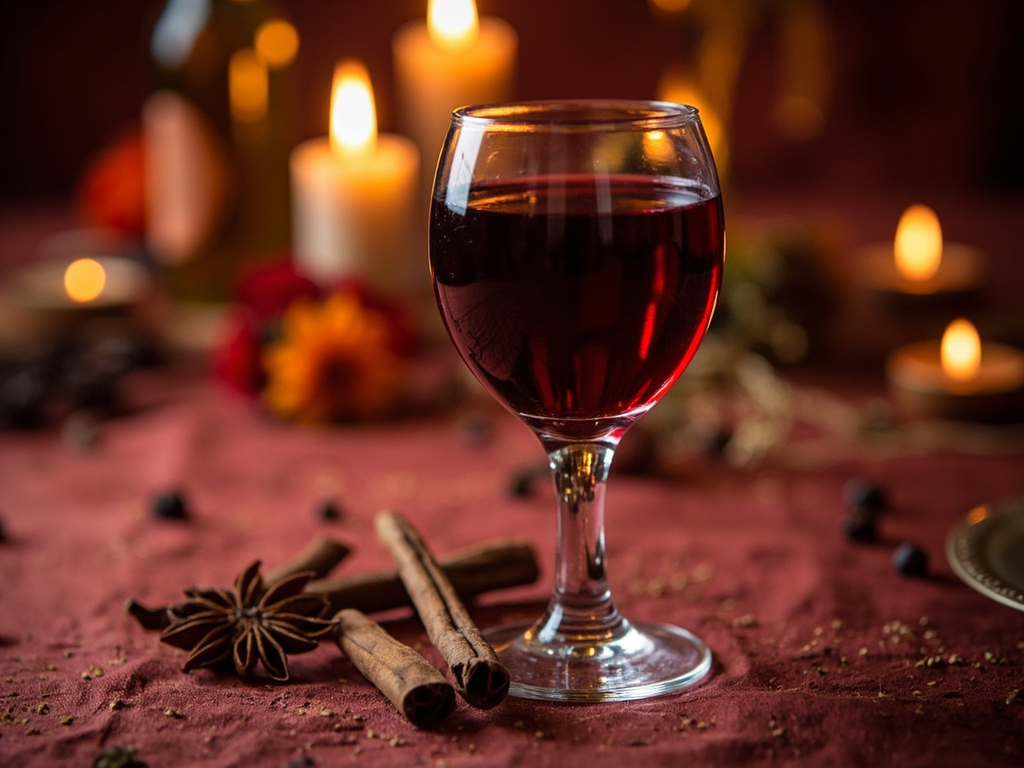
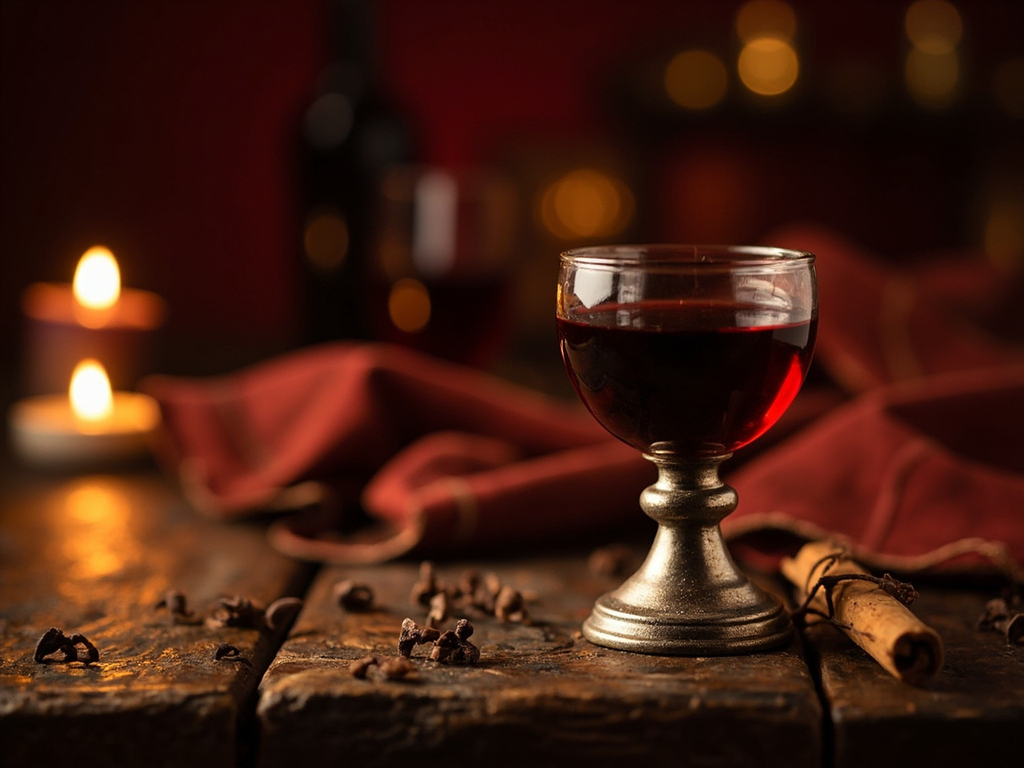
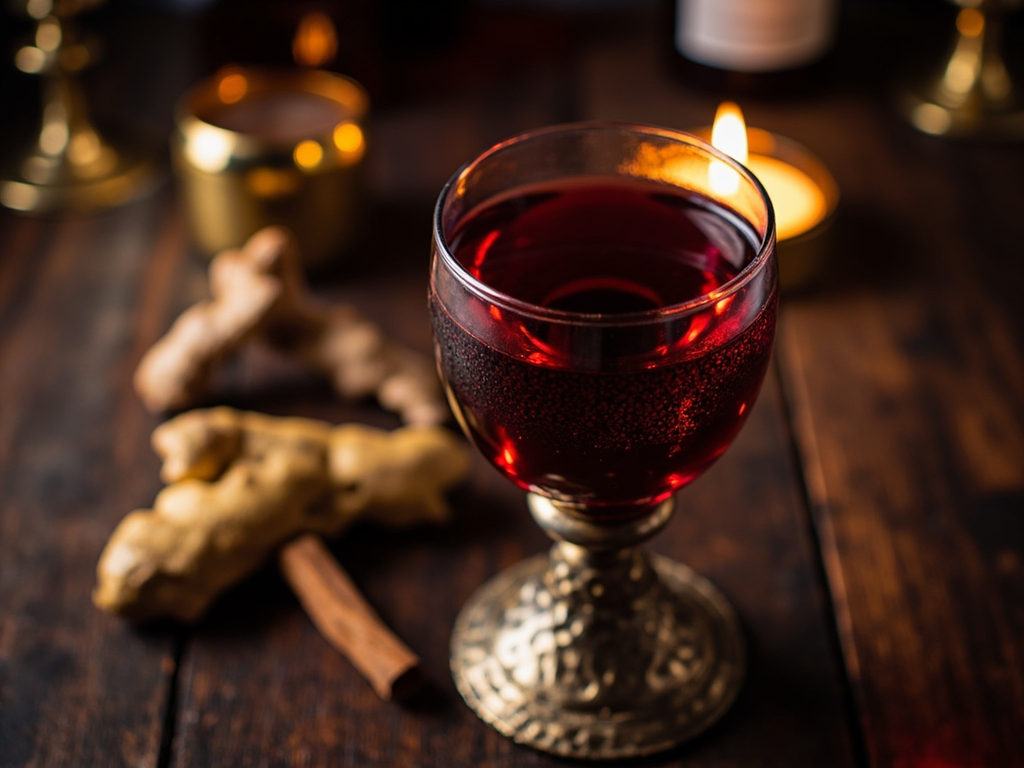
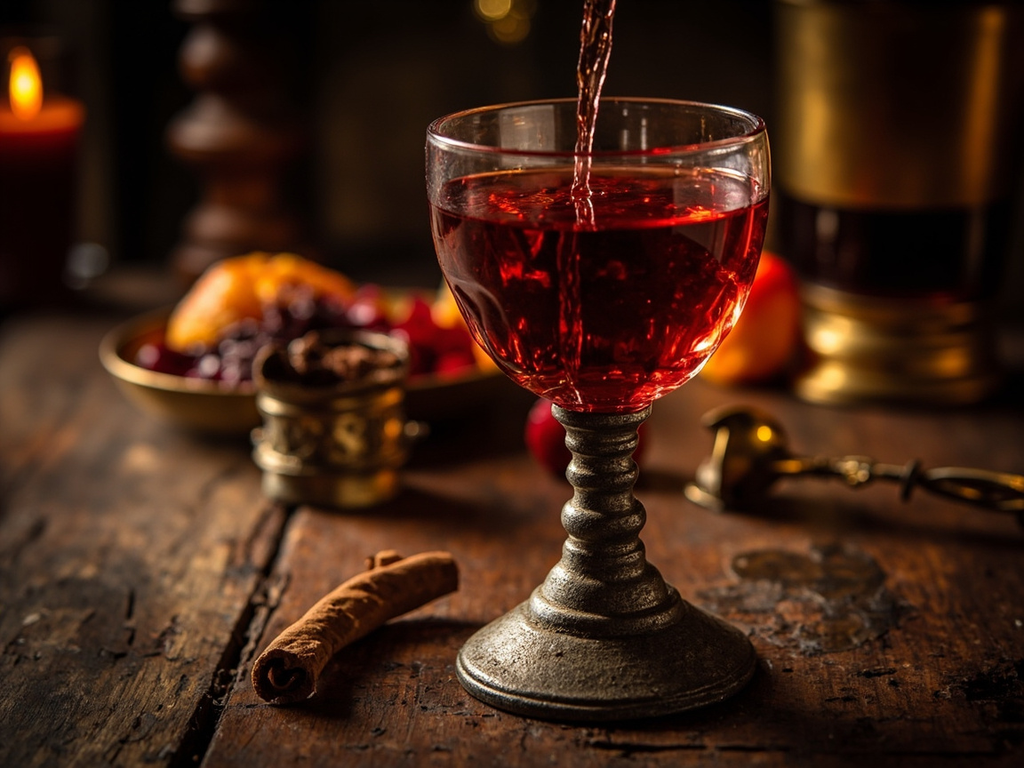
Red wine sweetened with honey and loaded with ginger, cinnamon, clove and grains of paradise, then filtered until clear and silky. Hot or cold, it is the noble digestif par excellence, reputed to be good for the stomach.
When I returned to court, King Arthur did me great honor, and after the meats they brought the hypocras in cups. Believe me, knight: no wine is so courteous as that, where honey softens the harshness and the spice powder warms the blood after the long fasts of the quest. They pass it through a sleeve — a cloth sack called Hippocras's sleeve — again and again until it becomes clear as ruby. Drink a cup of it, but not three, if you wish still to stay in the saddle.
- •Red wine — a pitcher (base)
- •Honey — to desired sweetness (medieval sweetener)
- •Ginger, cinnamon — good pinch (fine powder, warmth)
- •Clove, grains of paradise — a few (noble spices)
- •Mace or nutmeg — a hint (perfume)
Hypocras of the Court of Camelot
Red wine sweetened with honey and loaded with ginger, cinnamon, clove and grains of paradise, then filtered until clear and silky. Hot or cold, it is the noble digestif par excellence, reputed to be good for the stomach.
Why this dish? At Camelot, when Perceval returns from his exploits, the feast ends with "the issue of table": they serve hypocras, sweetened and spiced wine that seals the friendship of the Knights of the Round Table. It is the drink of great occasions, the one offered to the hero being celebrated.
When I returned to court, King Arthur did me great honor, and after the meats they brought the hypocras in cups. Believe me, knight: no wine is so courteous as that, where honey softens the harshness and the spice powder warms the blood after the long fasts of the quest. They pass it through a sleeve — a cloth sack called Hippocras's sleeve — again and again until it becomes clear as ruby. Drink a cup of it, but not three, if you wish still to stay in the saddle.
Ingredients (period version)
- Red wine — a pitcher (base)
- Honey — to desired sweetness (medieval sweetener)
- Ginger, cinnamon — good pinch (fine powder, warmth)
- Clove, grains of paradise — a few (noble spices)
- Mace or nutmeg — a hint (perfume)
Ingredients
- Full-bodied red wine — 1 bottle (75 cl) (base)
- Honey — 80 to 100 g (sweetness)
- Ground ginger — 1 tsp (spice)
- Cinnamon (stick) — 1 (spice)
- Cloves — 4 (spice)
- Grains of paradise (or pepper) — 1/2 tsp (noble spice)
- Grated nutmeg — 1 pinch (perfume)
Method
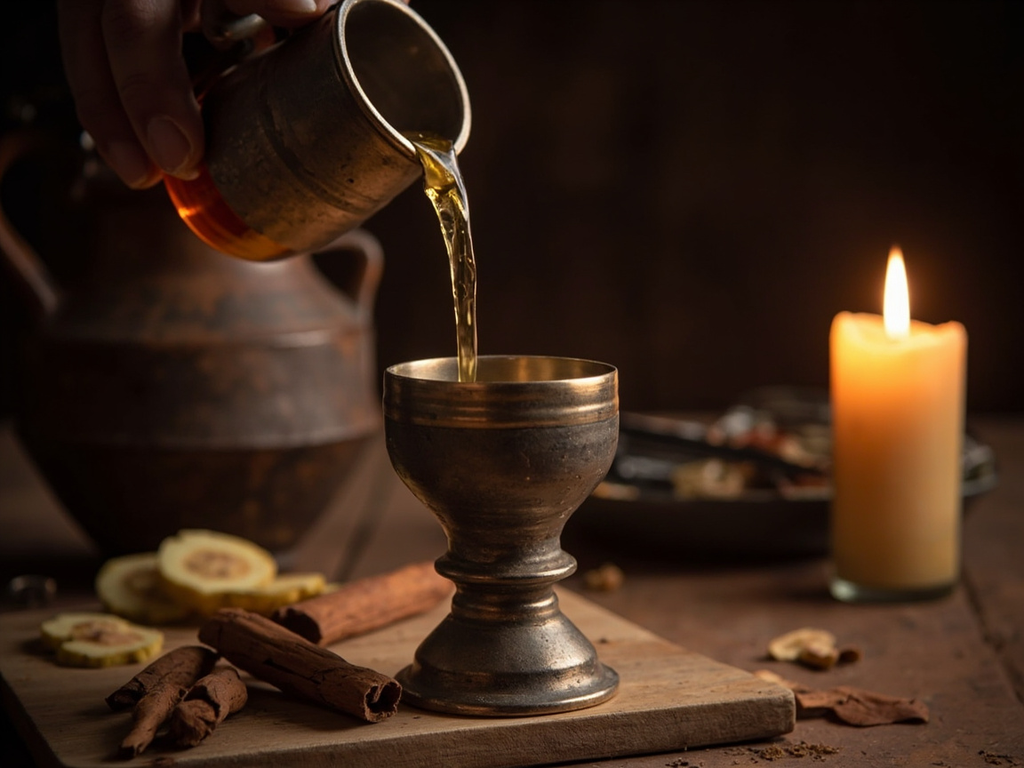
- Warm (do not boil) the wine with the honey until dissolved.
- Add all the spices, cover and infuse off the heat for 1 to 2 hours (or overnight in the fridge for more finesse).
- Filter several times through a clean fine cloth (the "sleeve") until perfectly clear.
- Serve warm in cups, or chilled in summer. Keeps for a few days in the fridge.
How it was made : Hypocras (wine passed through "Hippocras's sleeve") is documented in medieval collections such as Le Ménagier de Paris (1393) and Le Viandier. It was served at the "issue of table," reputed to aid digestion. Grains of paradise (melegueta pepper) were a luxury spice highly prized before the spread of black pepper.
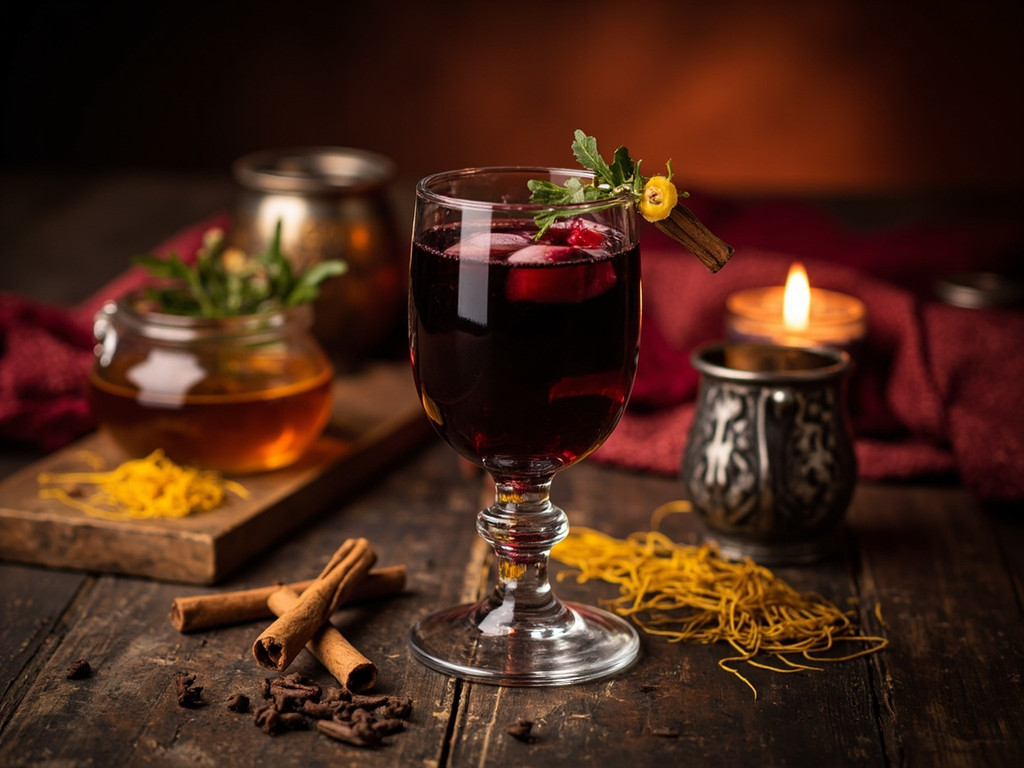
The contemporary twist : Pour it over a large clear ice cube in a frosted pewter cup: the "issue of Camelot" summer version.
Sources : Le Ménagier de Paris (1393) · Le Viandier (Taillevent, 14th c.)
Perceval · Charactorium