 flip
flipPlakous with Honey and Fresh Cheese
Plakous with Honey and Fresh Cheese
Why this dish? Pericles dedicated the Parthenon to Athena on the Acropolis: honey and cheese cakes were among the offerings placed on the altars of the gods. This plakous, sweet and pure, evokes the rites that accompanied the great works he made the jewel of the city.
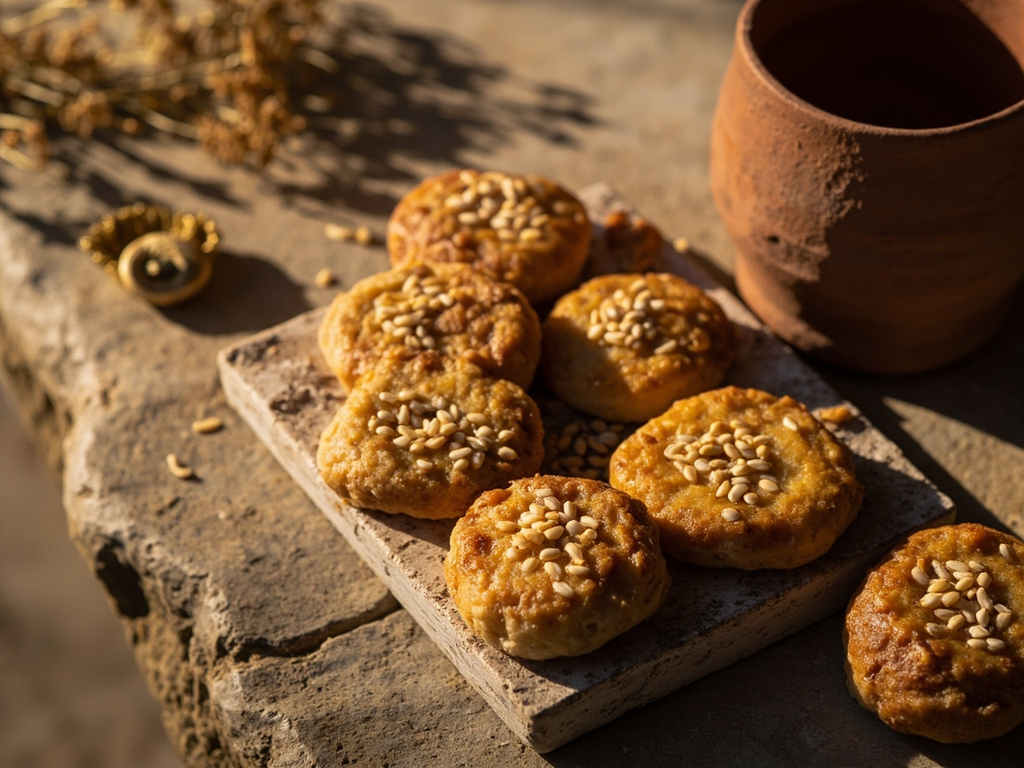
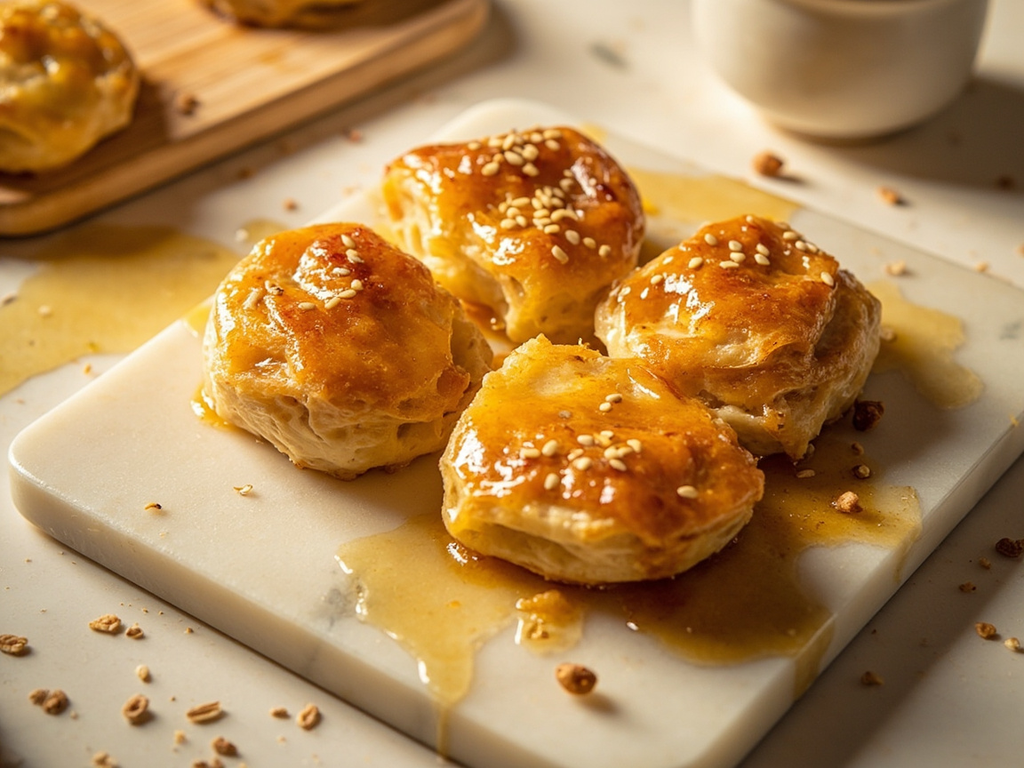
A cake of thin pastry leaves filled with fresh cheese beaten with honey and sesame seeds. Served at the end of the symposion or placed as an offering, it is the sacred sweet of the Athenians.
Come closer, and look at this honey cake: such is the gift laid at the feet of Athena, our protector, on the sacred rock where her marble home now stands. I wished for the goddess a temple worthy of her glory; for her table, the people offer what is sweetest — fresh cheese from our goats, bound with honey from Hymettus and scented with sesame. Beat the cheese until it is light as a prayer, drench it with still-warm honey, and think that sweetness, among us, belongs to the gods as much as to men.
- •Fresh goat cheese — a good portion (filling)
- •Hymettus honey — generously (sweetener and binder)
- •Fine wheat pastry — a few sheets (wrapper)
- •Sesame seeds — a handful (flavor and crunch)
Plakous with Honey and Fresh Cheese
A cake of thin pastry leaves filled with fresh cheese beaten with honey and sesame seeds. Served at the end of the symposion or placed as an offering, it is the sacred sweet of the Athenians.
Why this dish? Pericles dedicated the Parthenon to Athena on the Acropolis: honey and cheese cakes were among the offerings placed on the altars of the gods. This plakous, sweet and pure, evokes the rites that accompanied the great works he made the jewel of the city.
Come closer, and look at this honey cake: such is the gift laid at the feet of Athena, our protector, on the sacred rock where her marble home now stands. I wished for the goddess a temple worthy of her glory; for her table, the people offer what is sweetest — fresh cheese from our goats, bound with honey from Hymettus and scented with sesame. Beat the cheese until it is light as a prayer, drench it with still-warm honey, and think that sweetness, among us, belongs to the gods as much as to men.
Ingredients (period version)
- Fresh goat cheese — a good portion (filling)
- Hymettus honey — generously (sweetener and binder)
- Fine wheat pastry — a few sheets (wrapper)
- Sesame seeds — a handful (flavor and crunch)
Ingredients
- Fresh goat (or sheep) cheese — 300 g (filling)
- Thyme or chestnut honey — 100 g plus extra for drizzling (sweetener and binder)
- Phyllo dough — 6 sheets (wrapper)
- Olive oil (for brushing) — 3 tbsp (browning)
- Sesame seeds — 2 tbsp (flavor and crunch)
Method
- Beat the fresh cheese with honey until smooth.
- Brush each phyllo sheet with olive oil and layer three in the bottom of a small dish.
- Spread the honey-cheese cream over, cover with the remaining three brushed sheets.
- Sprinkle with sesame seeds and bake for 20–25 minutes at 180°C until golden.
- Upon removal, drizzle with warm honey and let rest before cutting.
How it was made : Plakous (distant ancestor of baklava and Roman placenta) was a cake of pastry leaves and honey cheese. Athenaeus cites several variants. Honey was the only sweetener for Greeks — cane sugar was unknown — and honey-cheese cakes regularly appeared among food offerings on altars.
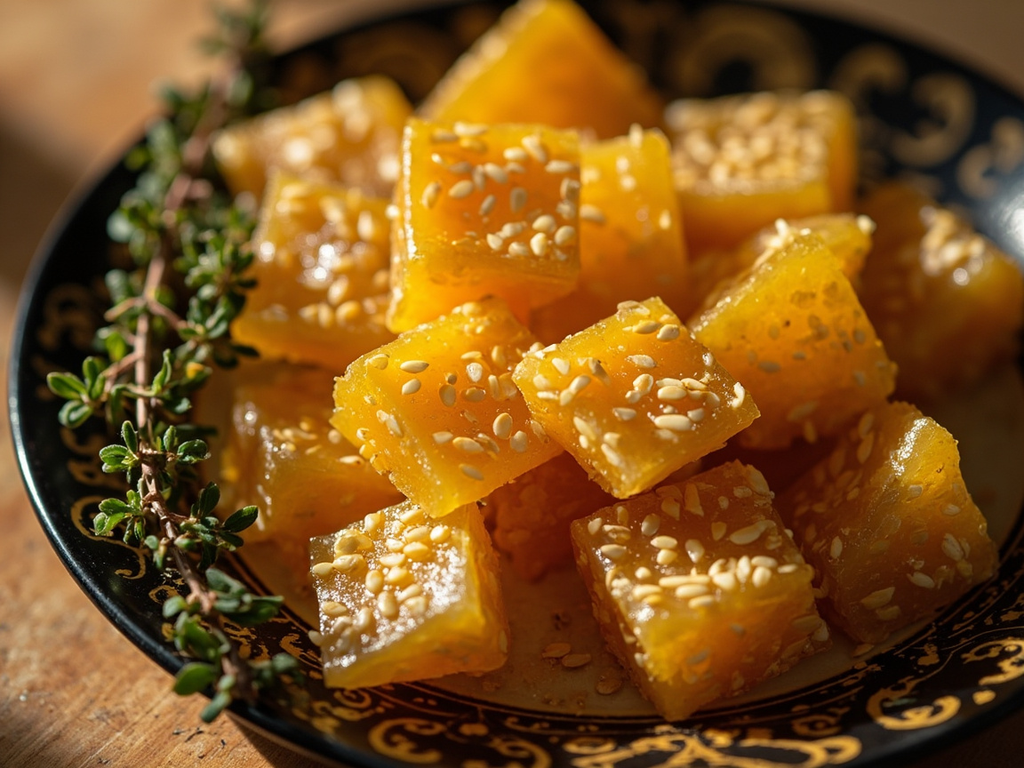
The contemporary twist : Cut into diamond shapes like modern Greek pastry and serve with a spoonful of fresh cheese and toasted sesame seeds.
Sources : Athenaeus of Naucratis, The Deipnosophists (Book XIV, on cakes) · Andrew Dalby, Food in the Ancient World from A to Z
Pericles · Charactorium