 flip
flipTarichos from Piraeus, Sailors' Salt Fish
Tarichos from Piraeus, Sailors' Salt Fish
Why this dish? Tarichos, salted fish imported from the Black Sea and Pontus, passed through Piraeus — the port that Pericles connected to Athens by the Long Walls and made prosperous as the commercial heart of his maritime empire. On the quays he secured, these barrels of brine fed the people cheaply.
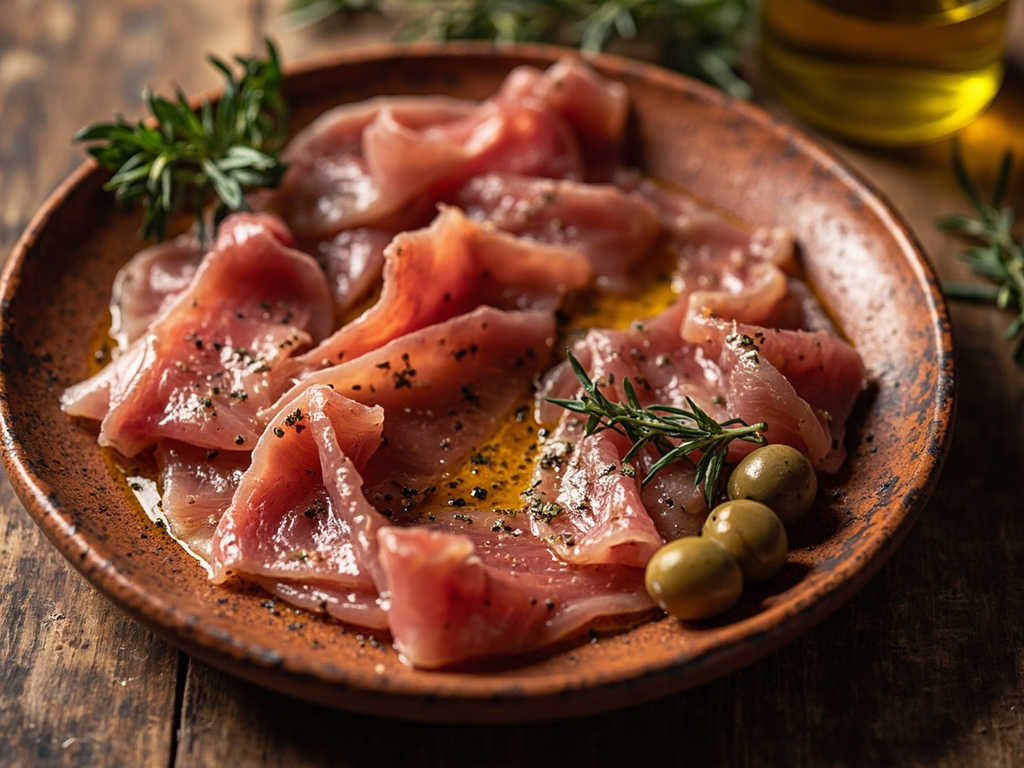
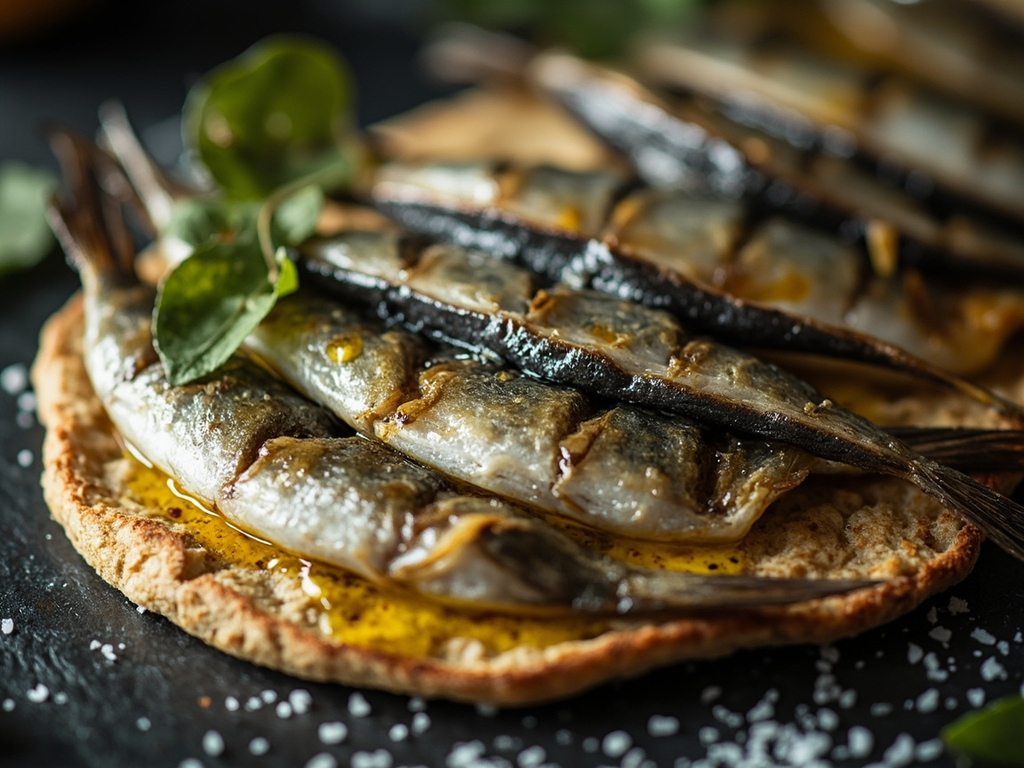
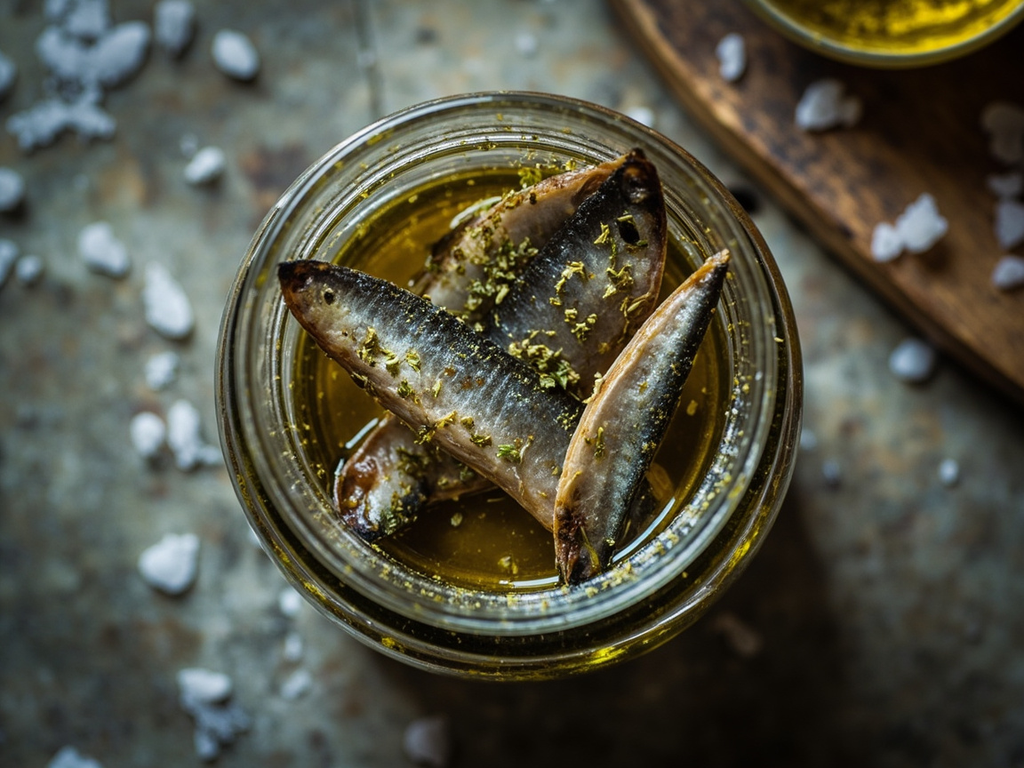
Fatty fish (tuna, mackerel) long preserved in salt, desalted and served in strips with oil and a little vinegar. The quintessential opson of the urban poor, intensely salty and deep.
See this fish, traveler: it has crossed the Pontus and the Hellespont in its brine to reach the quays of Piraeus, this port I bound to the City by our Long Walls. As long as our fleet holds the sea, the people will never lack this salted opson to enliven their barley cake. Desalt it in clear water, dress it with a stream of oil and a few drops of vinegar: this is the feast of the sailor and the artisan, and I am not ashamed of it.
- •Tuna or mackerel in brine (tarichos) — a few slices (main opson)
- •Olive oil — a drizzle (seasoning (signature))
- •Wine vinegar — a few drops (brightness)
- •Dried oregano — a pinch (herb)
Tarichos from Piraeus, Sailors' Salt Fish
Fatty fish (tuna, mackerel) long preserved in salt, desalted and served in strips with oil and a little vinegar. The quintessential opson of the urban poor, intensely salty and deep.
Why this dish? Tarichos, salted fish imported from the Black Sea and Pontus, passed through Piraeus — the port that Pericles connected to Athens by the Long Walls and made prosperous as the commercial heart of his maritime empire. On the quays he secured, these barrels of brine fed the people cheaply.
See this fish, traveler: it has crossed the Pontus and the Hellespont in its brine to reach the quays of Piraeus, this port I bound to the City by our Long Walls. As long as our fleet holds the sea, the people will never lack this salted opson to enliven their barley cake. Desalt it in clear water, dress it with a stream of oil and a few drops of vinegar: this is the feast of the sailor and the artisan, and I am not ashamed of it.
Ingredients (period version)
- Tuna or mackerel in brine (tarichos) — a few slices (main opson)
- Olive oil — a drizzle (seasoning (signature))
- Wine vinegar — a few drops (brightness)
- Dried oregano — a pinch (herb)
Ingredients
- Mackerel or tuna (very fresh fillets) — 400 g (main opson)
- Coarse sea salt — 500 g (for salting) (preservation)
- Extra virgin olive oil — 4 tbsp (seasoning)
- Wine vinegar — 2 tbsp (brightness)
- Dried oregano — 1 tsp (herb)
Method
- Place fish fillets in a dish, cover completely with coarse salt, and refrigerate 24–48 hours to firm and salt.
- Rinse thoroughly, then desalt for 1–2 hours in cold water, changing as needed to taste.
- Pat dry and slice into thin strips.
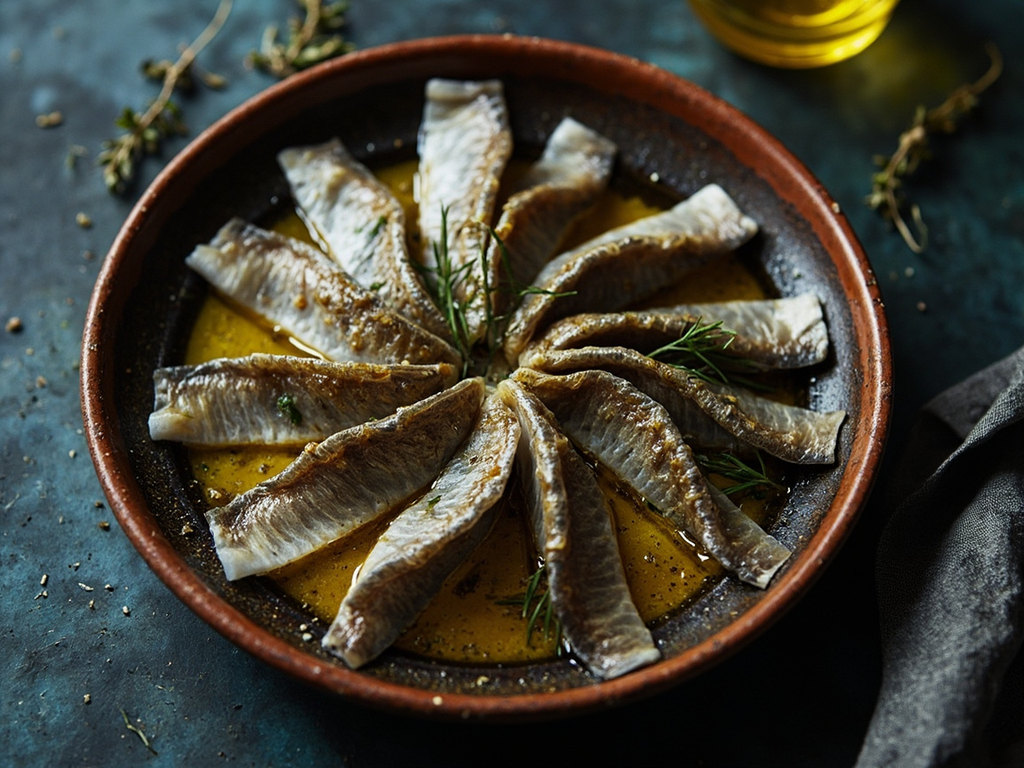
- Arrange on a plate, drizzle with olive oil and vinegar, sprinkle with oregano.
- Let marinate 15 minutes and serve with maza or bread.
How it was made : Athens imported massive amounts of tarichos from colonies on the Euxine (Black Sea): tuna, sturgeon, and mackerel salted in huge jars. Cheap and durable, it was the democratic opson par excellence, sold in the agora. Salting was the great ancient preservation technique, before any refrigeration, allowing fish to travel for months.
The contemporary twist : Present as an "ancient carpaccio": slices in a rosette, oil brushed on, oregano blossom, and a lemon wedge as a Mediterranean nod (lemon came later, but the spirit is there).
Sources : Robert I. Curtis, Garum and Salsamenta: Production and Commerce in Materia Medica · James Davidson, Courtesans and Fishcakes: The Consuming Passions of Classical Athens
Pericles · Charactorium