 flip
flipPlakous with honey and fresh cheese
Plakous with honey and fresh cheese
Why this dish? When Persephone returns in spring, Olympus celebrates her: plakous, a cake of thin layers with honey and fresh cheese, was the dish of weddings and divine banquets, distant ancestor of our cheesecakes.
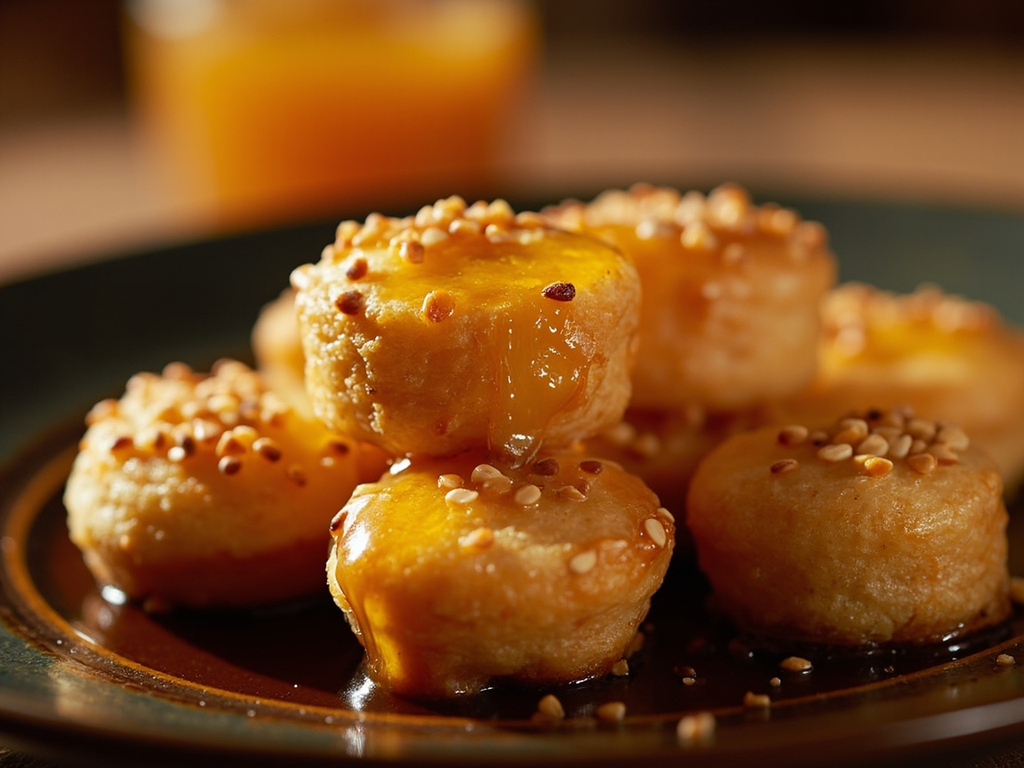
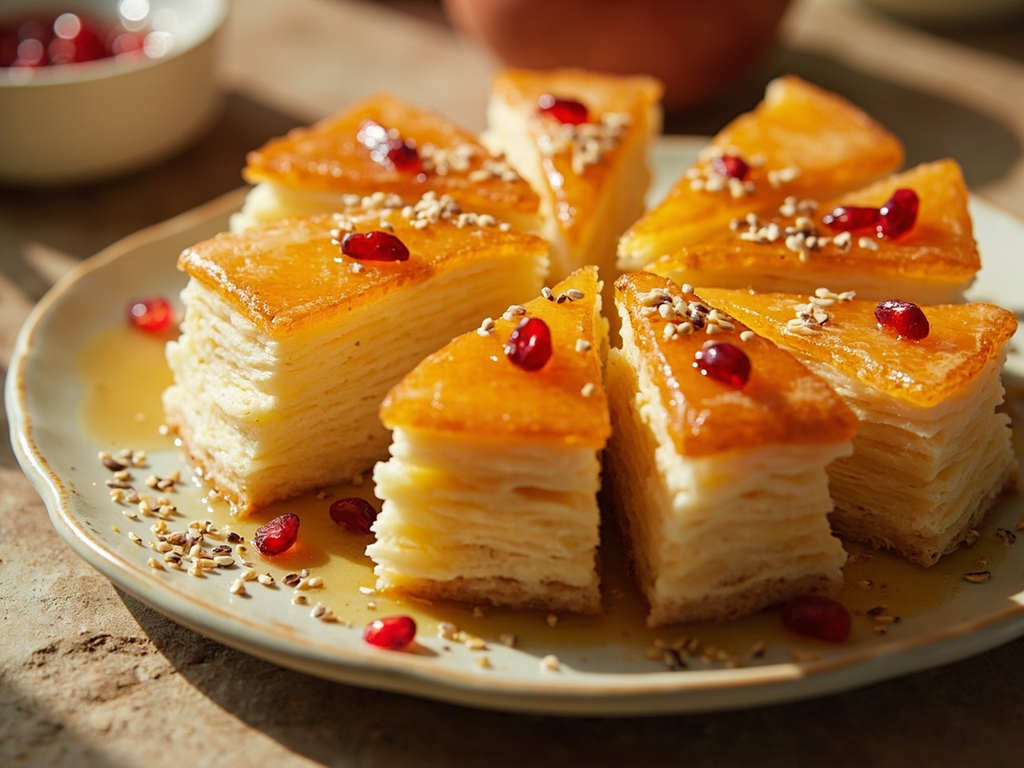
A cake of thin stacked pastry layers, filled with fresh cheese beaten with honey, baked golden and drizzled with warm honey. All floral sweetness and milky freshness—the treat of great occasions.
When I return in spring and Olympus lights up, they set for me the second table, that of sweets. My delight is this cake of light leaves, heavy with fresh cheese and drowned in the fragrant honey of Hymettus. It is offered at weddings, to appeased gods, at generous harvests. Break off a warm piece, mortal, and you will know the taste of the return of light.
- •Fine wheat flour — for the leaves (dough)
- •Fresh sheep or goat cheese — in abundance (filling)
- •Hymettus honey — generously (sweetener and glaze)
- •Olive oil — a drizzle (layering)
Plakous with honey and fresh cheese
A cake of thin stacked pastry layers, filled with fresh cheese beaten with honey, baked golden and drizzled with warm honey. All floral sweetness and milky freshness—the treat of great occasions.
Why this dish? When Persephone returns in spring, Olympus celebrates her: plakous, a cake of thin layers with honey and fresh cheese, was the dish of weddings and divine banquets, distant ancestor of our cheesecakes.
When I return in spring and Olympus lights up, they set for me the second table, that of sweets. My delight is this cake of light leaves, heavy with fresh cheese and drowned in the fragrant honey of Hymettus. It is offered at weddings, to appeased gods, at generous harvests. Break off a warm piece, mortal, and you will know the taste of the return of light.
Ingredients (period version)
- Fine wheat flour — for the leaves (dough)
- Fresh sheep or goat cheese — in abundance (filling)
- Hymettus honey — generously (sweetener and glaze)
- Olive oil — a drizzle (layering)
Ingredients
- Phyllo dough — 6 sheets (flaky layers)
- Fresh cheese (sheep or ricotta) — 300 g (filling)
- Thyme or flower honey — 120 g (sweetener and glaze)
- Mild olive oil — 4 tbsp (brush)
- Sesame seeds — 1 tbsp (finish)
Method
- Beat the fresh cheese with 3 tablespoons of honey until smooth.
- Brush each phyllo sheet with oil and stack three by three in a small dish.
- Spread the cheese cream, cover with the other three oiled sheets.
- Bake for 25-30 minutes at 180°C until the top is golden and crispy.
- Upon leaving the oven, drizzle with the remaining heated honey, sprinkle with sesame seeds, and let cool slightly before cutting.
How it was made : Plakous ("flat thing") was made of very thin dough layers—the Romans would derive their placenta described by Cato. It was sweetened exclusively with honey, cane sugar being unknown to the ancient Greek world.
The contemporary twist : Cut into diamonds and presented like a light baklava, before the invention of baklava, with a burst of pomegranate on top.
Sources : Athenaeus of Naucratis, The Deipnosophists (Book XIV) · Cato the Elder, De agricultura (placenta, derived Roman source)
Persephone · Charactorium