 flip
flipPullum Numidicum — Chicken with Dates and Pepper
Pullum Numidicum — Chicken with Dates and Pepper
Why this dish? As a consular senator, Cicero entertained often: his correspondence is full of dinners, invitations, and even complaints when a guest displeased him. For these *cenae* where Roman politics was woven, poultry prepared in sweet-and-sour sauce was served, the height of elite refinement. The contrast with his daily puls says everything about the man: frugal in principle, generous host by duty.
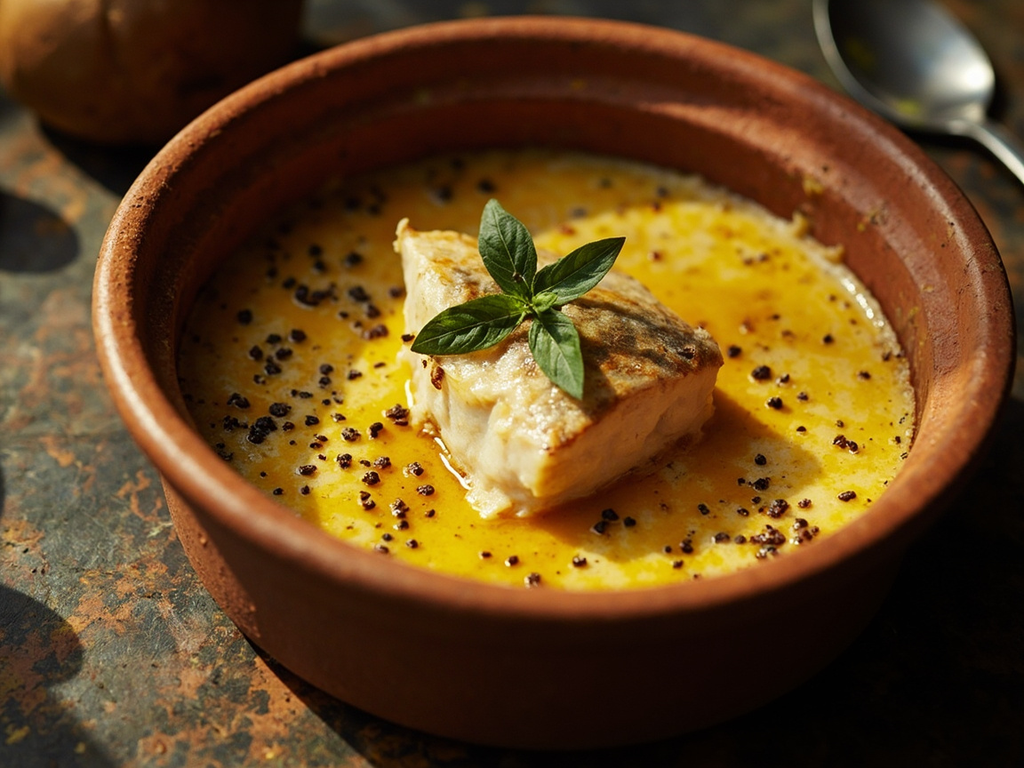
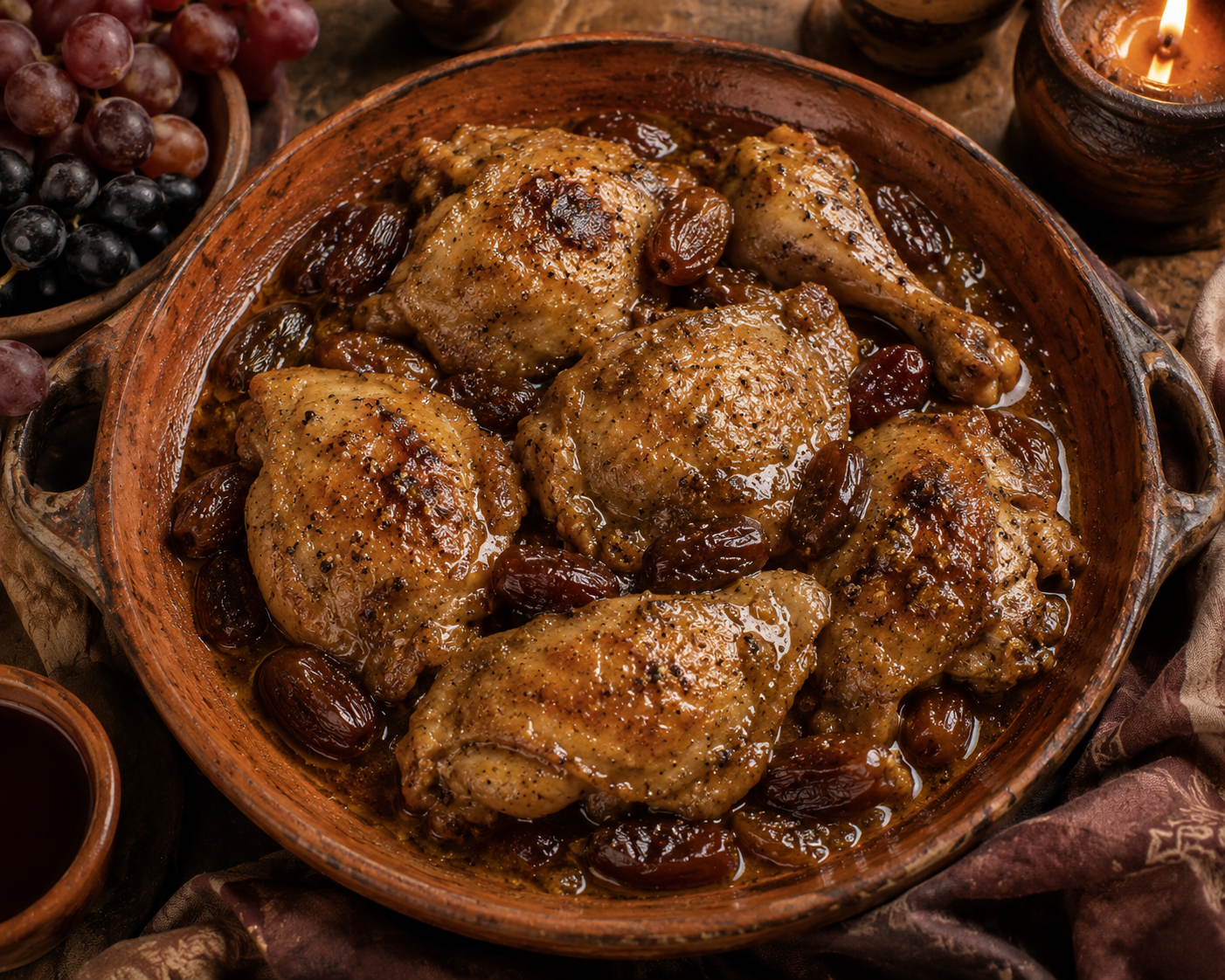
Roasted chicken then coated with a typically Roman sauce: garum, honey, and defrutum married with pepper, lovage, and melted dates. The archetype of the sweet-savory-spicy that made banquets glorious.
When I receive at my table a man on whom the fate of the Republic depends, believe me, I do not serve him porridge. We brown the poultry, then bathe it in a sauce where garum weds honey and reduced grape must, spiced with that pepper from the ends of the East that our merchants bring back at a price of gold. One rule, which I hold from my own cooks: the sauce should coat the spoon without drowning it, for excess in cooking as on the rostrum is the worst of faults.
- •Chicken (pullus) — one, cut into pieces (meat)
- •Garum (liquamen) — a little (salt umami)
- •Honey — a spoonful (sweetness)
- •Defrutum (reduced grape must) — a dash (tangy syrup)
- •Pitted dates — a handful (sweet softness)
- •Pepper, lovage, cumin — to taste (spices)
- •White wine — a glass (deglazing)
Pullum Numidicum — Chicken with Dates and Pepper
Roasted chicken then coated with a typically Roman sauce: garum, honey, and defrutum married with pepper, lovage, and melted dates. The archetype of the sweet-savory-spicy that made banquets glorious.
Why this dish? As a consular senator, Cicero entertained often: his correspondence is full of dinners, invitations, and even complaints when a guest displeased him. For these *cenae* where Roman politics was woven, poultry prepared in sweet-and-sour sauce was served, the height of elite refinement. The contrast with his daily puls says everything about the man: frugal in principle, generous host by duty.
When I receive at my table a man on whom the fate of the Republic depends, believe me, I do not serve him porridge. We brown the poultry, then bathe it in a sauce where garum weds honey and reduced grape must, spiced with that pepper from the ends of the East that our merchants bring back at a price of gold. One rule, which I hold from my own cooks: the sauce should coat the spoon without drowning it, for excess in cooking as on the rostrum is the worst of faults.
Ingredients (period version)
- Chicken (pullus) — one, cut into pieces (meat)
- Garum (liquamen) — a little (salt umami)
- Honey — a spoonful (sweetness)
- Defrutum (reduced grape must) — a dash (tangy syrup)
- Pitted dates — a handful (sweet softness)
- Pepper, lovage, cumin — to taste (spices)
- White wine — a glass (deglazing)
Ingredients
- Chicken thighs and drumsticks — 6 pieces (meat)
- Fish sauce (garum / nuoc-mam) — 1.5 tbsp (seasoning)
- Honey — 1 tbsp (sweetness)
- Reduced grape juice by half (or grape syrup / saba) — 2 tbsp (sweet-sour)
- Medjool dates, pitted — 6 (softness)
- Black pepper, ground — 1/2 tsp (spice)
- Celery seeds (if no lovage) + cumin — 1/4 tsp each (spices)
- Dry white wine — 150 ml (sauce)
- Olive oil — 2 tbsp (cooking)
Method
- Sear the chicken pieces in olive oil until nicely browned; set aside.
- Deglaze with white wine, add fish sauce, honey, and reduced grape juice.
- Stir in the spices (pepper, cumin, celery seeds) and the dates cut into small pieces.
- Return the chicken, cover, and simmer for 25–30 minutes: the dates melt and thicken the sauce.
- Uncover and reduce for a few minutes to a coating sauce. Serve hot.
How it was made : The recipe is inspired by Apicius (*De re coquinaria*), a collection compiled after Cicero but codifying an elite cuisine already well established in the late Republic. Garum, honey, and defrutum were systematically combined, and spices were ground in a mortar. Pepper, imported from India, was a marker of wealth.
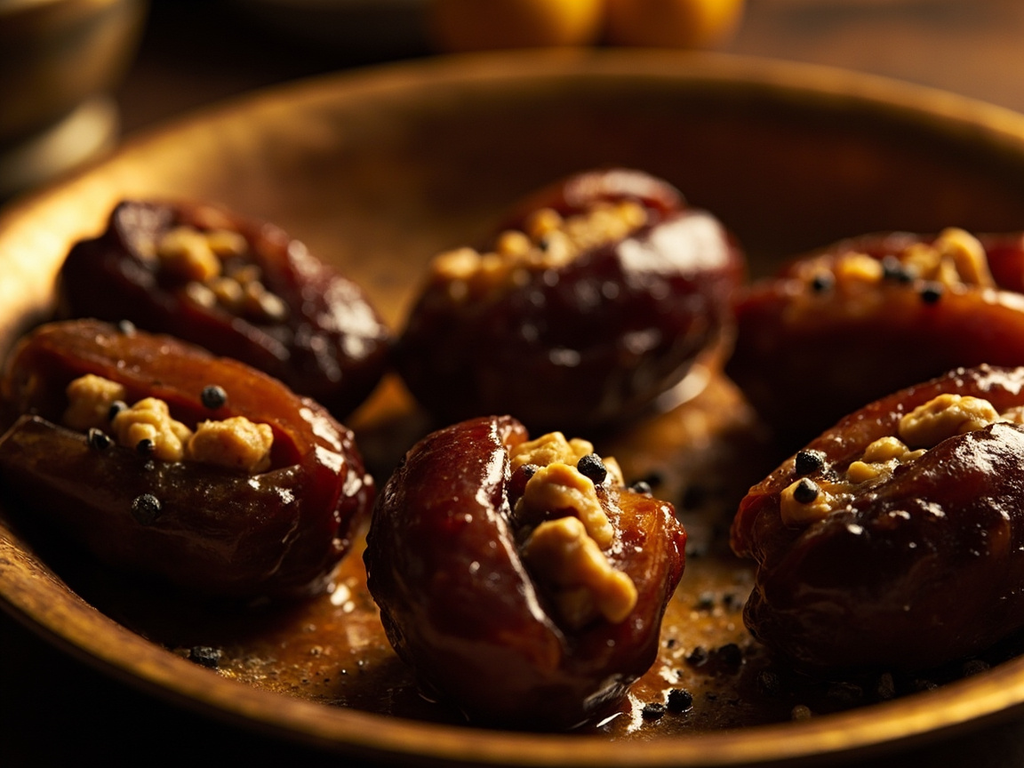
The contemporary twist : Scatter with roasted date shards and a little zest: a 'Roman honey chicken' that holds its own against today's tagines.
Sources : Apicius, *De re coquinaria* (late compilation of an older elite cuisine)
Cicero · Charactorium