 flip
flipRoast Venison with Cameline Sauce
Roast Venison with Cameline Sauce
Why this dish? Philip Augustus was passionate about hunting in the forests of the royal domain, which he constantly expanded. Boar and deer brought back from the hunt ended up on a spit-roast at the table of the Palais de la Cité, coated with cameline, the queen of sauces at royal banquets.
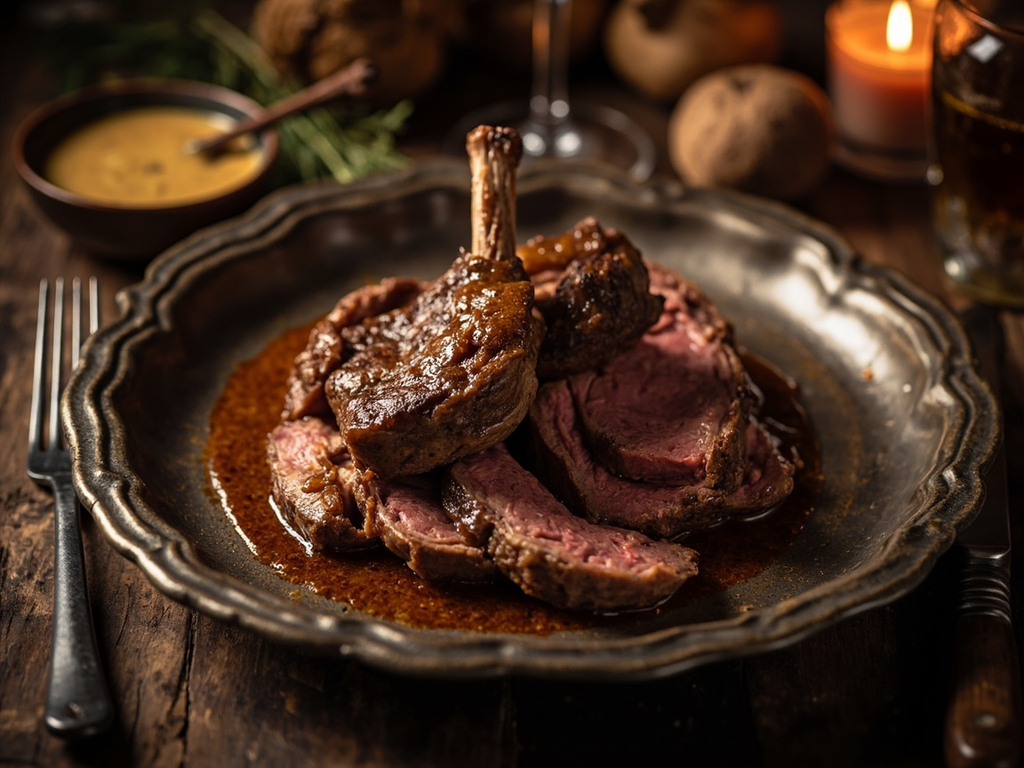
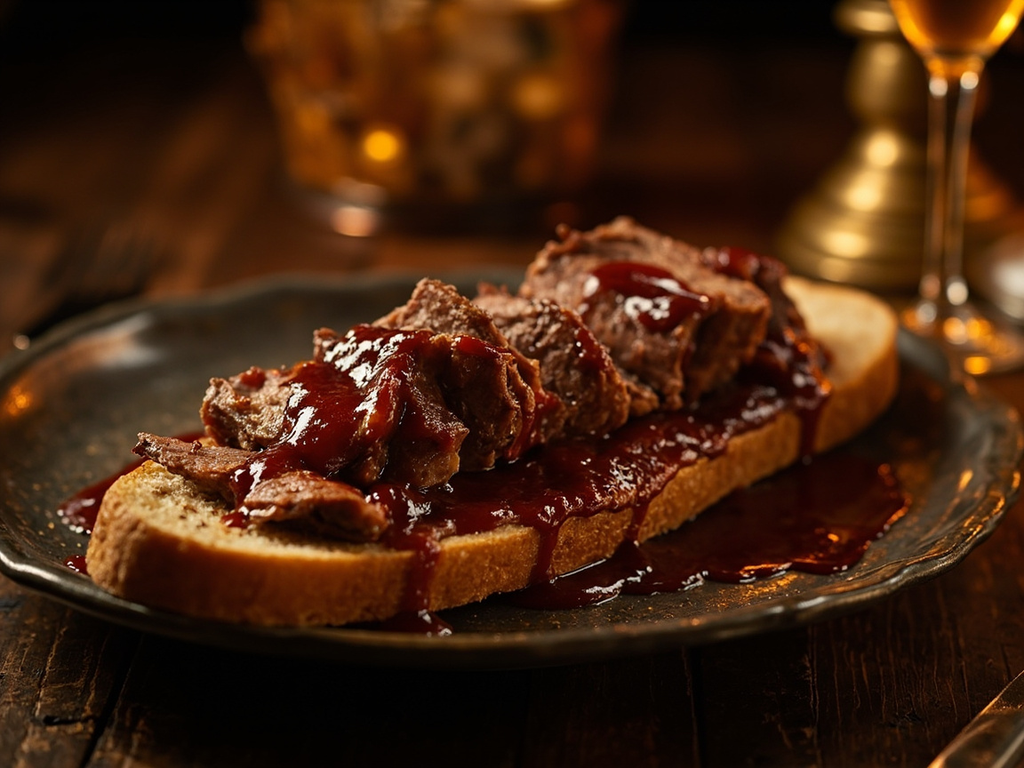
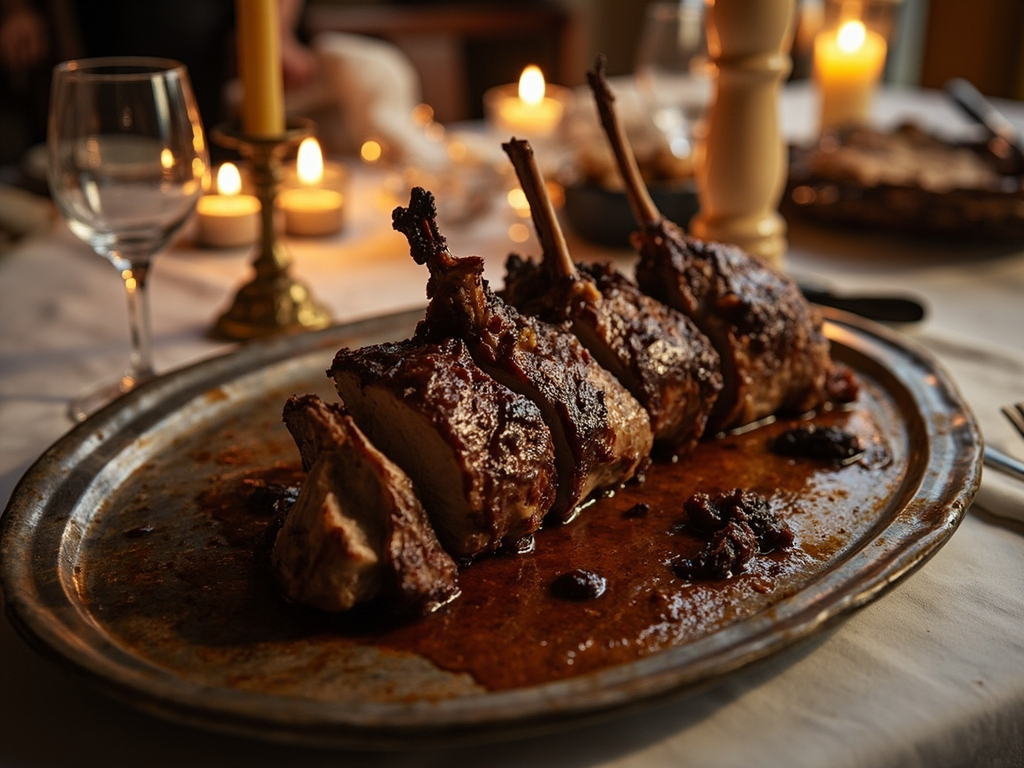
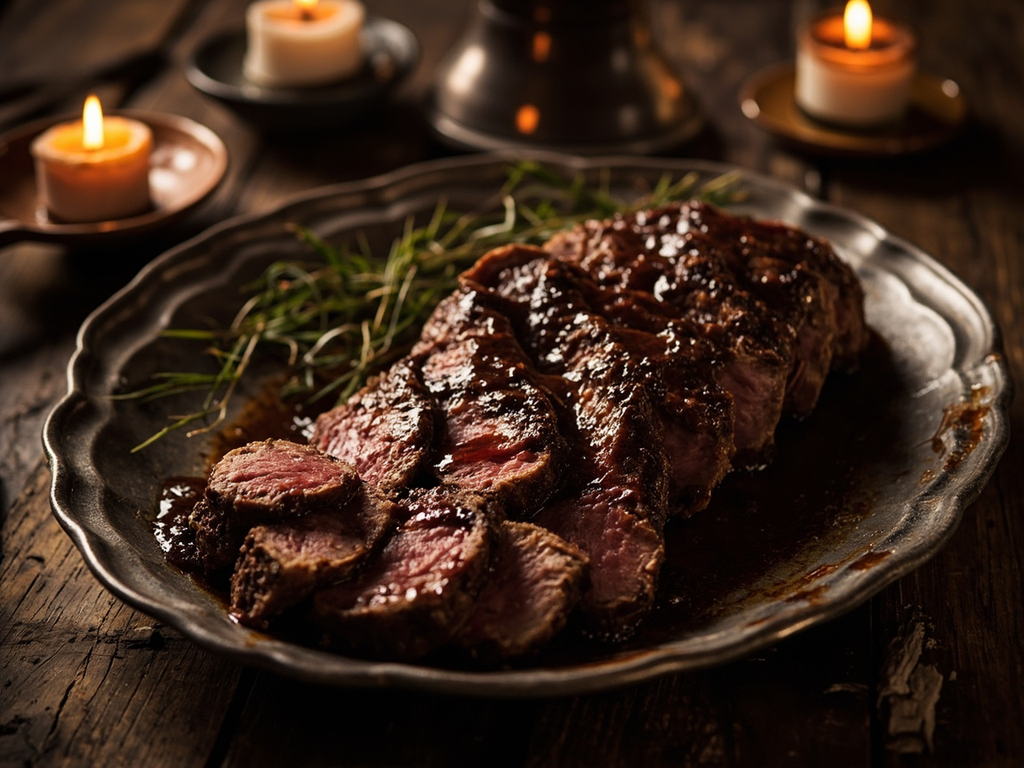
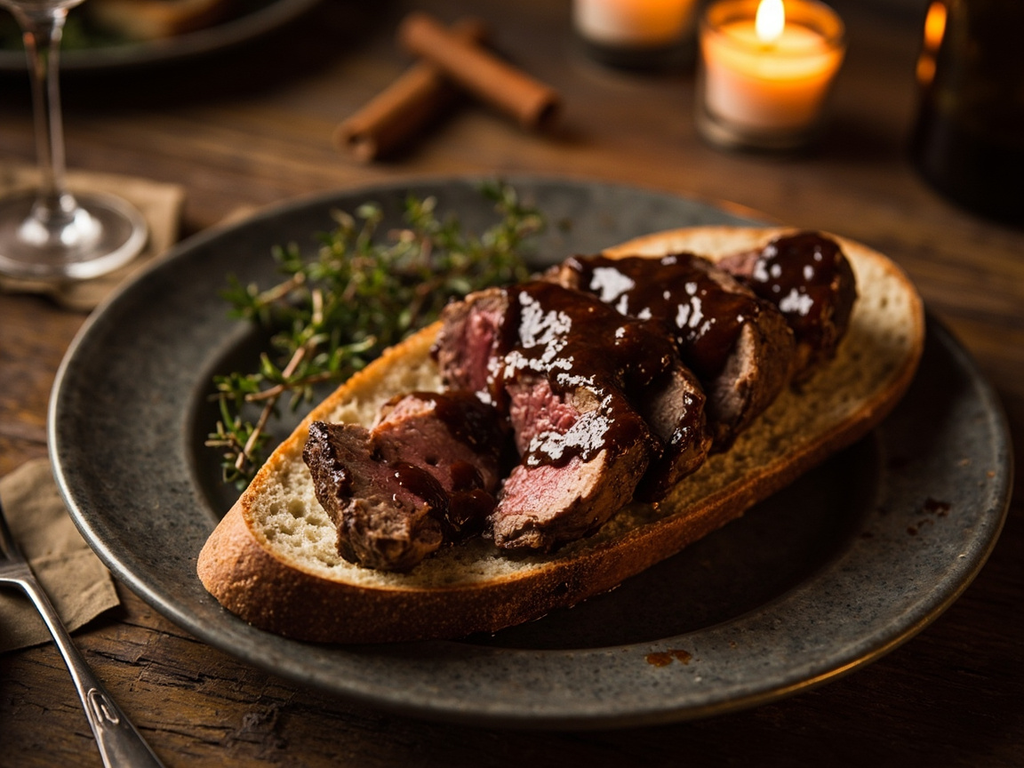
A roast loin of venison, sliced and coated with a cold brown sauce, flavored with cinnamon and ginger, bound with bread and sharpened with verjuice. The contrast between the hot meat and the tangy-spiced sauce is the hallmark of medieval taste.
Know, you who read these lines, that at the table of my palace of the Cité no roast was worth the venison taken by my own hand in my forests. It was turned on the spit until the fat sizzled on the embers, then my cooks covered it with cameline: toasted bread, plenty of cinnamon and ginger, and sharp verjuice to awaken the tongue. Now taste it, and you shall know what a king of France ate in the time of Bouvines.
- •Haunch or loin of venison (deer/boar) — a fine piece (the roast)
- •Cinnamon — in abundance (master spice of cameline)
- •Ginger, clove, long pepper — to taste (supporting spices)
- •Toasted bread — a few slices (sauce binder)
- •Verjuice — a good splash (acidity)
Roast Venison with Cameline Sauce
A roast loin of venison, sliced and coated with a cold brown sauce, flavored with cinnamon and ginger, bound with bread and sharpened with verjuice. The contrast between the hot meat and the tangy-spiced sauce is the hallmark of medieval taste.
Why this dish? Philip Augustus was passionate about hunting in the forests of the royal domain, which he constantly expanded. Boar and deer brought back from the hunt ended up on a spit-roast at the table of the Palais de la Cité, coated with cameline, the queen of sauces at royal banquets.
Know, you who read these lines, that at the table of my palace of the Cité no roast was worth the venison taken by my own hand in my forests. It was turned on the spit until the fat sizzled on the embers, then my cooks covered it with cameline: toasted bread, plenty of cinnamon and ginger, and sharp verjuice to awaken the tongue. Now taste it, and you shall know what a king of France ate in the time of Bouvines.
Ingredients (period version)
- Haunch or loin of venison (deer/boar) — a fine piece (the roast)
- Cinnamon — in abundance (master spice of cameline)
- Ginger, clove, long pepper — to taste (supporting spices)
- Toasted bread — a few slices (sauce binder)
- Verjuice — a good splash (acidity)
Ingredients
- Roast venison (deer or doe) — 800 g (the roast)
- Ground cinnamon — 1.5 tsp (master spice)
- Ground ginger — 1 tsp (spice)
- Ground clove + pepper — 1 pinch each (spice)
- Grilled country bread — 2 slices (binder)
- Verjuice (or green grape juice + vinegar) — 100 ml (acidity)
- Broth — 150 ml (sauce thinning)
- Salt — to taste (seasoning)
Method
- Salt the meat and roast in the oven at 200 °C until pink in the center (20-25 min depending on thickness), then let rest.
- Soak the grilled bread in verjuice and a little broth, then blend until smooth.
- Add cinnamon, ginger, clove and pepper; thin with broth until the sauce coats a spoon. Season with salt.
- Do NOT cook the sauce (cameline is served cold): just blend until smooth.
- Slice the venison and coat with cameline at serving time.
How it was made : Cameline is documented in the earliest French recipe collections (Viandier around 1300, Le Mesnagier de Paris in 1393), slightly later than Philip Augustus's reign but reflecting a continuous seigneurial tradition. At the time, sauces were bound with bread, not butter, and were acidic and spicy, never creamy.
The contemporary twist : Serve the cameline in a small glass alongside thinly sliced roast, like a 'royal ketchup' for dipping, to let diners guess the spices.
Sources : Le Viandier de Taillevent (c. 1300) · Le Mesnagier de Paris (1393) · Bruno Laurioux, Manger au Moyen Âge (2002)
Philippe Auguste · Charactorium