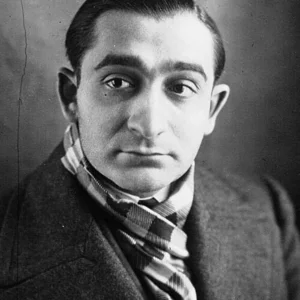

French statesman, a figure of the radical left and of moral rigor in politics. President of the Council in 1954-1955, he ended the Indochina War and set Tunisia on the path to autonomy.
Pierre Mendès France(1907 — 1982)
Pierre Mendès France
France
6 min read
Frequently asked questions
Famous Quotes
« To govern is to choose.»
Key Facts
- President of the Council from June 1954 to February 1955
- Signed the Geneva Accords in July 1954, ending the Indochina War
- Granted internal autonomy to Tunisia through the Carthage speech (July 1954)
- Opposed the Algerian War and the Gaullist Fifth Republic
- Led a campaign against alcoholism by promoting milk in schools
Works & Achievements
The fulfillment of his promise of peace within a month, ending the Indochina War and marking a turning point in French decolonization.
The launch of Tunisia's negotiated decolonization process, which would lead to its independence in 1956.
An innovation in political communication: every Saturday he addressed the French people to explain the government's actions in an accessible way.
A public health initiative promoting milk and combating alcohol consumption, especially among young people.
A political essay setting out his vision of a reformed, transparent state founded on accountability, where “to govern is to choose.”
An autobiographical account of his arrest by Vichy and his escape, written during the war.
As Minister of the Economy in the GPRF, he championed a policy of monetary austerity to restore the country's postwar finances.
Anecdotes
On 31 July 1954, Pierre Mendès France signed the Geneva Accords that ended the Indochina War. He had set himself a public ultimatum: settle the conflict within one month or resign. He kept his word almost to the day, which left a lasting impression on public opinion.
Mendès France was famous for advocating the drinking of milk rather than alcohol. At an official luncheon, he had a glass of milk served, sparking mockery and caricatures, but launching a genuine public health campaign against alcoholism in schools.
During the Second World War, arrested by the Vichy regime in 1940 and accused of desertion, he escaped from his prison in Clermont-Ferrand in June 1941 by climbing over a wall, then made his way to London to join the Free French Forces as an aerial navigator.
At 25, in 1932, he became the youngest member of parliament in France, elected in the Eure. A brilliant economist, he was already denouncing deflationary policies and defending ideas close to those of Keynes, which set him apart from the leaders of the Third Republic.
In May 1968, although he had withdrawn from frontline political life, Mendès France appeared at the great rally in the Charléty stadium, raising hopes that he might be a recourse for the left, without however seeking to take the lead of the movement.
Primary Sources
The government I shall form (...) will give itself a deadline — let us say four weeks — to reach a ceasefire in Indochina. Failing that, it will tender its resignation.
The accords provide for the cessation of hostilities and the withdrawal of forces, setting a provisional demarcation line at the 17th parallel in Vietnam.
Mendès France inaugurates weekly radio broadcasts in which he addresses the French people directly to explain the work of his government.
To govern is to choose. A policy consists in weighing, in comparing, and then in deciding between solutions, none of which is entirely satisfactory.
Key Places
Birthplace and place of death of Pierre Mendès France, the center of his national political career.
The town where he served as mayor and the département that first elected him as deputy in 1932, a lasting local anchor for his political work.
Site of the 1954 international conference where the agreements ending the Indochina War were signed.
The town where he was imprisoned by the Vichy regime in 1940-1941, before his escape to London.
Site of his 1954 speech announcing Tunisia's internal autonomy, a major step in decolonization.
The capital where he joined Free France in 1942 to serve as a navigator in the air forces.
Typical Objects

A symbol of his campaign against alcoholism, he had it served at official meals to promote a healthy drink, particularly among children.

The tool of his weekly radio talks of 1954-1955, through which he addressed the French people directly to explain his actions.

The instrument used to sign the Geneva Accords in 1954, a gesture that ended nearly eight years of war in Indochina.

Reports and figure-laden memos that he mastered as a rigorous economist, defending planning and the sound management of public finances.

A familiar object in his public image as a calm and thoughtful man, often featured in photographs and caricatures of the period.
School Curriculum
Vocabulary & Tags
Key Vocabulary
Daily Life
Morning
An early riser and methodical, Mendès France devoted his mornings to studying economic and diplomatic files. Known for his rigour, he read notes and reports with great attention to figures before cabinet meetings and other gatherings.
Afternoon
His afternoons were taken up by sessions at the National Assembly, negotiations, and cabinet meetings. In 1954-1955, he conducted one diplomatic discussion after another concerning Indochina and North Africa.
Evening
On Saturday evenings, he prepared and recorded his radio talks intended to explain his actions to the French people. On other evenings, he continued his work or received advisers and journalists.
Food
An advocate of a sober lifestyle, he publicly championed the consumption of milk and moderation when it came to alcohol. His frugal meal with a glass of milk became a symbol, heavily caricatured by his opponents.
Clothing
He wore the classic dark suit of the Fourth Republic statesman: strict suit and tie, overcoat, and hat — an image of austerity and seriousness in keeping with his moral reputation.
Housing
Born into the Parisian bourgeoisie, he lived in Paris while remaining attached to his constituency in the Eure. As President of the Council, he resided at the Hôtel Matignon, the seat of the head of government.
Historical Timeline
Period Vocabulary
Liens externes & ressources
Références
Œuvres
Accords de Genève sur l'Indochine
1954
Autonomie interne de la Tunisie (discours de Carthage)
1954
Causeries radiophoniques
1954-1955
Campagne contre l'alcoolisme
1954-1955
La République moderne
1962
Liberté, liberté chérie
1943
Œuvre de modernisation économique
1944-1945