 flip
flipKoba akondro (rice, banana, and peanut cake)
Koba akondro (rice, banana, and peanut cake)
Why this dish? Koba, a dense paste of rice, banana, and peanut cooked for hours in a banana leaf, is the travel treat of Madagascar: it keeps, it travels, it is eaten on the road. Ranavalona III, deported from Madagascar to Réunion and then to Algiers, knew the pain of the long journey — and koba is its emblematic snack.
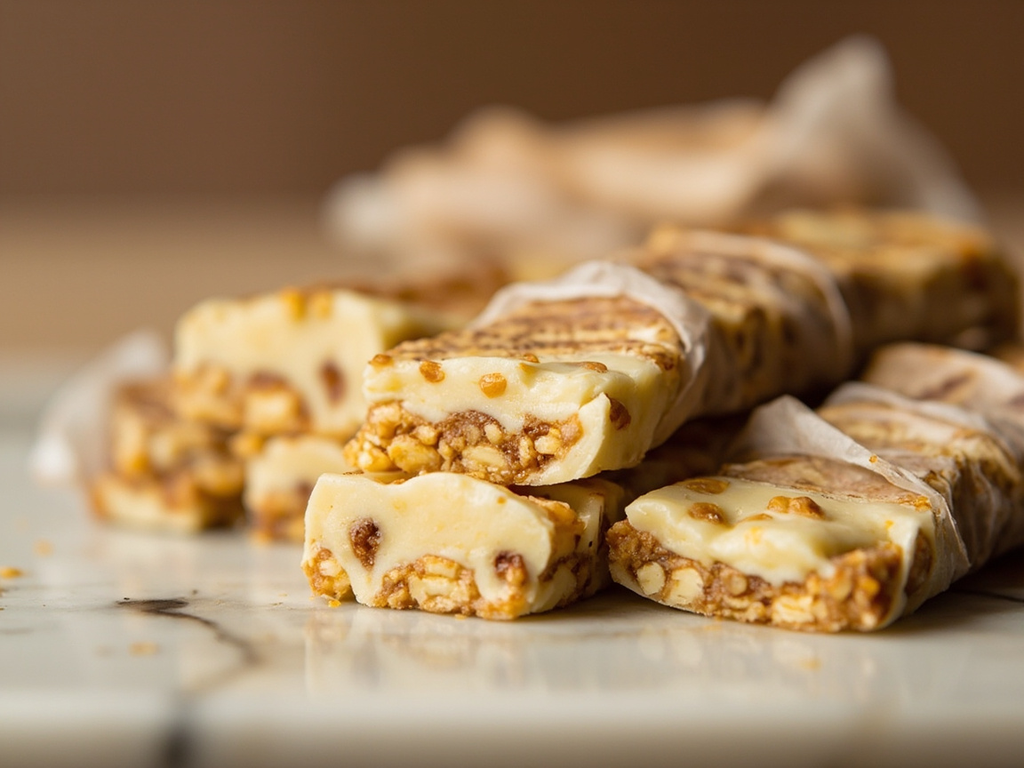
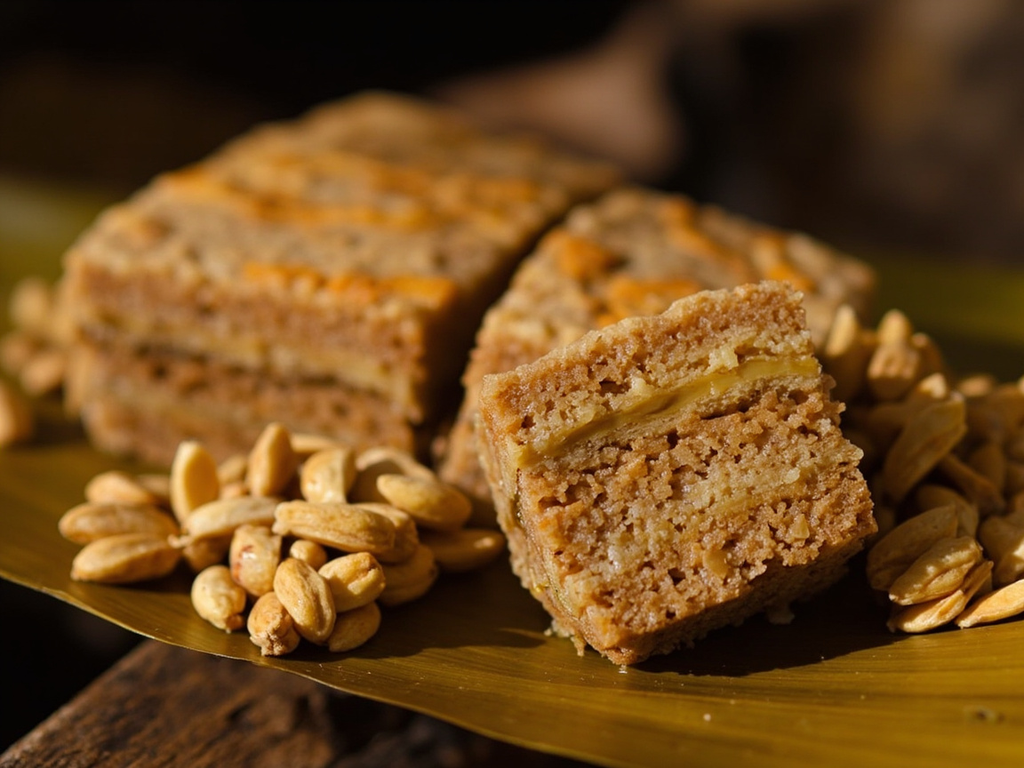
A compact, sweet paste of rice flour, mashed ripe bananas, and crushed peanuts, long-cooked in a banana leaf. Dense, filling, just sweet enough: the snack that sticks to your ribs on the road.
For the road, nothing beats koba. The peanut is pounded, the very ripe bananas are mashed, the rice flour binds it all together, and this paste is enclosed in a tied banana leaf. Then it is cooked for a long, long time until firm. Slip it into your bag: it does not spoil and nourishes you during long hours of walking. I, who have known long exiles at sea, know the value of a food that travels without faltering.
- •Rice flour (vary) — two measures (binder)
- •Very ripe bananas — a bunch (sweetener and binder)
- •Shelled peanuts — a good handful (fatty garnish)
- •Honey or sugarcane sugar — to taste (sweetness)
- •Banana leaf — one large (cooking wrapper)
Koba akondro (rice, banana, and peanut cake)
A compact, sweet paste of rice flour, mashed ripe bananas, and crushed peanuts, long-cooked in a banana leaf. Dense, filling, just sweet enough: the snack that sticks to your ribs on the road.
Why this dish? Koba, a dense paste of rice, banana, and peanut cooked for hours in a banana leaf, is the travel treat of Madagascar: it keeps, it travels, it is eaten on the road. Ranavalona III, deported from Madagascar to Réunion and then to Algiers, knew the pain of the long journey — and koba is its emblematic snack.
For the road, nothing beats koba. The peanut is pounded, the very ripe bananas are mashed, the rice flour binds it all together, and this paste is enclosed in a tied banana leaf. Then it is cooked for a long, long time until firm. Slip it into your bag: it does not spoil and nourishes you during long hours of walking. I, who have known long exiles at sea, know the value of a food that travels without faltering.
Ingredients (period version)
- Rice flour (vary) — two measures (binder)
- Very ripe bananas — a bunch (sweetener and binder)
- Shelled peanuts — a good handful (fatty garnish)
- Honey or sugarcane sugar — to taste (sweetness)
- Banana leaf — one large (cooking wrapper)
Ingredients
- Rice flour — 200 g (binder)
- Very ripe bananas — 4 (sweetener and binder)
- Unsalted peanuts — 120 g coarsely pounded (fatty garnish)
- Honey — 3 tbsp (sweetness)
- Banana leaf (or parchment paper + foil) — 1 large (cooking wrapper)
Method
- Mash the bananas into a puree, add honey and pounded peanuts.
- Gradually incorporate the rice flour until a thick, homogeneous paste forms.
- Place the paste in the center of a banana leaf (passed over a flame) or parchment paper, shape into a log, and seal tightly by tying.
- Steam or simmer in water for 1 h 30 to 2 h, until the paste is firm.
- Let cool, then slice into thick rounds.
How it was made : Koba was prepared in large quantities and cooked for hours in banana leaves over the fire. Its density and natural wrapping made it a travel and market provision, still sold today in slices along Malagasy roads.
The contemporary twist : Sliced thinly and quickly pan-fried to caramelize the edges, koba akondro is served warm with a scoop of coconut ice cream — a modern dessert version.
Ranavalona III · Charactorium